
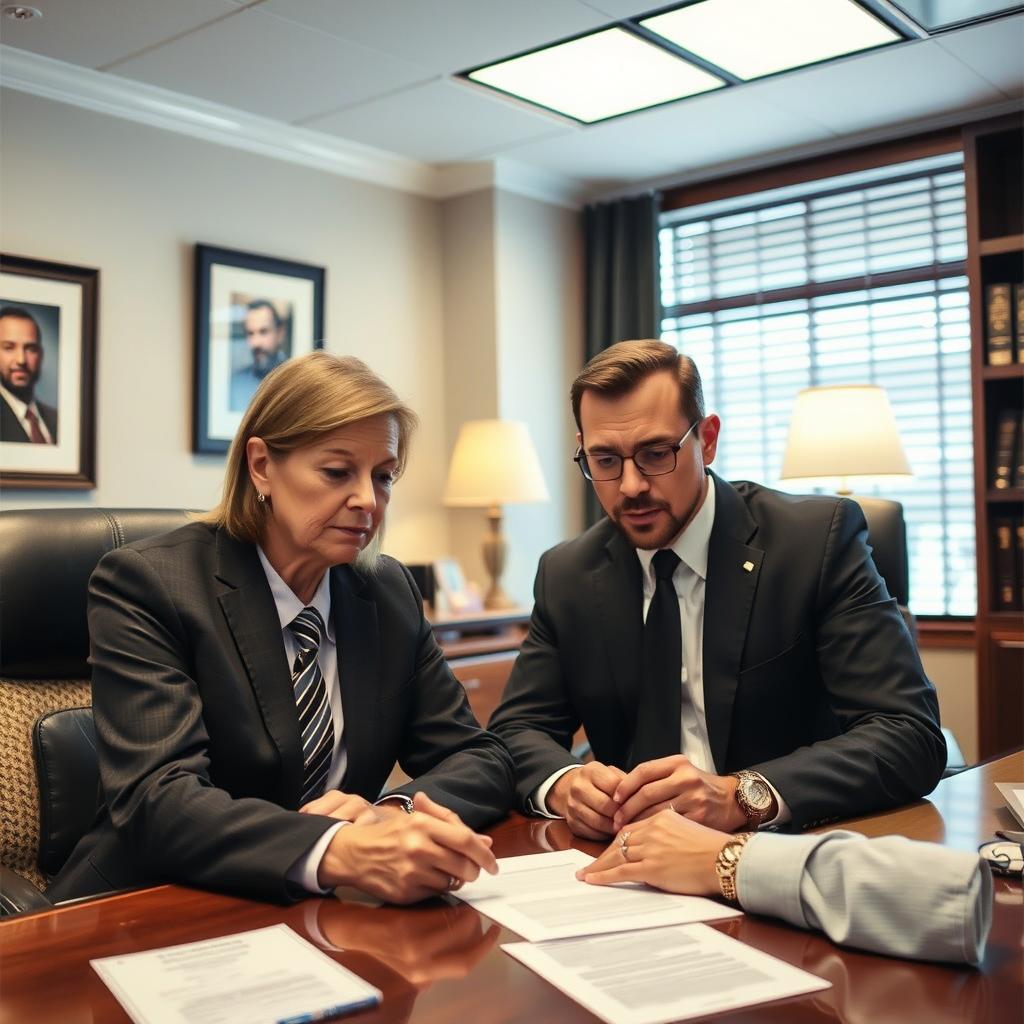
Uncontested Divorce Lawyer Chenango County, NY
An uncontested divorce allows spouses who agree on all material terms—division of property, spousal maintenance, child custody and support—to dissolve their marriage without contested litigation. In Chenango County, New York, an uncontested divorce is filed with the Chenango County Supreme Court under New York Domestic Relations Law § 170. New York is a no-fault divorce state; a spouse need only state under oath that the marriage has been irretrievably broken down for at least six months. Mr. Sris and his Of Counsel team concentrate on family law matters in Chenango County and across the Southern Tier, helping clients prepare and file the necessary documents, negotiate settlement agreements, and obtain the final judgment of divorce as efficiently as the court’s schedule and the parties’ cooperation permit. To discuss your situation with an experienced uncontested divorce attorney, call (888) 437-7747. Law Offices Of SRIS, P.C. – Advocacy Without Borders.
What an Uncontested Divorce Means in Chenango County, New York
A divorce is “uncontested” when both spouses resolve all ancillary issues—equitable distribution of marital property, spousal maintenance, custody, visitation, and child support—without a trial. In Chenango County, the Supreme Court located at 5 Court Street, Norwich, New York handles all divorce and equitable distribution matters, while the Family Court addresses custody and support petitions. The court’s role in an uncontested case is limited to reviewing the settlement to confirm that it is fair and complies with the statutory requirements of the Domestic Relations Law.
The no-fault ground under DRL § 170 requires a sworn statement that the marriage is irretrievably broken for six months or more. This ground is available regardless of whether both spouses initially agree to divorce; one spouse’s statement is sufficient, and the other spouse’s cooperation in signing a separation agreement can simplify the process. When the parties reach a written separation agreement that resolves all financial and custodial issues, the uncontested matter may be submitted on papers without a court appearance in many cases. Mr. Sris and his Of Counsel appear regularly at the Chenango County Supreme Court and understand the procedural expectations of the 6th Judicial District, which includes Broome, Chenango, and several surrounding counties. By relying on verified local practice as of early 2026, they guide clients through the preparation of a proper complaint and the accurate completion of the settlement agreement, helping reduce delay and avoid unnecessary court intervention.
How Mr. Sris and His Of Counsel Handle Uncontested Divorce Cases
The uncontested divorce process in New York follows a structured path, but the specific steps vary with the complexity of the marital estate and the level of cooperation between the parties. Mr. Sris and his Of Counsel begin by confirming that the client meets the residency requirement. One spouse must have been a resident of New York for a continuous period of at least one year immediately before filing, or must meet one of the alternative statutory grounds. Once residency is established, the team works with the client to draft a detailed separation agreement that addresses all mandatory subjects: equitable distribution of marital property, spousal maintenance (alimony) calculated under the statutory formula of DRL § 236, child custody and a parenting plan if minor children are involved, and child support based on the Child Support Standards Act.
After both spouses sign the separation agreement, an uncontested divorce complaint is filed with the Chenango County Supreme Court. The complaint includes the factual basis for the divorce, the parties’ addresses, and the relief requested. The filing and procedural steps—such as obtaining an index number and, if needed, a Request for Judicial Intervention—are handled by the firm. Following service of process on the defendant spouse, the settlement agreement and supporting affidavits are submitted to the court. In most uncontested matters, the court reviews the papers and, if satisfied, enters a judgment of divorce. Mr. Sris and his Of Counsel monitor the case until the judgment is signed and filed, and can assist with post-judgment modifications if circumstances later change.
About Mr. Sris and His Of Counsel Team
Mr. Sris, Owner and Founder of Law Offices Of SRIS, P.C., has practiced family law since 1997 and is admitted to the bar in New York, Virginia, Maryland, the District of Columbia, and New Jersey. A former prosecutor, he brings a depth of litigation experience to his divorce practice. Mr. Sris testified before the Virginia House Courts of Justice Committee in support of 2019 HB 635 (chief patron Del. David Bulova), which reformed aspects of equitable distribution law. On each uncontested divorce matter in Chenango County, he works alongside his Of Counsel team—attorneys engaged through Excella who together bring over 120 years of combined legal experience. Results may vary. Mr. Sris and his Of Counsel have documented 4,739+ case results across all practice areas since the firm’s founding.
Frequently Asked Questions
What are the requirements for an uncontested divorce in Chenango County, New York?
To obtain an uncontested divorce in Chenango County, you must satisfy New York’s residency requirement, state a no-fault ground of irretrievable breakdown for at least six months, and reach a written agreement with your spouse resolving all issues of property division, spousal maintenance, and, if children are involved, custody and child support. The complaint is filed in the Chenango County Supreme Court with the settlement agreement attached. Both spouses must sign the agreement, and the defendant spouse must be properly served. After the court reviews and approves the settlement, a judgment of divorce is entered. A hearing is typically not required when all papers are in order.
How long does an uncontested divorce take in Chenango County?
The timeline depends on the court’s calendar, the completeness of the settlement agreement, and the promptness of the parties in signing and returning documents. After the complaint and agreement are filed and service is completed, the court processes the submission and, if no defects are identified, enters the judgment. The overall duration can vary; Mr. Sris and his Of Counsel work to prepare a thorough submission to avoid unnecessary delay. For a particular estimate based on current docket conditions, we encourage you to schedule a consultation.
Can I file for an uncontested divorce without a lawyer in Chenango County?
You are not legally required to hire an attorney, but a lawyer can help ensure your separation agreement accurately addresses all required statutory elements and that your rights are protected. New York’s equitable distribution and maintenance laws are complex, and an improperly drafted agreement may be rejected by the court or create unintended financial consequences. Acting without counsel also carries the risk that one spouse will later seek to set aside the agreement. Mr. Sris and his Of Counsel can advise you on the full range of issues that must be addressed in an uncontested divorce.
Do both spouses need to appear in court for an uncontested divorce in Chenango County?
In most uncontested divorce cases in New York, a personal court appearance is not required if the divorce is submitted on papers with a fully executed settlement agreement. The court may review the complaint, the signed agreement, the defendant’s affidavit, and the plaintiff’s affidavit without a hearing. However, if the court identifies a deficiency or requires clarification, it may request a brief appearance. Mr. Sris and his Of Counsel prepare the submission to minimize the chance that a hearing will be necessary.
What issues must be resolved in a New York uncontested divorce?
Every uncontested divorce in New York must resolve equitable distribution of marital property, spousal maintenance (alimony) if sought, and, when minor children are involved, custody, visitation, and child support. The agreement must classify all property as marital or separate, value the marital estate, and decide how it will be divided. Spousal maintenance may be set by agreement of the parties using the statutory formula as a guideline. Child support must comply with the Child Support Standards Act. A settlement that omits any of these subjects is incomplete and will not be approved.
How does equitable distribution work in a New York uncontested divorce?
New York courts divide marital property equitably, which means fairly but not necessarily equally, based on a list of statutory factors. In an uncontested divorce, the spouses themselves decide how property will be divided and state their agreement in the separation agreement. The court reviews the arrangement for fairness and compliance with the Domestic Relations Law. If the agreement disproportionately benefits one spouse without a reasonable basis, the court may refuse to incorporate it. Mr. Sris and his Of Counsel can help you negotiate an agreement that is both equitable and likely to be approved by the Chenango County Supreme Court.
Attorney advertising. Prior results do not guarantee a similar outcome.
Case results depend on a variety of factors unique to each case.
Results may vary.