
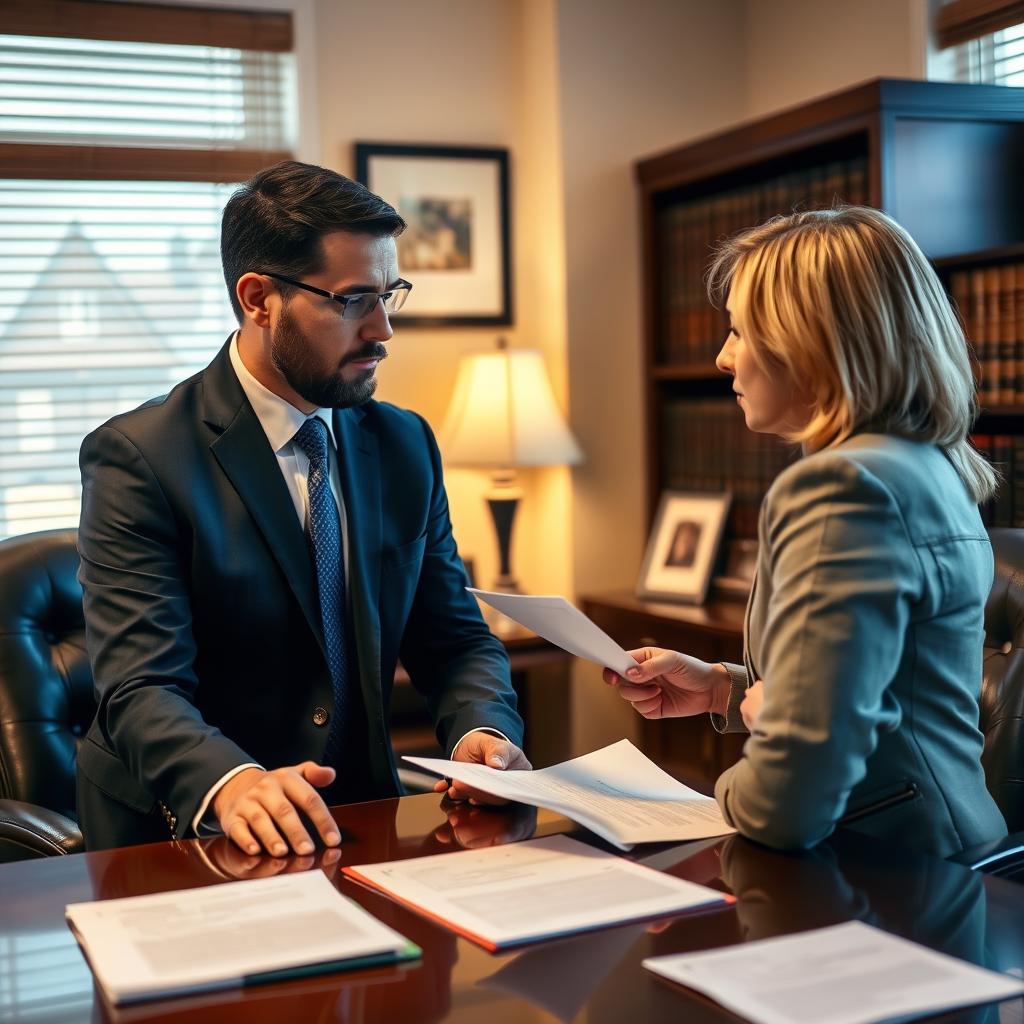
Spousal Support Lawyer Washington County, VA
Spousal support disputes in Washington County, Virginia, require a careful understanding of Virginia’s statutory framework and the local court system. Whether you are seeking support or responding to a support request, the outcome of your matter can significantly affect your financial stability for years to come. Washington County family law matters are heard in the Washington County Juvenile & Domestic Relations District Court and the Washington County Circuit Court, located in Abingdon. Mr. Sris, Owner and Founder of Law Offices Of SRIS, P.C., and the firm’s Of Counsel attorneys have extensive experience handling spousal support cases across Virginia, including in Washington County. They bring a practical approach to each case, working to achieve a fair resolution based on the specific facts and the statutory factors the court will consider. Reach Law Offices Of SRIS, P.C. at (888) 437-7747 to schedule a consultation.
What Spousal Support Means in Washington County, VA
Under Virginia law, spousal support—often called alimony—is governed by Va. Code § 20-107.1. When a marriage ends, a court may award support to a spouse who needs financial assistance, taking into account the statutory factors listed in the code. These factors include the duration of the marriage, each spouse’s earning capacity, contributions to the family’s well‑being, and the standard of living established during the marriage. In Washington County, these determinations are made in the context of the domestic‑relations courts that serve Abingdon and the surrounding communities.
The Washington County Juvenile & Domestic Relations District Court handles initial petitions for support, custody, and protective orders, while the Washington County Circuit Court has exclusive jurisdiction over divorce and equitable distribution. Because spousal support is often intertwined with property division and child custody, a single family law matter may involve both courts. Counsel appearing on family law matters at the local court in Washington County, VA, must be prepared to address the interplay between these tribunals. The firm’s Shenandoah location, at 505 N Main St, Suite 103, Woodstock, VA 22664, serves Washington County clients and provides representation at all stages of a support proceeding.
The court may award temporary support while a divorce is pending, known as pendente lite support, or a final support award as part of the divorce decree. Virginia is an equitable distribution state, meaning marital property is divided fairly, not necessarily equally. Spousal support is a separate determination, and the court must explain its reasoning based on the statutory factors. Whether you anticipate negotiating a separation agreement that includes support terms or you expect a contested hearing, having an experienced attorney who is familiar with Washington County’s local practices can make a meaningful difference.
How Mr. Sris and the Firm’s Of Counsel Attorneys Handle Spousal Support Cases
Mr. Sris and the firm’s Of Counsel attorneys begin by gathering a complete picture of the marriage and each spouse’s financial situation. They evaluate income, expenses, assets, debts, and any special circumstances—such as a spouse’s health or a history of non‑monetary contributions—that could affect the support calculation under Va. Code § 20-107.1. From the outset, they work to develop a strategy that aligns with the client’s goals, whether that means negotiating a voluntary support agreement or preparing for litigation.
If a case proceeds to court, the attorney presents evidence and argument to the judge, focusing on the applicable statutory factors and any unique considerations that could influence the amount or duration of support. The firm also assists clients with enforcement and modification of existing support orders. For example, if a supporting spouse fails to make payments, the court may hold that party in contempt and impose remedies such as wage garnishment or a judgment for arrears. When circumstances change—such as a job loss or a significant increase in income—the firm represents clients in seeking a modification of a support order in the Washington County Juvenile & Domestic Relations District Court. Throughout the process, the firm maintains open communication and keeps the client informed of all developments.
About Mr. Sris and the Firm’s Of Counsel Attorneys
Mr. Sris, Owner and Founder of Law Offices Of SRIS, P.C., has practiced law since 1997 and is a former prosecutor. That background gives him a thorough understanding of courtroom procedure and the ability to anticipate the arguments that opposing counsel may raise. He is admitted in Virginia, Maryland, the District of Columbia, New Jersey, and New York, and he concentrates his practice on family law, criminal defense, and immigration. Mr. Sris testified before the Virginia House Courts of Justice Committee in support of 2019 HB 635 (chief patron Del. David Bulova), a bill that addressed procedural aspects of equitable distribution.
The firm’s Of Counsel attorneys are experienced practitioners who, together with Mr. Sris, bring extensive combined legal experience. Results may vary. The team’s approach to spousal support matters is grounded in a thorough analysis of the facts, a firm command of Virginia’s family law statutes, and a commitment to working toward a resolution that protects the client’s financial interests. Whether through a negotiated settlement or a contested trial, the firm represents clients in Washington County with the same professionalism and attention to detail that has defined its practice since 1997.
Frequently Asked Questions
How is spousal support calculated in Virginia?
Virginia courts decide spousal support by considering the factors listed in Va. Code § 20-107.1, not by using a fixed formula. Those factors include the duration of the marriage, each spouse’s financial resources and earning capacity, the standard of living during the marriage, contributions to the family, and any history of fault that led to the dissolution. The judge has broad discretion to weigh each factor and tailor an award that provides for the needy spouse while requiring the payor spouse to contribute an amount that is reasonable under the circumstances. An experienced attorney can help you present evidence on the factors that are most important to your case.
Can a spousal support order be modified after a divorce?
Yes, a spousal support order can be modified if there has been a material change in circumstances that was not anticipated at the time of the original order. Common changes include a substantial increase or decrease in either spouse’s income, a job loss, a serious health condition, or remarriage of the recipient spouse. A party seeking modification must file a petition in the Washington County Juvenile & Domestic Relations District Court and demonstrate the change. The court will then reconsider the statutory factors and decide whether a new support amount is appropriate. Prompt action is advisable once a significant change occurs.
How long does spousal support last in Virginia?
The duration of spousal support is determined by the court based on the circumstances of the marriage. Support may be awarded for a defined period (rehabilitative support) to allow the recipient spouse to gain education or job skills, or it may be indefinite in long‑term marriages where one spouse cannot become self‑supporting. Indefinite support can be modified or terminated upon a showing of a material change in circumstances, such as the recipient’s remarriage or cohabitation. The court will state its reasoning in the final decree, explaining the basis for the duration of the award.
What happens if my spouse refuses to pay court‑ordered spousal support?
Failure to pay court‑ordered spousal support can result in contempt proceedings, which carry significant consequences. The recipient spouse may file a show cause petition in the Washington County Juvenile & Domestic Relations District Court. If the court finds the payor in contempt, it may order wage garnishment, place a lien on property, suspend a license, or even impose jail time in egregious cases. The court can also enter a judgment for the unpaid support, accruing interest. An attorney can help enforce the order and pursue the arrears owed.
Do I need a lawyer for a spousal support case in Washington County?
While you are not required to have a lawyer, spousal support matters involve complex legal standards and can have long‑lasting financial consequences, making legal guidance advisable. An attorney can evaluate the statutory factors, gather the necessary financial documentation, negotiate a support agreement, and present your case effectively in court. In Washington County, familiarity with the local courts and judicial preferences can also be a practical advantage. The firm offers consultations to discuss your situation and help you decide how to proceed.
What should I bring to a consultation about spousal support?
You should bring any documents that show your income, expenses, assets, and debts, as well as information about your spouse’s finances if you have it. Helpful items include tax returns, pay stubs, bank statements, credit card statements, mortgage documents, and any prenuptial or separation agreements. You should also be ready to discuss the history of the marriage, including significant dates and any relevant events. The more complete the financial picture, the more effectively the attorney can assess what a spousal support outcome might look like in your case.
If you have questions about spousal support in Washington County, contact Law Offices Of SRIS, P.C. at (888) 437-7747.
Virginia law primary sources:
- Virginia Code § 20-107.1 – Spousal support factors
- Washington County Circuit Court
- Virginia Judicial System
Attorney advertising. Prior results do not guarantee a similar outcome.
Case results depend on a variety of factors unique to each case.