
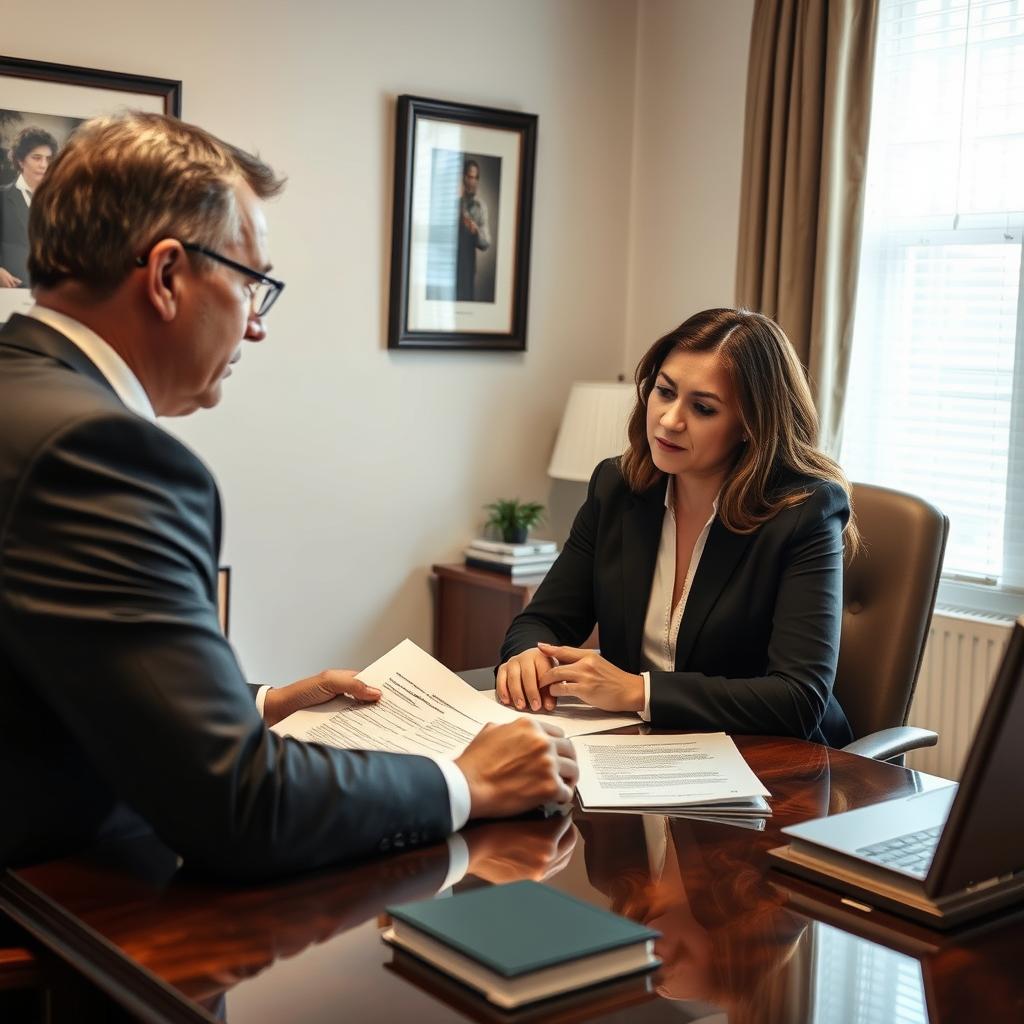
Spousal Support Lawyer Cortland County, NY
Spousal support—often called maintenance or alimony—is one of the most heavily negotiated issues in a New York divorce. In Cortland County, these questions arise before the Cortland County Supreme Court, which sits at 46 Greenbush Street, Suite 301, Cortland, NY 13045 and handles all matrimonial actions, including equitable distribution and maintenance determinations. The New York Domestic Relations Law (DRL) § 236 provides the framework, and the court applies codified statutory formulas to both temporary and post-divorce maintenance. For a spouse who has relied on the other’s income during the marriage, support can be essential to maintain financial stability while transitioning to independence. Mr. Sris and the firm’s Of Counsel attorneys concentrate a substantial portion of their family law practice on spousal support matters. Law Offices Of SRIS, P.C., founded in 1997, represents clients in Cortland, Homer, Marathon, McGraw, and throughout Central New York. To discuss your situation with an experienced spousal support lawyer, reach our firm at (888) 437-7747. Law Offices Of SRIS, P.C. – Advocacy Without Borders.
What Spousal Support Means in Cortland County
Spousal support in Cortland County follows the same statutory structure that governs the rest of New York, but local practice in the 6th Judicial District has its own characteristics. All maintenance issues are heard in the Supreme Court, not the Family Court. That means a spouse seeking support must either file a divorce action or already have one pending. The Cortland County Supreme Court, located at 46 Greenbush Street, Suite 301, Cortland, NY 13045, operates during regular business hours and requires counsel to be familiar with the judges’ individual part rules.
Under DRL § 236, New York courts apply a two-pronged maintenance framework: temporary (pendente lite) maintenance while the divorce is pending, and post-divorce maintenance after the judgment. The temporary maintenance formula is based on the parties’ incomes and the presence of any child support obligation. The post-divorce maintenance formula also uses income, but the court has broader discretion to consider the length of the marriage, the age and health of each spouse, the earning capacity of the recipient spouse, and whether one spouse sacrificed career opportunities for the family. In Cortland County, where many households have incomes tied to education, healthcare, manufacturing, and agriculture, the court routinely examines detailed financial statements submitted by both sides.
Cortland County is part of the Central New York region, and its economy differs from the downstate metropolitan areas. The statutory maintenance formulas still apply, but the local cost of living and typical incomes can influence how the formulas produce a presumptive amount. Where a presumptive award would be unjust or inappropriate, the court may deviate after setting forth its reasons. Mr. Sris and his Of Counsel regularly appear in the Cortland County Supreme Court and understand how to present income documentation, tax returns, and lifestyle evidence so the court has the full financial picture. The firm’s New York location serves clients across the county, from Cortland to Virgil, Truxton, and Preble.
How Mr. Sris and His Of Counsel Handle Spousal Support Cases
When someone contacts the firm about spousal support, the first step is a careful review of the marriage’s financial history. Income, assets, debts, and the standard of living during the marriage all matter. Mr. Sris and the firm’s Of Counsel attorneys also look at whether one spouse has the ability to pay while meeting his or her own needs. In many Cortland County cases, the paying spouse may have concerns about being ordered to pay an amount that leaves too little to live on. The firm works to present the facts so that the formula is applied correctly, and the resulting award is fair to both sides.
Several procedural steps can affect the course of a spousal support case. At the outset, either spouse may file a request for temporary maintenance. The court typically sets a briefing schedule, and the motion is decided on papers or after a short oral argument. If the parties cannot agree, the case proceeds through discovery—exchange of financial documents, depositions, and sometimes the use of a neutral financial experienced attorney. A settlement conference is mandatory before trial. Many Cortland County maintenance disputes resolve through negotiation, often with the assistance of mediation or collaborative law, because a negotiated agreement gives both parties more control than leaving the decision to a judge. The firm’s attorneys are experienced in all of these processes and tailor the approach to the client’s priorities, whether that means moving quickly toward a resolution or litigating a disputed issue.
Post-divorce spousal support awards may be durational or non-durational, depending on the length of the marriage and other statutory factors. If circumstances change—such as a substantial change in either party’s income—the court may modify an existing maintenance order. Mr. Sris and his Of Counsel handle modifications in Cortland County as well. They also address enforcement when a former spouse stops paying. The firm works to protect the recipient’s financial position while ensuring that the payor’s obligations are based on accurate, up-to-date information. Throughout the case, the client receives clear explanations of each step. Results vary based on the specific facts of each case.
About Mr. Sris and the Firm’s Of Counsel Attorneys
Mr. Sris, Owner and Founder of Law Offices Of SRIS, P.C., is a former prosecutor who founded the firm in 1997. He is admitted to practice in New York, Virginia, Maryland, the District of Columbia, and New Jersey. Mr. Sris testified before the Virginia House Courts of Justice Committee in support of 2019 HB 635 (chief patron Del. David Bulova). His extensive experience with financial litigation and negotiation informs his approach to spousal support matters, where income analysis and ability-to-pay arguments often decide the outcome.
The firm’s Of Counsel attorneys bring extensive combined legal experience to family law cases across the firm’s multi-state practice. The team works collaboratively on spousal support cases, so clients benefit from multiple perspectives on strategy, discovery, and settlement. Law Offices Of SRIS, P.C. has handled a substantial number of family law matters since its founding. Results may vary.
Frequently Asked Questions
How does a court decide spousal support in New York?
New York courts apply statutory formulas under DRL § 236 to calculate temporary and post-divorce maintenance, using the parties’ incomes and considering the length of the marriage. The temporary maintenance formula produces a presumptive amount based on the payor’s and recipient’s incomes, with adjustments for child support. For post-divorce maintenance, the court also weighs factors such as the age and health of the spouses, their earning capacities, the need of one spouse to incur education or training expenses, and whether one spouse hindered the other’s career. The judge is not bound by the formula if it would be unjust or inappropriate, but must explain any deviation. Mr. Sris and his Of Counsel help clients present the financial evidence the court needs to apply the formula correctly. For a consultation, reach our firm at (888) 437-7747.
What is the difference between temporary and post-divorce spousal support?
Temporary maintenance is awarded while the divorce is pending; post-divorce maintenance is set in the final judgment. Temporary maintenance helps the lower-earning spouse meet current living expenses and legal fees during the divorce process. It is calculated under a specific statutory formula that uses the parties’ gross incomes. Post-divorce maintenance is determined at the conclusion of the case and is based on a separate formula that considers the length of the marriage and additional statutory factors. The amount and duration of temporary maintenance do not dictate the final post-divorce award, though they can be persuasive. In Cortland County, motions for temporary maintenance are heard before the court schedules the case for trial, and the decision can shape early settlement discussions.
Can a spousal support order be changed after the divorce?
Yes, a spousal support order may be modified if there is a substantial change in circumstances, such as a significant change in either party’s income. Either spouse can petition the Cortland County Supreme Court for a modification. The court will examine whether the change was unforeseen and whether it renders the existing order unfair. Common reasons include job loss, disability, retirement, or a substantial increase in the recipient spouse’s earnings. New York law does not allow modification solely because the payor regrets the original agreement. Mr. Sris and his Of Counsel represent clients on both sides of modification petitions, focusing on whether the change in circumstances meets the legal standard. To discuss the details of your situation, contact Law Offices Of SRIS, P.C. at (888) 437-7747.
What factors does the court consider when setting the duration of spousal support?
Under DRL § 236, the court considers the length of the marriage, the age and health of each spouse, the recipient’s earning capacity, and whether the recipient needs time for education or training. For marriages of shorter duration, maintenance may be limited to a few years. For longer marriages—especially those of 20 years or more—the court may order maintenance of an indefinite duration or a longer term. The court also looks at whether one spouse contributed to the other’s career advancement during the marriage. Evidence such as vocational assessments, medical records, and employment history is crucial. In Cortland County, the court evaluates these factors in light of the local job market and cost of living. Mr. Sris and his Of Counsel help clients build the factual record so the duration decision is grounded in reliable evidence.
Do I need a lawyer for a spousal support case in Cortland County?
You are not legally required to hire a lawyer for a spousal support case in Cortland County, but navigating New York’s maintenance formulas and procedural rules without legal guidance can be challenging. The Supreme Court expects parties to follow financial disclosure requirements and to present income documentation correctly. Mistakes in the calculation of income or the application of the formula can lead to an award that does not reflect your actual financial situation. A lawyer can also help you evaluate settlement proposals and, if necessary, present your case at a hearing. Mr. Sris and his Of Counsel offer consultation to discuss whether representation is right for your matter. For a consultation, reach our firm at (888) 437-7747.
What happens if my former spouse stops paying court-ordered spousal support?
If a former spouse stops paying, the recipient can file an enforcement proceeding in Cortland County Supreme Court to compel payment. The court has several tools to enforce a maintenance order: it can enter a money judgment, garnish wages, seize assets, or hold the non-paying spouse in contempt. Contempt can result in fines or, in extreme cases, incarceration. The paying spouse may raise defenses such as inability to pay or a change in circumstances. It is important to act promptly, because delaying enforcement can allow arrears to grow and make collection harder. The firm’s attorneys represent both recipients seeking enforcement and payors facing contempt allegations. Contact Law Offices Of SRIS, P.C. at (888) 437-7747 to discuss enforcement options.
For official legal information: New York Domestic Relations Law § 236 · Cortland County Supreme Court · New York State Unified Court System
The firm’s principal office is located in Buffalo, New York, approximately 150 miles from Cortland County. Consultations are available at the Buffalo office or remotely as appropriate.
Attorney advertising. Prior results do not guarantee a similar outcome. Case results depend on a variety of factors unique to each case. Results may vary.