
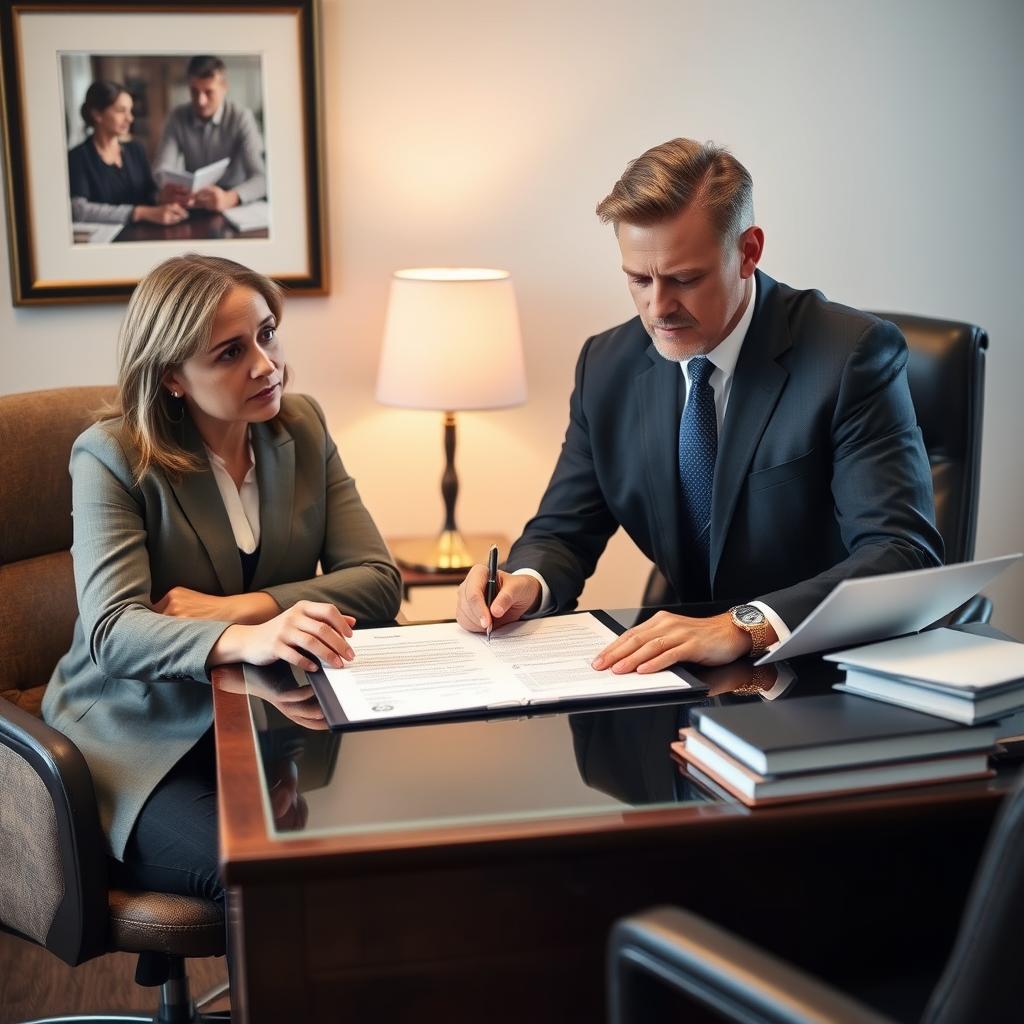
Separation Agreement Lawyer Wayne County, NY
You and your spouse have decided to separate. You live in Wayne County, maybe in Lyons, Newark, or Palmyra, and you want to settle the terms of your separation—how property will be divided, who will stay in the house, how the children will be cared for, and whether one of you will provide support to the other. A separation agreement can put all of that in writing and give both of you clarity without a contested courtroom fight. Mr. Sris and his Of Counsel team at Law Offices Of SRIS, P.C. help individuals and families throughout Wayne County draft, negotiate, and finalize separation agreements that stand up to court scrutiny and lay a clear foundation for whatever comes next. To discuss your situation and find out whether a separation agreement is right for you, call (888) 437-7747. Law Offices Of SRIS, P.C. – Advocacy Without Borders.
Strategy Options When Creating a Separation Agreement in Wayne County
The path to a separation agreement usually starts with a series of conversations—with your spouse, with your own lawyer, and often with both attorneys together. In Wayne County, many couples choose to work through the terms in a collaborative, low-conflict way that avoids unnecessary court appearances. Mr. Sris and his Of Counsel can help you assess whether negotiation, mediation, or a more structured four-way settlement conference is the best fit for your family. If you and your spouse already agree on the major points—parenting time, support, property—then a separation agreement can often be drafted and finalized relatively efficiently. When disagreements remain, counsel for each side can negotiate the unresolved issues without the stress and expense of litigation. Whichever approach fits your case, having an experienced attorney review and structure the agreement helps protect your interests and makes it far more likely the agreement will be honored by a court later.
What to Expect When You Pursue a Separation Agreement
Wayne County family law matters are handled in two court systems. The Supreme Court for the county, located at 54 Broad Street in Lyons, hears divorce and equitable distribution cases. The Family Court addresses custody, visitation, child support, and family offense petitions. A separation agreement that fully resolves all financial and parenting issues can be incorporated into a later divorce judgment in Supreme Court. While the agreement itself is often reached outside the courtroom, the law requires that any agreement affecting children be in the child’s best interests and that financial provisions be fair when made. Mr. Sris and his Of Counsel will review your circumstances, communicate with the other side, draft the agreement, and provide the advice you need to decide whether to sign. If you later pursue a divorce, the signed separation agreement can serve as one of the statutory grounds, potentially simplifying the process.
Understanding the Legal Framework—Narrative Penalty Overview
A separation agreement in New York is a contract between spouses. There is no penalty provision as such, but the consequences of a poorly drafted or one-sided agreement can be severe. If the agreement is later challenged, a court may refuse to enforce all or part of it, undoing the certainty you thought you had. A spouse who signs without full disclosure or independent legal advice may have grounds to set it aside. That is why each party should have their own attorney—even in an amicable separation. Mr. Sris and his Of Counsel ensure the terms are fair under New York’s equitable distribution standards, that child support adheres to the statutory formula, and that the agreement addresses all necessary issues so a court will enforce it later. The goal is a durable document that protects your future.
About Mr. Sris and His Of Counsel Team
Mr. Sris, Owner and Founder of Law Offices Of SRIS, P.C., has been practicing since 1997. His experience as a former prosecutor gives him insight into how to structure agreements that hold up under legal scrutiny and how to negotiate effectively. He works with a team of Of Counsel attorneys who bring their own backgrounds to the firm. Together, they serve clients across Wayne County and throughout New York. When you work with us, you are drawing on the combined abilities of a multi-state practice that concentrates part of its effort on family law matters—including separation agreements, divorce, custody, and support. To learn more about how we can assist you, call (888) 437-7747.
Frequently Asked Questions
What exactly is a separation agreement in New York?
A separation agreement is a written contract between spouses that settles all issues arising from the marriage, including property division, spousal support, child custody, and child support. It allows you to establish the terms under which you will live apart without immediately filing for divorce. In New York, a properly executed separation agreement can also serve as grounds for a no-fault divorce after you have lived apart for the required period. The agreement must be signed and acknowledged in a manner that entitles it to be recorded, and both sides benefit from representation by their own lawyers.
Do I really need a lawyer for a separation agreement?
While New York law does not require you to have a lawyer, signing a separation agreement without one can carry significant risks. Even in an amicable situation, each spouse needs an independent review of the financial disclosures, an analysis of whether the proposed terms comply with New York’s equitable distribution and child support laws, and protection against hidden liabilities. An experienced attorney can spot unintended waivers—of an inheritance, a pension, or future support—that a layperson might overlook. Having your own attorney before you sign is the most reliable way to build an agreement that will be enforced later.
How does a separation agreement affect a later divorce in Wayne County?
A separation agreement can serve as both the grounds for divorce and the settlement of all issues, often allowing for a simpler, less costly uncontested divorce. Under New York Domestic Relations Law § 170, a valid separation agreement, along with substantial compliance with its terms and the required period of living apart, is one of the ways to obtain a divorce. The agreement will be incorporated into the divorce judgment, resolving property, support, and custody in the same way you agreed. Without an agreement, you may need to litigate those issues after filing.
What if my spouse will not sign a separation agreement?
If one spouse refuses to sign, the agreement cannot be created by one side alone—you will not have a binding separation agreement. In that scenario, your options include pursuing mediation or working through attorneys to continue negotiations. If an impasse remains, you can proceed directly to a divorce action. In some cases, filing for divorce and then negotiating a settlement during the divorce process—called a marital settlement agreement—may bring about the same result. Mr. Sris and his Of Counsel can help you evaluate which approach best fits your situation.
Can we modify a separation agreement after it is signed?
Yes, a separation agreement can be modified if both parties agree in writing or, in limited cases, by court order. Typically, the parties can sign a written amendment that updates child support, custody, visitation, or spousal support provisions. If one party refuses to agree to a change, the other may need to petition the court to modify the agreement. However, courts generally respect the original contract and will only modify terms—especially property division—under very narrow circumstances. The agreement should be drafted with provisions for how modifications will be handled.
What should a separation agreement include?
A comprehensive separation agreement should address property division (including real estate, bank accounts, retirement assets), spousal maintenance, child custody and parenting time, child support, health insurance, and tax considerations. It also must state how debts will be divided, who continues to live in the marital home, and how future disputes will be resolved. In New York, the agreement cannot waive child support below the statutory formula without a specific justification, and the child’s best interests always govern custody provisions. Working with an attorney helps ensure all required elements are covered.
How long does it take to get a separation agreement in Wayne County?
The time needed depends largely on how soon the parties can agree on terms, not on any court-imposed deadline. Some couples work out a separation agreement in a matter of weeks; others, especially those with complex assets or contentious parenting issues, may take several months. The agreement itself is not filed with the court unless it later becomes part of a divorce. Therefore, the pace is driven by negotiation and cooperation, not by judicial scheduling. Mr. Sris and his Of Counsel can help you set realistic expectations based on your case.
Is a separation agreement legally binding in New York?
Yes, once signed and properly acknowledged, a separation agreement is an enforceable contract under New York law. Courts will generally enforce its terms as long as the agreement is fair when made, both parties entered into it voluntarily with full disclosure, and the provisions do not violate public policy—especially where children are concerned. If a spouse later violates the agreement, the other can seek judicial enforcement, often through a motion in Supreme or Family Court.
How are assets divided in a separation agreement?
New York follows equitable distribution, meaning the division must be fair, though not necessarily equal. The agreement identifies what is marital property—assets acquired during the marriage—and what is separate. The spouses can decide how to divide the marital portion, but the terms should reflect a reasonable outcome under the statutory factors. A separation agreement that arbitrarily awards all assets to one spouse without a fair basis can be challenged later. Your attorney will help you understand what might be considered a fair settlement.
What if my spouse hides assets during the separation agreement process?
If you suspect hidden assets, full financial disclosure is required before you should sign anything. Both parties must exchange sworn statements of net worth and supporting documents. If one side later uncovers hidden assets, the agreement can be set aside on the grounds of fraud or overreaching. Working with an attorney who requests and examines the financial documentation before you agree to terms is the trusted way to protect yourself. We can also advise you on steps to take if you discover concealment after the agreement is finalized.
Our New York location—by appointment only—is at 50 Fountain Plaza, Suite 1400, Office No. 142, Buffalo, NY 14202. For questions about separation agreements in Wayne County, call (888) 437-7747 to reach Mr. Sris and his Of Counsel team.
Attorney advertising. Prior results do not guarantee a similar outcome. Case results depend on a variety of factors unique to each case.