
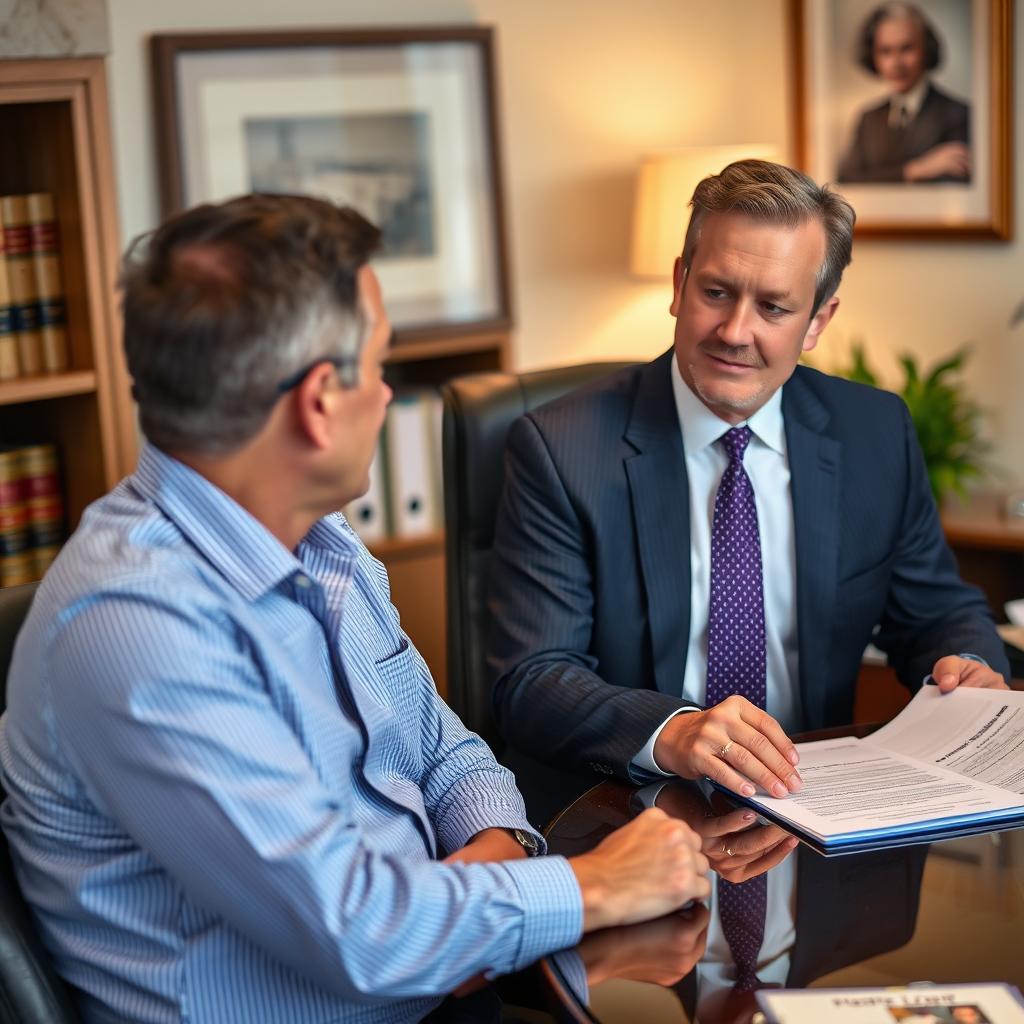
Separation Agreement Lawyer Staten Island, NY
You and your spouse have decided to separate, and you know you need a written agreement to define your rights, support obligations, and property division. In Staten Island, a separation agreement is a contract that can resolve all outstanding issues between you while you live apart — and, if properly drafted, it can serve as the foundation for an uncontested divorce later. At Law Offices Of SRIS, P.C., Mr. Sris and his Of Counsel team guide clients through the drafting and negotiation of separation agreements that reflect the realities of New York family law. Reach our firm at (888) 437-7747 to request a consultation. Law Offices Of SRIS, P.C. – Advocacy Without Borders.
What Separation Agreements Mean in Staten Island, NY
In Richmond County and throughout New York, a separation agreement is a legally binding contract between spouses that settles all financial, property, and support matters. Under New York Domestic Relations Law, a valid separation agreement must be in writing, subscribed by both parties, and acknowledged in the same manner as a deed. It can address equitable distribution of marital property, spousal maintenance, child custody, parenting time, and child support — though any provision regarding children remains subject to the court’s ongoing review based on the best interests of the child.
For Staten Island residents, the path from a signed separation agreement to a divorce judgment often involves the Richmond County Supreme Court at 18 Richmond Terrace. New York permits a no-fault divorce when a couple has lived apart under a written separation agreement for at least one year, or when the marriage has been irretrievably broken down for six months. A thoughtfully drafted agreement can therefore streamline the divorce process and reduce conflict. Mr. Sris and his Of Counsel concentrate their practice on crafting agreements that anticipate the long-term consequences of separation and divorce, with particular attention to the statutes and local customs that shape family law proceedings in Richmond County.
Many couples in Staten Island use separation agreements to resolve matters like the division of a family home, retirement assets, business interests, and the payment of spousal support. New York’s maintenance guidelines offer a statutory formula for temporary and post-divorce spousal support, but parties may agree to different terms in a separation agreement so long as the agreement is fair and not unconscionable. Without legal guidance, however, it is easy to overlook critical tax implications, future modification rights, or the potential for the agreement to be set aside if it is later challenged. Mr. Sris works with his Of Counsel to ensure each agreement is comprehensive and stands up to judicial scrutiny.
How Mr. Sris and His Of Counsel Handle Separation Agreement Cases
Every separation agreement begins with a thorough review of the parties’ financial situation, their goals for the future, and any contested issues. Mr. Sris and his Of Counsel help clients inventory marital assets, assess the value of pensions and other deferred compensation, and identify separate property that should be excluded. They then draft a clear, enforceable agreement that sets forth each spouse’s rights and obligations. Negotiation is often the preferred path, but when the parties cannot agree, the firm is prepared to litigate the disputed terms in Richmond County Supreme Court.
Once the agreement is signed, it can be incorporated by reference into a subsequent divorce decree, making its terms enforceable as a court order. If a spouse violates the agreement — for example, by failing to pay spousal support or by hiding assets — the firm can bring an enforcement proceeding in the Supreme Court. Mr. Sris and his Of Counsel take a practical approach, working to resolve post-judgment disputes efficiently while protecting the client’s underlying rights. Throughout the process, the firm’s multi-state experience allows it to address issues that arise when one spouse moves out of New York, ensuring the agreement remains enforceable across jurisdictions.
About Mr. Sris and His Of Counsel Team
Mr. Sris, Owner and Founder of Law Offices Of SRIS, P.C., has practiced family law since 1997. A former prosecutor, he brings a disciplined approach to every case, whether it involves negotiation or litigation. His legislative experience — he testified before the Virginia House Courts of Justice Committee in support of 2019 HB 635 (chief patron Del. David Bulova) — reflects his thorough understanding of the interplay between statutes and real-life family law outcomes. Working alongside Mr. Sris, his Of Counsel team contributes extensive combined legal experience in matrimonial and family law matters. Together, they represent clients in Staten Island and throughout the New York metropolitan area.
All Of Counsel attorneys are engaged through Excella, and the firm’s practice is concentrated in family law, divorce, and related disputes. The team understands the procedural landscape of Richmond County courts and the practical considerations that drive separation agreement negotiations. When you need a separation agreement lawyer in Staten Island, you can reach Mr. Sris and his Of Counsel at (888) 437-7747 to discuss your situation.
Frequently Asked Questions
What is a separation agreement in New York?
A separation agreement is a written contract between spouses that resolves all financial and property issues arising from their separation, and it can serve as a basis for an uncontested divorce. Under New York law, the agreement must be signed and acknowledged, and its terms regarding equitable distribution, maintenance, and property division are generally binding. However, provisions concerning children — such as custody and support — are subject to the court’s ongoing review to ensure they are in the child’s best interests. The agreement must be fair and reasonable when made, or it risks being set aside. Mr. Sris and his Of Counsel help Staten Island clients negotiate and draft agreements that comply with New York’s legal requirements.
Do I need a lawyer to draft a separation agreement in Staten Island?
You are not legally required to have a lawyer draft your separation agreement, but having experienced legal representation helps protect your rights and ensures the agreement will be enforceable. A separation agreement often involves complex financial disclosures, tax implications, and long-term support obligations. Without legal guidance, one spouse may inadvertently waive important claims or agree to terms that are not in their best interests. Law Offices Of SRIS, P.C. can review your circumstances and draft an agreement that meets your needs while anticipating potential enforcement challenges in Richmond County courts.
How can a separation agreement be enforced in Staten Island?
If one spouse fails to comply with a separation agreement, the other spouse may bring an enforcement proceeding in Richmond County Supreme Court. Because the agreement is a contract, its breach can be remedied through a court order for specific performance, money judgment, or contempt if the agreement has been incorporated into a divorce decree. Mr. Sris and his Of Counsel handle enforcement actions, working to secure compliance through negotiation or, when necessary, litigation. The key is having a well-drafted agreement that clearly spells out each party’s obligations.
Can a separation agreement be modified after it is signed?
A separation agreement can be modified only by mutual consent or by a court in limited circumstances. If both parties agree to change the terms, they can execute a written modification that satisfies the same formalities as the original agreement. However, a court will not modify an agreement just because one party later regrets its terms; there must be grounds such as fraud, mistake, or unconscionability. For provisions involving children, a court may modify custody or support terms based on a substantial change in circumstances, always guided by the child’s best interests. Mr. Sris advises clients on whether modification is feasible and represents them if a dispute arises.
What happens if my spouse does not agree to a separation agreement?
If your spouse refuses to sign a separation agreement, you may still pursue a divorce, but you will need to litigate the unresolved financial and property issues in court. In New York, a divorce can be granted on the ground of irretrievable breakdown of the marriage for six months even without a separation agreement. The court will then determine equitable distribution, spousal maintenance, and other contested matters after trial. While negotiations are always preferred, Mr. Sris and his Of Counsel are prepared to advocate for your interests in Richmond County Supreme Court when agreement cannot be reached.
Why choose Law Offices Of SRIS, P.C. for a separation agreement in Staten Island?
Mr. Sris and his Of Counsel bring extensive combined legal experience to separation agreement negotiations and enforcement, and the firm has a long history of representing clients in Staten Island family law matters. Founded in 1997, Law Offices Of SRIS, P.C. Concentrates its practice on family law, including divorce, equitable distribution, and spousal support. Mr. Sris’s background as a former prosecutor gives him a distinct understanding of how to build and present a case, whether at the negotiating table or in court. The firm’s multi-state capabilities also mean that issues crossing state lines — such as out-of-state property or a spouse who relocates — are handled with a comprehensive strategy. To discuss your separation agreement, call (888) 437-7747.
To learn more about family law representation in other New York localities, visit our pages for Manhattan, Brooklyn, Queens, and Nassau County.
Additional resources: Richmond County Supreme Court | New York Domestic Relations Law
Attorney advertising. Prior results do not guarantee a similar outcome.
Case results depend on a variety of factors unique to each case.
Results may vary.