
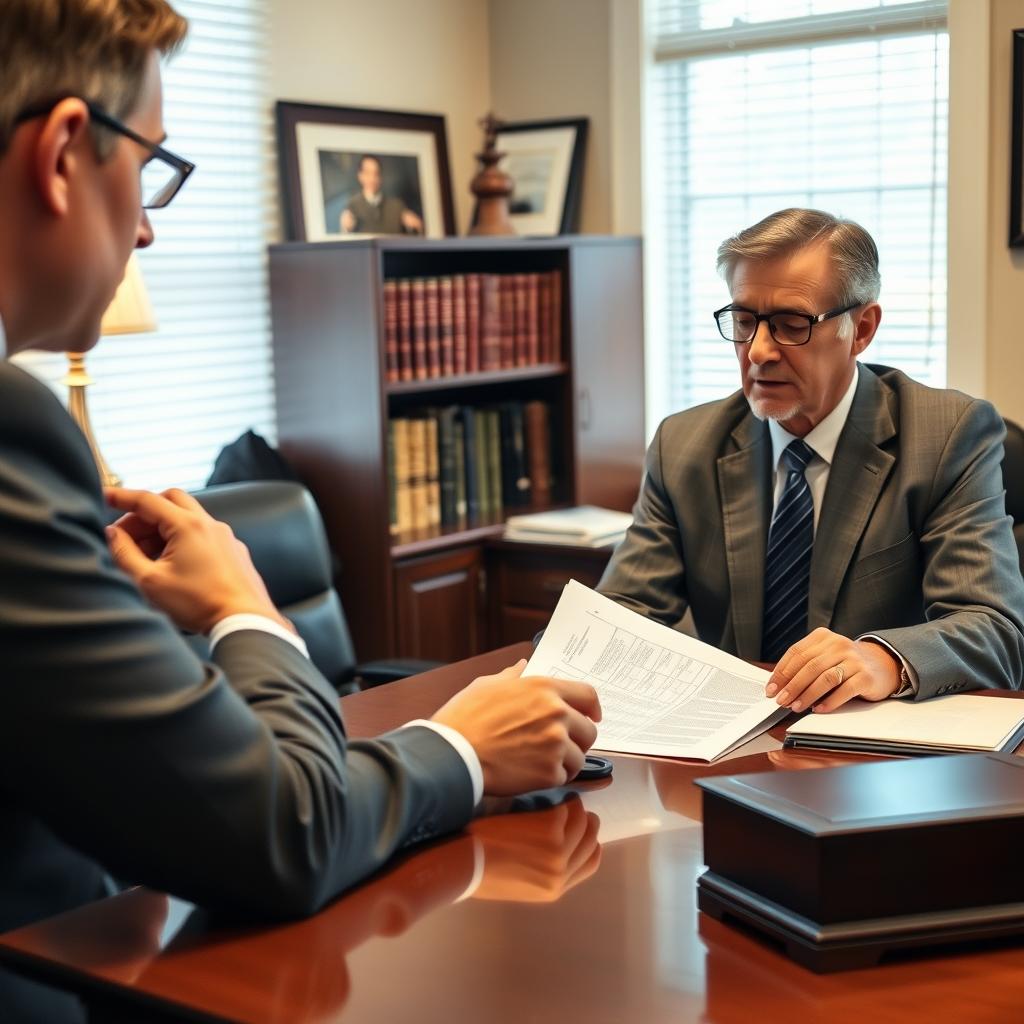
Retirement Asset Division Lawyer Oswego County
You need a Retirement Asset Division Lawyer Oswego County to protect your financial future during a divorce. New York law treats pensions and 401(k)s as marital property subject to equitable distribution. A Qualified Domestic Relations Order (QDRO) is the required legal instrument for division. Law Offices Of SRIS, P.C.—Advocacy Without Borders. provides direct counsel on these complex matters. (Confirmed by SRIS, P.C.)
Statutory Definition of Retirement Asset Division in New York
Retirement asset division in Oswego County is governed by New York Domestic Relations Law § 236(B)(5) — Marital Property — subject to Equitable Distribution. This statute classifies pensions, 401(k)s, IRAs, and other retirement benefits accrued during the marriage as marital property. The court has broad discretion to divide these assets fairly, not necessarily equally, based on multiple statutory factors. The maximum penalty for mishandling a division is the loss of a significant portion of your retirement savings and potential tax liabilities.
The legal process requires precise valuation and a court order. Retirement accounts are not simply split by writing a check. A Qualified Domestic Relations Order (QDRO) is a mandatory separate judgment. This order directs the retirement plan administrator to pay a specified share to the alternate payee, your former spouse. Without a properly drafted and court-approved QDRO, the plan will not disburse funds. This can derail a settlement and create long-term financial conflict.
Valuation is the first critical step. The marital portion of a defined benefit pension requires an actuarial calculation. For defined contribution plans like a 401(k), the marital portion is the total value accrued from the date of marriage to the date of the divorce action’s commencement. Market fluctuations between valuation and division are a common point of contention. An experienced Retirement Asset Division Lawyer Oswego County will secure a valuation date in the stipulation or court order to lock in the amount.
What is considered a marital retirement asset?
Any retirement benefit earned or contributed to during the marriage is marital property in Oswego County. This includes the growth on pre-marital balances during the marriage. Common assets are employer pensions, 401(k)s, 403(b)s, IRAs, military pensions, and New York state retirement system accounts. The portion accrued before marriage or after the divorce filing date is typically separate property.
How is a pension divided in an Oswego County divorce?
A pension is divided using a Qualified Domestic Relations Order that specifies the alternate payee’s share. The division can use a “shared interest” or “separate interest” method. The shared interest method gives the ex-spouse a percentage of each future pension payment. The separate interest method creates a distinct, separate account for the ex-spouse. The method impacts when payments begin and their total value.
What is the difference between equitable distribution and community property?
New York is an equitable distribution state, not a community property state. Equitable distribution means a fair, but not automatically equal, split of marital assets based on statutory factors. Community property states mandate a presumptive 50/50 split. An Oswego County judge considers factors like the length of the marriage, each spouse’s income, and future financial circumstances when dividing retirement assets. Learn more about Virginia legal services.
The Insider Procedural Edge in Oswego County Courts
Retirement division cases in Oswego County are heard at the Oswego County Supreme Court, located at 25 East Oneida Street, Oswego, NY 13126. This court handles all matrimonial actions, including the complex filings for QDROs. Procedural specifics for Oswego County are reviewed during a Consultation by appointment at our Oswego County Location. The local court requires strict adherence to New York uniform rules for matrimonial actions.
The timeline for finalizing a retirement division is often the longest part of a divorce. After a judgment of divorce is entered, you have 90 days to submit a proposed QDRO for the judge’s signature. Delays are common if the QDRO is rejected by the plan administrator for technical errors. Each retirement plan has its own model QDRO language and approval process. Filing fees for matrimonial actions are set by New York State law and are paid at the County clerk’s Location.
Local practice requires that all retirement assets be identified and valued in the Statement of Net Worth. This financial disclosure is mandatory. Failure to fully disclose a retirement account can result in the court reopening the case and awarding sanctions. Oswego County judges expect attorneys to have a working knowledge of QDRO drafting. They will not guide you through the process. Having a lawyer who understands the coordination between the court order and the plan’s requirements is a decisive advantage.
What court handles divorce and asset division in Oswego County?
The Oswego County Supreme Court has exclusive jurisdiction over divorce and the division of marital assets like retirement accounts. All petitions for divorce and related motions for QDROs are filed with the County Clerk at this location. The Matrimonial Part of the Supreme Court manages the specific procedures and hearings.
How long does it take to get a QDRO approved?
From drafting to final approval, a QDRO can take several months. The court’s review may take 4-8 weeks after submission. The plan administrator’s review can take another 60-90 days. Complex plans or objections from either party can extend this timeline significantly. Starting the QDRO process early is critical. Learn more about criminal defense representation.
Penalties & Defense Strategies for Retirement Division
The most common penalty in a poorly handled retirement division is the loss of 30% to 50% of the marital portion of your retirement assets. This is not a court-imposed fine but the direct financial consequence of an unfavorable equitable distribution. The court’s division is final and difficult to modify. Tax penalties from improper transfers are also a major risk.
| Offense / Error | Penalty / Consequence | Notes |
|---|---|---|
| Failing to secure a QDRO | Loss of access to awarded share; ex-spouse retains full asset. | The divorce judgment alone does not divide the account. |
| Incorrect QDRO language | Rejection by plan administrator; delays of 6+ months; additional legal fees. | Each plan (e.g., NYSLRS, TIAA, Fidelity) has specific requirements. |
| Early withdrawal without QDRO | 10% IRS early withdrawal penalty + ordinary income taxes on full amount. | A QDRO allows a penalty-free transfer to an IRA for the alternate payee. |
| Undervaluing a pension | Unequal distribution; receiving less than your equitable share. | Requires an actuary for defined benefit plans. |
| Non-disclosure of an account | Court can award 100% of hidden asset to other spouse; sanctions for contempt. | Full disclosure in the Statement of Net Worth is mandatory. |
[Insider Insight] Oswego County judges and prosecutors in family court matters prioritize finality and clean paperwork. They have little patience for post-judgment motions caused by attorney error in drafting QDROs. The local trend is to enforce the terms of the stipulation of settlement strictly. If your agreement says a QDRO will be prepared, the court expects it to be done correctly and on time. Proposing a QDRO that does not conform to the plan’s rules is seen as a waste of judicial resources. Your defense is to hire an attorney who drafts these orders routinely.
Can my ex-spouse take more than half of my 401(k)?
Yes, an Oswego County court can award more than half of a 401(k)’s marital portion to one spouse. Equitable distribution is based on multiple factors, not a 50/50 rule. If one spouse has much lower future earning capacity or sacrificed a career, the court may adjust the division to achieve fairness. The specific percentage must be justified in the settlement or court decision.
What are the tax implications of dividing an IRA?
Dividing an IRA in a divorce requires a specific transfer incident to divorce order. If done correctly pursuant to the divorce decree, the transfer is tax-free. The receiving spouse must retitle the IRA in their own name. Taking a cash distribution instead of a transfer triggers immediate income taxes and potential early withdrawal penalties.
Why Hire SRIS, P.C. for Your Oswego County Retirement Division
Our lead attorney for complex asset division has over fifteen years of experience drafting and litigating QDROs. This attorney’s background includes direct work with pension plan administrators and actuaries to ensure orders are approved without delay. We understand the precise language required by the New York State and Local Retirement System, private corporations, and federal plans. Learn more about DUI defense services.
SRIS, P.C. approaches retirement asset division with a focus on preserving capital and avoiding tax traps. We do not treat QDROs as a simple form-filling exercise. We obtain the plan’s specific model language and draft the proposed order to meet those exact specifications. Our team coordinates with your financial advisor or accountant to understand the full picture. We litigate aggressively if the other party is hiding assets or refusing to cooperate with the division process.
The firm’s structure supports your case. We have the resources to manage the valuation of complex pensions and stock options. Our goal is to secure a division order that is both court-approved and administrator-approved. This prevents the common nightmare of a “failed” QDRO that leaves assets locked and unresolved for years. For an affordable retirement asset division lawyer Oswego County residents can consult, our process is clear and direct.
Localized FAQs on Retirement Asset Division in Oswego County
How is a New York State pension divided in divorce?
A New York State pension is divided using a specific Domestic Relations Order for the NYSLRS. The order must specify the retirement plan, the member’s information, and the alternate payee’s share as a percentage or fixed amount. The division is based on the pension credits earned during the marriage.
Do I need a separate lawyer for a QDRO?
Your divorce attorney should handle the QDRO as part of the matrimonial action. If they lack specific experience, they should associate with a lawyer who specializes in retirement division. Using a separate, specialized QDRO drafting service can create coordination problems and extra cost.
What happens to my 401(k) if I get divorced?
Your 401(k) will be divided according to your divorce settlement or court order. The marital portion is transferred to your ex-spouse’s retirement account via a QDRO. This is a tax-free transfer if executed correctly. You cannot simply withdraw the money and give it to them. Learn more about our experienced legal team.
Can I divide retirement assets without going to court?
Yes, if you reach a full settlement agreement, you can avoid a trial. However, the agreement must be incorporated into your divorce judgment. The QDRO itself is still a court order that must be signed by a judge and submitted to the plan administrator for approval.
How much does a retirement asset division lawyer cost?
Costs vary based on case complexity, the number of accounts, and whether valuation experienced attorneys are needed. Many attorneys handle QDRO drafting for a flat fee after the divorce is settled. Litigating the division of assets during the divorce involves hourly billing.
Proximity, CTA & Disclaimer
Our Oswego County Location serves clients throughout the region, including Fulton, Mexico, and Pulaski. Procedural specifics for Oswego County are reviewed during a Consultation by appointment at our Oswego County Location. For immediate guidance on dividing your pension or 401(k), contact our team. Consultation by appointment. Call 24/7.
Law Offices Of SRIS, P.C.—Advocacy Without Borders.
Past results do not predict future outcomes.