
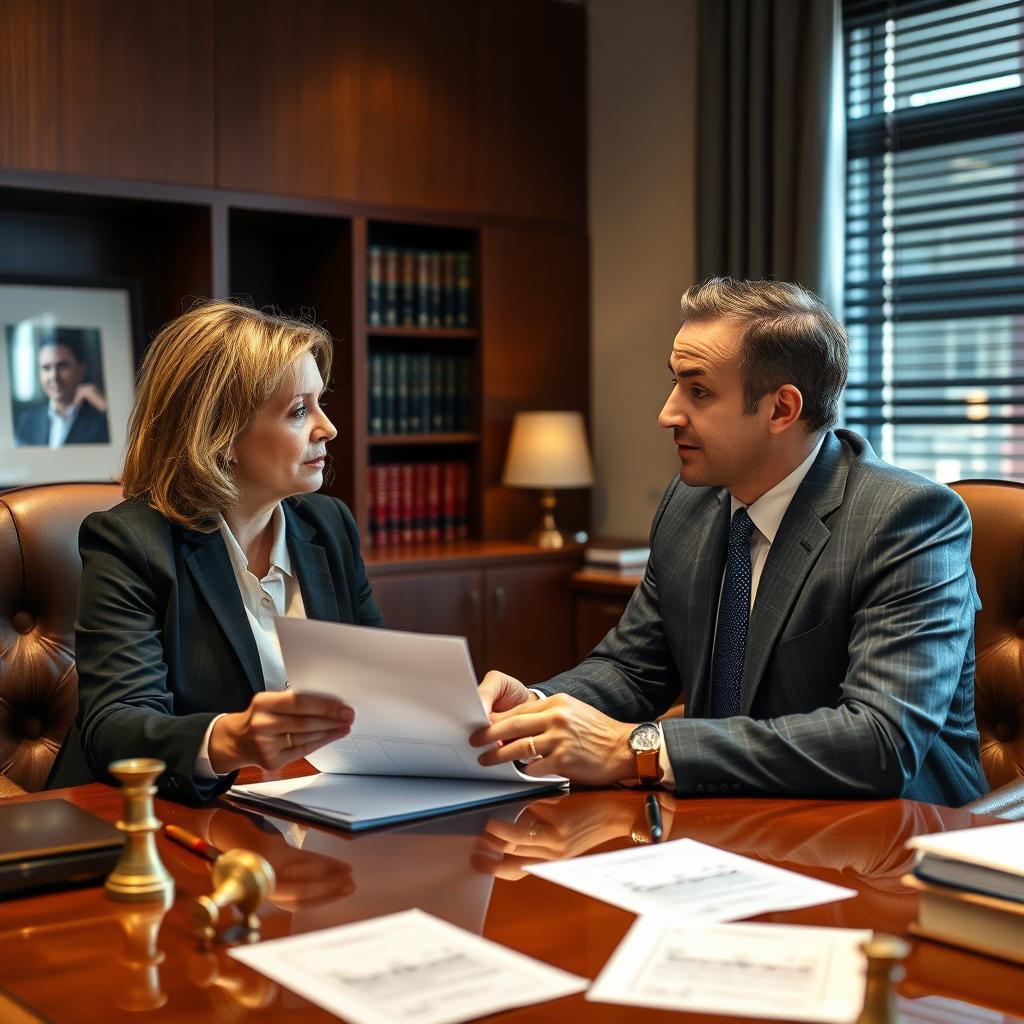
Postnuptial Agreement Lawyer New York County, NY
A postnuptial agreement allows spouses to clarify financial rights and obligations after the wedding, rather than before. In New York County (Manhattan), these marital contracts define how property would be divided, whether spousal maintenance will be paid, and how other family‑law issues would be resolved if the marriage ends. New York’s Domestic Relations Law governs the enforceability of such agreements, and disputes are heard in the New York County Supreme Court at 60 Centre Street. Law Offices Of SRIS, P.C. assists clients throughout Manhattan — from Midtown and the Upper East Side to Tribeca and the Financial District — with drafting, reviewing, negotiating, and enforcing postnuptial agreements. Mr. Sris and his Of Counsel team bring substantial experience in matrimonial litigation to each matter. To request a consultation, call (888) 437‑7747.
Law Offices Of SRIS, P.C. — Advocacy Without Borders.
What Postnuptial Agreements Mean in New York County (Manhattan)
In New York, postnuptial agreements are contracts between spouses that address the distribution of marital assets, allocation of debt, and the payment or waiver of spousal support if the marriage is later dissolved. The New York County Supreme Court, located at 60 Centre Street, New York, NY 10007, has jurisdiction over matrimonial actions, including challenges to the validity or enforcement of a postnuptial agreement. The court applies general contract principles but also examines the agreement against the backdrop of the confidential relationship between husband and wife. A postnuptial agreement will typically be upheld if it was entered into voluntarily, with full financial disclosure by both parties, and if its terms are not manifestly unfair or unconscionable at the time of execution. If one spouse later alleges fraud, duress, or a lack of adequate financial disclosure, the court may set aside the agreement in whole or in part. This judicial scrutiny makes careful drafting essential — a poorly prepared agreement can create exactly the dispute it was meant to avoid.
Manhattan’s dense population and high concentration of complex financial interests — from closely held businesses in Midtown to real‑estate holdings on the Upper East and West Sides — make postnuptial agreements a practical tool for many couples. Whether the goal is to protect a family business, set parameters for spousal maintenance, or simply create certainty, a postnuptial agreement can serve a stabilizing function. Our New York location serves clients in all Manhattan neighborhoods, including Harlem, Greenwich Village, SoHo, Chelsea, Hell’s Kitchen, the East Village, Chinatown, and Washington Heights. Attorneys at Law Offices Of SRIS, P.C. are familiar with the procedural requirements of the New York County Supreme Court and the expectations of the 1st Judicial District, helping clients present agreements that can withstand judicial scrutiny.
How Mr. Sris and His Of Counsel Handle Postnuptial Agreement Cases
Every postnuptial agreement matter begins with a clear understanding of the client’s objectives. Some clients seek to memorialize an existing understanding about property division because a life event — such as an inheritance, a business windfall, or a marital difficulty — has changed the couple’s financial picture. Others are facing a spouse’s demand to sign an agreement and need independent legal advice about whether the proposed terms are fair and enforceable. Mr. Sris and his Of Counsel team first review the couple’s asset structure, income streams, and any existing separation or settlement agreements. They then discuss the available options, which range from negotiating a mutually acceptable agreement to litigating the validity of a contested postnuptial agreement in Supreme Court.
When the matter can be resolved out of court, the team drafts — or reviews — the agreement with an eye toward enforceability. This includes ensuring that both parties have made full financial disclosure, that each spouse has had the opportunity to consult with independent counsel, and that the agreement’s terms are stated with sufficient specificity. If litigation is unavoidable, Mr. Sris and his Of Counsel appear in the New York County Supreme Court to argue motions, conduct discovery, and, when necessary, present the case at trial. Throughout the process, the focus remains on protecting the client’s interests while working toward a practical resolution that reduces the risk of future litigation.
About Mr. Sris and His Of Counsel Team
Mr. Sris, Owner and Founder of Law Offices Of SRIS, P.C., has practiced law since 1997. A former prosecutor, he brings a depth of trial experience to matrimonial and family‑law disputes, including those involving postnuptial agreements. Mr. Sris is admitted to practice in Virginia, Maryland, the District of Columbia, New Jersey, and New York, and his multi‑state background gives him a broad perspective on how marital contracts are treated across jurisdictions. He testified before the Virginia House Courts of Justice Committee in support of 2019 HB 635 (chief patron Del. David Bulova), a bill that revised Virginia’s equitable‑distribution statute; his understanding of statutory frameworks informs his approach to agreements in New York as well.
Mr. Sris is supported by a team of Of Counsel attorneys, each of whom concentrates in aspects of family law. Together, Mr. Sris and his Of Counsel bring over 120 years of combined legal experience and 4,739+ documented firm-wide results. Results may vary. In your case. The team takes a collaborative approach, drawing on diverse experience to analyze postnuptial agreements from multiple angles, from the initial drafting through enforcement proceedings.
Frequently Asked Questions
What is a postnuptial agreement in New York?
A postnuptial agreement is a contract between spouses, entered into after marriage, that determines how assets will be divided and spousal support handled if the marriage ends. In New York, such agreements are governed by general contract law as well as the state’s public policy favoring the amicable resolution of matrimonial disputes. Courts will enforce a postnuptial agreement if it is in writing, signed by both parties, and acknowledged in the manner required for a deed to be recorded. However, because spouses owe each other a fiduciary duty, the court scrutinizes the agreement more closely than an ordinary commercial contract. It will not enforce a postnuptial agreement that was procured through fraud, duress, or overreaching, or that is unconscionable when made. Our attorneys work to ensure that each agreement is drafted to withstand such scrutiny.
Can a postnuptial agreement be enforced in New York County Supreme Court?
Yes, a properly executed postnuptial agreement is generally enforceable in the New York County Supreme Court. The court at 60 Centre Street handles matrimonial actions, and an action to enforce a postnuptial agreement is frequently brought as part of a divorce or separation proceeding. To succeed, the party seeking enforcement must prove that the agreement was entered into voluntarily, with full financial disclosure, and that it is not unconscionable. The court may refuse enforcement if it finds that one spouse was deprived of the opportunity to consult with independent counsel or if the agreement’s terms are so one-sided as to shock the conscience. Our litigation team is experienced in presenting the facts and legal arguments that support enforceability.
Do I need a lawyer for a postnuptial agreement in Manhattan?
You are not required by law to hire a lawyer to sign a postnuptial agreement, but obtaining independent legal advice is strongly recommended. Each spouse should ideally retain separate counsel so that each can understand the agreement’s consequences and ensure that their rights are protected. When both parties have independent representation, a later challenge on grounds of coercion or lack of understanding is much harder to sustain. An experienced attorney can also identify provisions that might be unenforceable under New York law and suggest alternatives that better serve the client’s long‑term interests. We represent individual spouses in connection with postnuptial agreements and encourage all clients to seek a thorough review before signing any marital contract.
How long does it take to finalize a postnuptial agreement?
The timeline to finalize a postnuptial agreement depends on the complexity of the couple’s assets and the amount of negotiation required. A straightforward agreement involving relatively simple finances can be drafted, reviewed, and signed in a few weeks. When a couple owns a business, has significant real estate, or is grappling with complex tax or estate‑planning issues, the process may take longer because financial disclosures must be thorough and valuations may be needed. If the parties cannot agree on terms and litigation ensues, the timeline extends further, as court scheduling and discovery will control the pace. At the outset, we provide clients with a realistic estimate based on their particular circumstances.
Can a postnuptial agreement be modified after it is signed?
Yes, a postnuptial agreement can be modified or revoked by a subsequent written agreement signed by both spouses. The same formalities that apply to the original agreement — full financial disclosure, voluntary execution, and acknowledgment — are generally required for a valid modification. Some couples include a provision in the original agreement that specifies how amendments must be made. A court will not enforce an oral modification unless the parties have clearly agreed and have acted in reliance on it, which is rare. Before making any changes, each spouse should consult with counsel to understand how the modification will affect their rights under the existing agreement and under New York law.
What if my spouse refuses to comply with a postnuptial agreement?
If a spouse fails to comply with a postnuptial agreement, the other party may petition the New York County Supreme Court to enforce its terms. The court can grant specific performance — for example, ordering the transfer of property or the payment of maintenance as provided in the agreement — or award monetary damages for the breach. In the context of a divorce action, the agreement’s terms will ordinarily be incorporated into the judgment, making the obligations enforceable through the court’s contempt powers. We assist clients in all phases of enforcement, from sending a demand letter to filing the appropriate motion or plenary action in Supreme Court.
Also serving clients in these New York localities: Family Law Lawyer Kings County (Brooklyn) · Family Law Lawyer Queens County (Queens) · Family Law Lawyer Richmond County (Staten Island) · Family Law Lawyer Nassau County (Long Island) · Family Law Lawyer Suffolk County (Long Island)
Official sources: New York County Supreme Court · New York Domestic Relations Law · New York State Unified Court System
Attorney advertising. Prior results do not guarantee a similar outcome. Case results depend on a variety of factors unique to each case. Results may vary.