
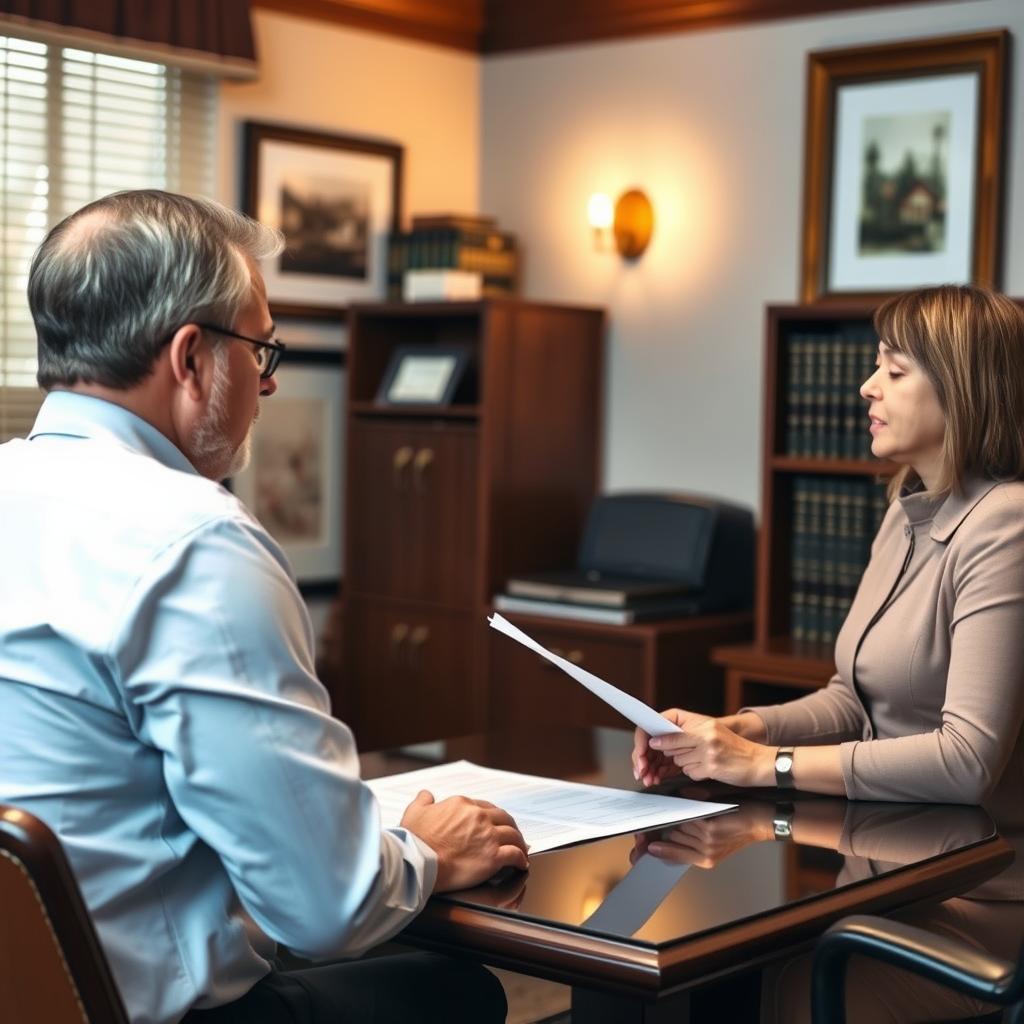
Postnuptial Agreement Lawyer Livingston County, NY
A postnuptial agreement is a contract entered into by spouses after marriage that sets out how property, finances, and other matters will be handled if the marriage ends. In Livingston County, New York, these agreements are governed by the New York Domestic Relations Law and are reviewed by the Supreme Court with equitable distribution principles in mind. Mr. Sris, a former prosecutor and Owner and Founder of Law Offices Of SRIS, P.C., works with the firm’s Of Counsel attorneys to represent clients in postnuptial agreement matters. Whether you are considering entering into a postnuptial agreement, need to enforce an existing one, or are challenging the validity of an agreement, experienced legal guidance can help protect your interests. Mr. Sris and the firm’s Of Counsel attorneys bring extensive combined legal experience to postnuptial agreement cases in Livingston County. To request a consultation, call (888) 437-7747. Law Offices Of SRIS, P.C. – Advocacy Without Borders.
What Postnuptial Agreements Mean in Livingston County, New York
Livingston County, located in the Finger Lakes region, is served by the Livingston County Supreme Court in Geneseo for matrimonial and equitable distribution matters, including postnuptial agreements. These agreements must meet the same enforceability standards as prenuptial agreements under New York law. The court requires that the agreement be in writing, signed by both parties, and entered into voluntarily with full disclosure of assets. In New York, equitable distribution controls the division of marital property, and a valid postnuptial agreement can override the default rules by specifying which assets are separate and how marital property will be divided.
Filing a postnuptial agreement is not mandatory to make it enforceable between the spouses, but it often becomes critical if a divorce action is later commenced. The Livingston County Supreme Court, located at 2 Court Street in Geneseo, handles all divorce and related equitable distribution cases. Our New York location serves clients throughout Livingston County, including communities such as Geneseo, Dansville, Mount Morris, Avon, Caledonia, Nunda, Lima, Livonia, Lakeville, and Conesus. For a consultation about your postnuptial agreement matter, reach Mr. Sris and the firm’s Of Counsel attorneys at (888) 437-7747.
How Mr. Sris and His Of Counsel Handle Postnuptial Agreement Cases
Every postnuptial agreement case is approached with a focus on the couple’s objectives and the legal framework that governs contract enforceability. Mr. Sris and the firm’s Of Counsel attorneys begin by understanding the parties’ financial circumstances and the terms they wish to memorialize. They draft or review the agreement to ensure compliance with New York’s statutory requirements, including full financial disclosure and voluntariness. If a dispute arises, representation extends to enforcement or challenge proceedings in the Livingston County Supreme Court.
The timeline for resolving a postnuptial agreement matter varies depending on whether the agreement is being drafted prospectively or litigated in a divorce action. Negotiation and drafting can often be completed within a timeframe set by the parties, while contested enforcement litigation follows the court’s calendar. The firm’s attorneys appear in Livingston County courts and maintain a presence in the area. To discuss your specific situation, contact Law Offices Of SRIS, P.C. at (888) 437-7747.
Common Reasons Spouses Enter Into Postnuptial Agreements
Spouses pursue postnuptial agreements for a variety of reasons, many of which arise from changes in circumstances that occur after the marriage has already begun. One common scenario involves a significant change in the financial situation of one or both spouses, such as receiving an inheritance, starting a business, or experiencing a substantial increase in income. A postnuptial agreement can clarify how these new assets will be treated and whether they will remain separate property or become part of the marital estate subject to equitable distribution. This type of planning can provide clarity and reduce uncertainty for both parties as their financial lives evolve over time.
Another frequent reason couples consider postnuptial agreements is to address issues that have arisen during the marriage and to establish a framework for moving forward. Some couples use these agreements as part of a broader effort to resolve marital difficulties, setting out financial terms that may alleviate sources of conflict. In other cases, one spouse may have concerns about the other’s spending habits, business debts, or financial management practices, and a postnuptial agreement can establish boundaries and protections. Additionally, couples who did not execute a prenuptial agreement before marriage may later decide that they want the certainty and structure that a written agreement provides, particularly as they acquire more assets or as their family grows. The firm’s attorneys can discuss whether a postnuptial agreement is appropriate for your circumstances during a consultation. Call (888) 437-7747 to schedule an appointment.
Key Legal Requirements for Postnuptial Agreements Under New York Law
New York courts apply a consistent set of legal standards when evaluating the validity and enforceability of postnuptial agreements. The agreement must be in writing and signed by both parties, and it must be executed voluntarily without coercion, duress, or undue influence. Full and fair financial disclosure is a cornerstone requirement; each spouse must provide the other with a clear and comprehensive picture of their assets, liabilities, and income. A court may set aside an agreement if it finds that one party concealed material financial information or if the disclosure provided was inadequate under the circumstances. The burden of establishing the validity of the agreement typically falls on the party seeking to enforce it.
Beyond the procedural requirements, New York courts also examine the substantive fairness of the agreement at the time of enforcement. Even if an agreement was entered into with proper disclosure and apparent voluntariness, a court may refuse to enforce provisions that are found to be unconscionable or that would leave one spouse in a position of undue hardship. The court considers factors such as the parties’ relative sophistication, whether each had the opportunity to consult with independent legal counsel, and the overall fairness of the terms in light of the circumstances existing at the time of the divorce. Given these nuanced standards, it is important to work with an attorney who understands how New York courts evaluate postnuptial agreements. Mr. Sris and the firm’s Of Counsel attorneys can help you understand how these requirements apply to your situation.
About Mr. Sris and the Firm’s Of Counsel Attorneys
Mr. Sris, Owner and Founder of Law Offices Of SRIS, P.C., has been practicing since 1997 and is admitted in Virginia, Maryland, the District of Columbia, New Jersey, and New York. A former prosecutor, Mr. Sris testified before the Virginia House Courts of Justice Committee in support of 2019 HB 635 (chief patron Del. David Bulova). The firm’s Of Counsel attorneys contract directly with Law Offices Of SRIS, P.C. and bring extensive combined legal experience. Mr. Sris and the firm’s Of Counsel attorneys have handled family law matters across multiple jurisdictions. Results may vary.
Clients benefit from a team that understands both the contractual and equitable dimensions of postnuptial agreements. The firm serves clients throughout Livingston County and the broader Finger Lakes region. Reach Mr. Sris and the firm’s Of Counsel attorneys at (888) 437-7747.
Frequently Asked Questions
What is a postnuptial agreement in New York?
A postnuptial agreement is a written contract between spouses, executed after marriage, that defines how property, debts, and finances will be managed or divided if the marriage ends. It can address asset classification, spousal support waivers, and estate rights. In New York, such agreements are governed by the same legal principles as prenuptial agreements under the Domestic Relations Law, requiring full financial disclosure and voluntary execution.
Do I need a lawyer to draft a postnuptial agreement in Livingston County?
While New York law does not require an attorney to draft a postnuptial agreement, legal representation is strongly recommended to help ensure the agreement is enforceable and adequately protects your interests. An attorney can advise on disclosure requirements, potential challenges, and how the agreement will interact with equitable distribution rules. The firm’s attorneys can assist with drafting, review, or negotiation. For guidance specific to your situation, call (888) 437-7747.
How are postnuptial agreements enforced in Livingston County?
Enforcement of a postnuptial agreement typically occurs in the Livingston County Supreme Court during a divorce action. The court will examine whether the agreement was entered into voluntarily, with full financial disclosure, and whether it is fair at the time of enforcement. If the agreement meets these standards, the court will generally enforce its terms as part of the equitable distribution process. Challenges based on fraud, duress, or unconscionability may be raised.
Can a postnuptial agreement be challenged in New York?
Yes, a postnuptial agreement can be challenged on grounds such as fraud, duress, lack of voluntary execution, or inadequate financial disclosure. A court may also decline to enforce provisions that are unconscionable or that violate public policy. If you are facing a challenge or need to contest an agreement, the firm’s attorneys can evaluate the facts and represent you in Livingston County proceedings. Call (888) 437-7747 to schedule a consultation.
How do I find a postnuptial agreement lawyer in Livingston County?
You can reach Mr. Sris and the firm’s Of Counsel attorneys at (888) 437-7747 to discuss your postnuptial agreement matter. Law Offices Of SRIS, P.C. represents clients in Livingston County and throughout New York. Our New York location serves Geneseo, Dansville, Mount Morris, and surrounding communities. The firm’s attorneys provide experienced representation in family law matters. Contact us to request a consultation.
Related pages: Family Law Lawyer New York County (Manhattan), NY | Family Law Lawyer Kings County (Brooklyn), NY | Family Law Lawyer Nassau County (Long Island), NY
Official resources: New York Domestic Relations Law | Livingston County Supreme Court
Attorney advertising. Prior results do not guarantee a similar outcome. Case results depend on a variety of factors unique to each case. Results may vary.