
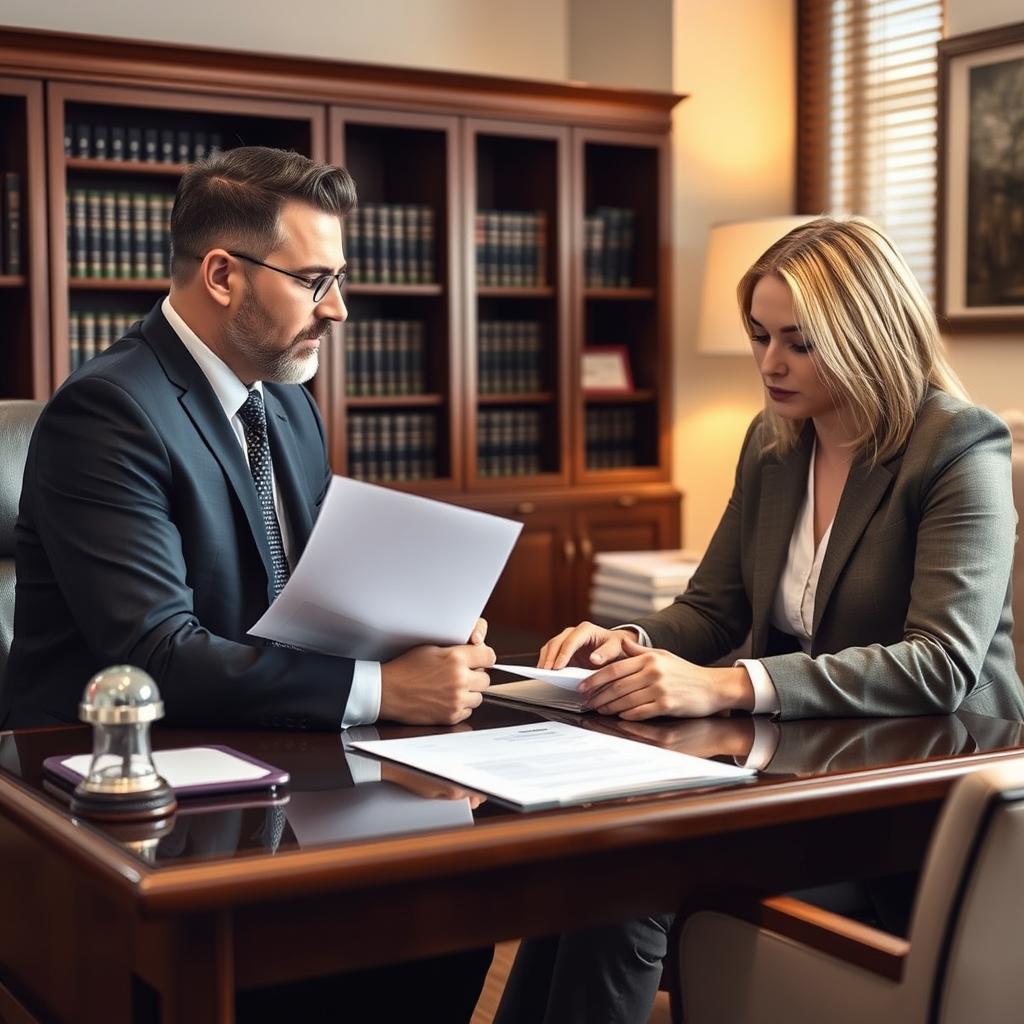
Post Divorce Modification Lawyer New York, NY
You worked through the divorce, the orders were entered, and you moved forward. Then life shifted. A promotion or a layoff changed your income. You need to relocate for a job or to be closer to family. A child’s needs have evolved in ways no one could have foreseen when the original custody arrangement was drafted. When circumstances materially change after a New York divorce judgment, the court can modify the terms of support, custody, or visitation—but the process requires a solid legal foundation, not just a change of heart. Mr. Sris and his Of Counsel team at Law Offices Of SRIS, P.C. help parents and former spouses in New York navigate post-divorce modification proceedings. Reach our location at (888) 437-7747 to discuss whether your situation supports a modification. Law Offices Of SRIS, P.C. — Advocacy Without Borders.
Modifying Court Orders After Divorce in New York
New York courts recognize that the financial and personal circumstances of divorced parties and their children evolve. Under the Domestic Relations Law, particularly DRL § 236 and DRL § 240, the Supreme Court or Family Court may modify provisions for maintenance (alimony), child support, custody, and visitation when a party demonstrates a substantial change in circumstances that was not reasonably anticipated at the time the original order was entered. The analysis is fact-intensive: an experienced attorney presents the changed circumstances and explains why the prior order no longer meets the family’s needs. Mr. Sris and his Of Counsel regularly appear in New York County Supreme Court at 60 Centre Street and in Family Court to request or oppose modifications.
Support modification petitions are the most common. For child support, the statutory guideline formula—17% of combined parental income for one child, 25% for two, 29% for three, 31% for four, 35% for five or more, applied to combined parental income (with discretion above the statutory cap)—is applied to current income figures. A change in the noncustodial parent’s income of fifteen percent or more, or a change in the child’s needs, may justify a modification. For spousal maintenance, the party seeking modification must show an unanticipated and unreasonable change in circumstances, often a significant change in income or health. Custody and visitation modifications require the moving party to demonstrate that the proposed change serves the child’s best interests under the long‑standing statutory standard.
Strategy Options for Post‑Divorce Modification in New York County
Not every change in circumstances leads to a courtroom battle. Many modifications are resolved by agreement when both parties recognize that the existing order no longer works. A well‑drafted stipulation, filed with the court and incorporated into a new order, can adjust support, custody, or visitation without the delay and expense of litigation. When agreement is not possible, a formal petition is filed in Supreme Court (for matters originally handled in the divorce action) or in Family Court (for standalone support and custody matters). Mr. Sris and his Of Counsel evaluate whether the facts support a petition, gather current financial documentation, and present the case at a hearing. In some instances, a temporary order—called a pendente lite order under DRL § 236—can provide immediate relief while the modification is pending.
Enforcement is the flip side of modification. If a former spouse or parent fails to comply with a modified order, the court can hold the non‑compliant party in contempt, enter a money judgment for arrears, suspend a driver’s license or professional license, or, in egregious cases, impose jail time. Mr. Sris and his Of Counsel also represent clients who are on the receiving end of a modification petition, ensuring that the other side meets the burden of proving a substantial, unanticipated change of circumstances.
What to Expect When You Seek a Modification
The timeline for a post‑divorce modification depends on whether the matter is contested and on the court’s calendar. Uncontested modifications, where both parties agree, can be resolved in a few months. Contested modifications, especially those involving custody disputes or complex financial issues, may take a year or longer in New York County, where the court docket is heavy. The process begins with a consultation to assess the strength of your case. Mr. Sris and his Of Counsel gather the original divorce judgment, any separation or settlement agreement, and current documentation of the changed circumstances—pay stubs, tax returns, medical records, school reports, and employment contracts. A petition is drafted, filed, and served on the other party. The court will schedule an initial conference, followed by discovery if needed, and often a settlement conference before a hearing. Throughout the process, the parties may be ordered to mediation or to appear for a preliminary conference with a court attorney‑referee.
New York County’s Supreme Court at 60 Centre Street handles matrimonial modifications, while Family Court, also at 60 Centre Street, addresses custody, visitation, and child support matters. Mr. Sris and his Of Counsel are familiar with the local procedures and calendar‑management practices in these courts, which helps clients plan realistically.
About Mr. Sris and His Of Counsel Team
Mr. Sris, Owner and Founder of Law Offices Of SRIS, P.C., formed the firm in 1997. A former prosecutor, he has practiced in Virginia, Maryland, the District of Columbia, New Jersey, and New York for more than a quarter‑century. Mr. Sris testified before the Virginia House Courts of Justice Committee in support of 2019 HB 635 (chief patron Del. David Bulova). His Of Counsel bring extensive experience in family law litigation, and together they offer clients the benefit of multiple perspectives on complex modification issues. Mr. Sris and his Of Counsel bring extensive combined legal experience, with over 4,739 documented firm-wide results. Results may vary.
Frequently Asked Questions
Do I need a lawyer to modify child support or alimony in New York?
You are not required to have a lawyer, but the modification process is procedural and requires proving a substantial change in circumstances with admissible evidence. A lawyer helps you compile the necessary financial documentation, draft the petition, and present your case persuasively. Self‑represented litigants often miss procedural deadlines or fail to meet the burden of proof, which can result in denial. Having an experienced attorney also positions you better to negotiate an agreement without a hearing. For guidance on your specific situation, reach Law Offices Of SRIS, P.C. at (888) 437-7747.
What qualifies as a “substantial change in circumstances” for modification of support?
A substantial change is a significant, unanticipated alteration in a party’s financial situation or in the child’s needs since the last order. Examples include a job loss, a substantial increase or decrease in income, a serious illness, a remarriage that alters household finances, or a child’s special educational or medical needs that did not exist before. Minor fluctuations do not suffice. The court compares the current circumstances to those at the time the prior order was entered. The party seeking modification carries the burden of proof.
How is child support recalculated in a modification case?
The same statutory formula used for initial child support orders applies to modifications: 17% for one child, 25% for two, 29% for three, 31% for four, and 35% for five or more children, based on combined parental income (with discretion above the statutory cap). The court recalculates support using each parent’s current income and deducts appropriate items such as Social Security and Medicare taxes. If the recalculated amount differs from the existing order by a certain percentage, the court may adjust the order prospectively.
Can I relocate with my child after a divorce?
Relocation requires either the other parent’s consent or a court order determining that the move serves the child’s best interests. New York courts consider the reasons for the move, the quality of the relationship between the child and each parent, the impact on the child’s education and social life, and the feasibility of a revised visitation schedule. A parent who relocates without consent or court approval may be ordered to return the child and could face contempt sanctions.
How long does a post‑divorce modification case take in New York County?
Uncontested modifications can be finalized in a few months; contested cases often take a year or more, depending on court scheduling and the complexity of the issues. The time frame also depends on whether discovery is required, whether expert evaluations (such as forensic custody assessments) are ordered, and whether the parties attend mediation. Mr. Sris and his Of Counsel can give you a more specific estimate after reviewing your case.
What if my former spouse refuses to pay the modified support amount?
You can file an enforcement petition asking the court to hold the non‑paying party in contempt, enter a money judgment for the arrears, or order other remedies such as license suspension. The court may also award attorney’s fees. Enforcement is a separate legal proceeding, and it is important to act promptly because support arrears may accrue interest and become more difficult to collect over time.
For further reading on related family law topics, see our pages for New York County (Manhattan) family law, Kings County (Brooklyn) family law, and Queens County (Queens) family law.
Primary sources: New York Domestic Relations Law (DRL) · New York State Unified Court System (nycourts.gov) · New York County Supreme Court (official page).
Attorney advertising. Prior results do not guarantee a similar outcome. Case results depend on a variety of factors unique to each case. Results may vary.