
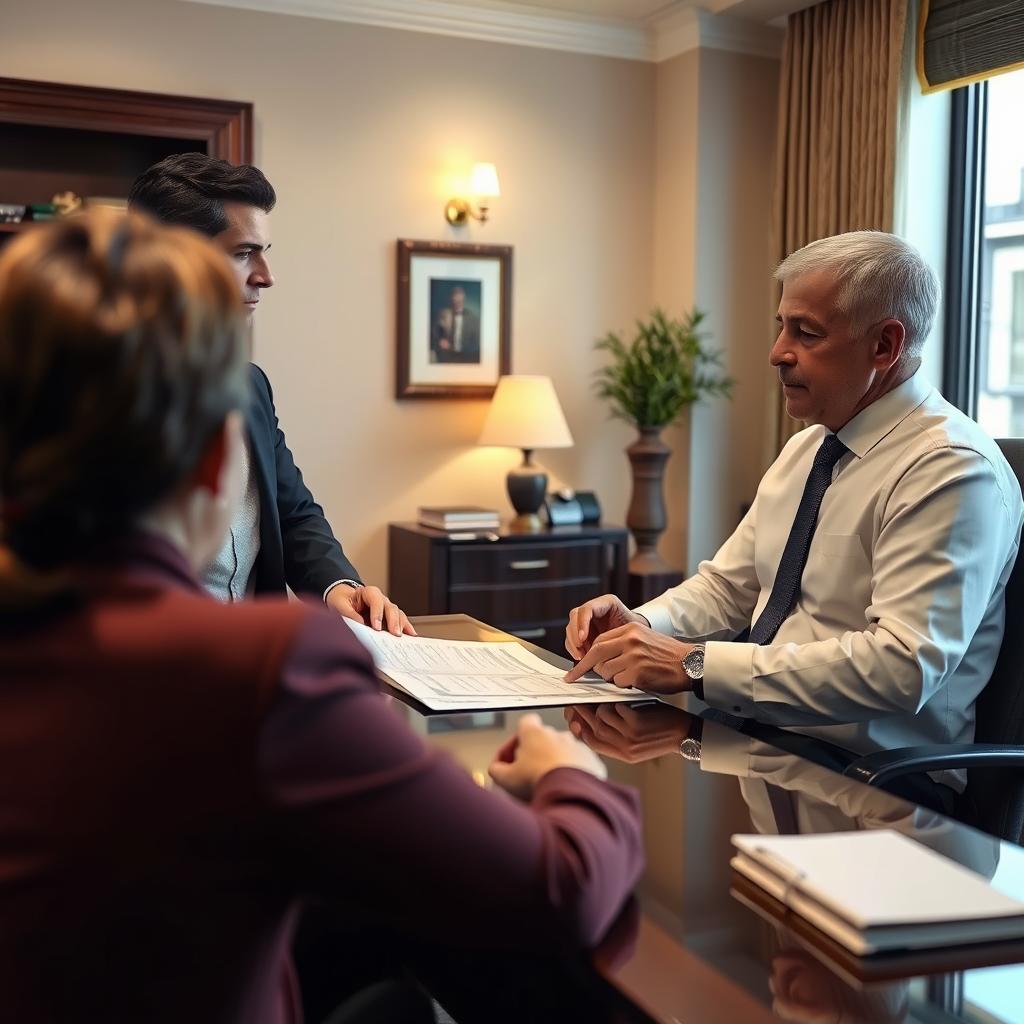
Order of Protection Lawyer New York, NY
An order of protection—often referred to as a restraining order—can provide critical legal relief when you are facing harassment, threats, or abuse from a family member, household member, or intimate partner. In New York, orders of protection are issued by both the Family Court and the Supreme Court in connection with family law matters. If you are considering filing a family offense petition in New York City, working with an experienced family law attorney helps you navigate the process, present your case effectively, and secure the protections the law allows. Mr. Sris and his Of Counsel team represent clients in Manhattan, Brooklyn, Queens, the Bronx, and Staten Island, as well as surrounding counties. Reach Law Offices Of SRIS, P.C. at (888) 437-7747 to schedule a consultation.
What an Order of Protection Means in New York, NY
In New York, an order of protection is a court mandate that directs a person (the respondent) to refrain from certain conduct toward the person seeking protection (the petitioner). The order may prohibit contact, require a respondent to stay away from the petitioner’s home, school, or workplace, remove a respondent from a shared residence, award temporary custody of children, and direct a respondent to surrender firearms. In New York City, family offense petitions are heard in the Family Court of the borough where the incident occurred or where the petitioner resides, such as the New York County Family Court at 60 Centre Street in Manhattan or the Kings County Family Court at 360 Adams Street in Brooklyn. Orders of protection may also be issued as part of a divorce or separation proceeding in the Supreme Court. The court’s decision is based on a finding that a family offense—such as assault, harassment, menacing, stalking, or disorderly conduct—has occurred. Because the legal standard and procedural requirements differ between the Family Court and the Supreme Court, working with counsel familiar with both forums helps protect your interests.
Obtaining an order of protection typically begins with the filing of a family offense petition. A temporary ex parte order of protection may be granted on the day you file if the court determines there is a substantial risk of immediate danger. The respondent then receives notice and the court schedules a hearing. At the hearing, both sides may present evidence and testimony. The court may issue a final order of protection for up to two years—or up to five years if aggravating circumstances are present—which can be extended upon a showing of continued risk. Violations of an order of protection can result in criminal contempt charges and arrest. Because the process moves quickly and the consequences affect housing, custody, and personal safety, representation from a seasoned family law lawyer is essential. Mr. Sris and his Of Counsel appear regularly in New York City Family Courts and Supreme Courts to advocate for petitioners and respondents in order-of-protection proceedings.
How Mr. Sris and His Of Counsel Handle Order of Protection Cases
Mr. Sris and his Of Counsel take a thorough approach to orders of protection, focusing on the specific facts of your situation and the legal standards set by the New York Family Court Act and the Domestic Relations Law. During an initial consultation, the attorneys discuss the history of the relationship, any prior incidents, and the relief you are seeking. If you are the petitioner, they help draft a detailed family offense petition that clearly states the allegations and attaches supporting documentation. If you are the respondent facing an order, they prepare to challenge the petition by examining the evidence, identifying procedural deficiencies, and presenting your side at the hearing. Because orders of protection often intersect with divorce, child custody, and support proceedings, Mr. Sris and his Of Counsel coordinate strategy across the various forums to protect the client’s overall position. They are experienced in handling contested hearings, negotiating consent orders that avoid the need for a full trial, and addressing violations through enforcement motions. The firm’s New York location—50 Fountain Plaza, Suite 1400, Office No. 142, Buffalo, NY 14202—serves clients throughout New York City and the surrounding counties by appointment.
The attorneys prioritize clear communication throughout the case, explaining what to expect at each court appearance and how to prepare. They work to help clients understand the potential impact of an order on custody arrangements, housing, and firearm rights. By drawing on over 120 years of combined legal experience between Mr. Sris and his Of Counsel, the firm addresses both the immediate need for protection and the long-term legal implications. Results may vary.
About Mr. Sris and His Of Counsel Team
Mr. Sris, Owner and Founder of Law Offices Of SRIS, P.C., has been practicing since 1997 and is admitted to the bars of Virginia, Maryland, the District of Columbia, New Jersey, and New York. A former prosecutor, he brings a perspective shaped by years of criminal trial work to every family offense and order-of-protection matter. His experience includes testifying before the Virginia House Courts of Justice Committee in support of 2019 HB 635 (chief patron Del. David Bulova). Mr. Sris heads a team of Of Counsel attorneys—non-employee attorneys engaged through Excella—who bring additional experience in family law, criminal defense, and litigation. Together, Mr. Sris and his Of Counsel have documented 4,739+ case results across all practice areas since 1997. Results may vary.
Frequently Asked Questions
What is an order of protection in New York?
An order of protection is a court directive that prohibits a person from engaging in further harmful conduct and may include no-contact, stay-away, and residential-exclusion provisions. In New York, orders of protection are issued under the Family Court Act (Article 8) in family offense proceedings or under the Domestic Relations Law as part of a divorce or separation action. The court can tailor the order to the specific circumstances, granting temporary and final relief to safeguard the petitioner. A final order can last up to two years, or up to five years when aggravating factors exist. Violating an order can lead to criminal charges.
How do I get an order of protection in New York City?
To obtain an order of protection, you file a family offense petition with the Family Court in the borough where you live or where the incident occurred. The petition describes the alleged acts—such as harassment, assault, or stalking—and the relationship between the parties. The court may immediately issue a temporary ex parte order of protection if it finds a substantial risk of danger. The respondent receives notice and the court schedules a hearing. Both sides may present evidence. Having an attorney prepare the petition and represent you at the hearing can strengthen your case. Mr. Sris and his Of Counsel assist clients throughout Manhattan, Brooklyn, Queens, the Bronx, and Staten Island.
Do I need a lawyer to file for an order of protection?
You are not required to have a lawyer to file a family offense petition, but legal representation helps you navigate the hearing process and protect related rights. The Family Court has petition forms and staff to assist self-represented litigants, yet the legal standards and evidentiary rules can be complex. An experienced family law attorney can draft a comprehensive petition, gather supporting evidence, and cross-examine witnesses effectively. For respondents, an attorney can challenge the allegations and raise procedural defenses. Given the consequences for custody, housing, and employment, consulting a lawyer is a prudent step. For a consultation, reach Law Offices Of SRIS, P.C. at (888) 437-7747.
What happens at a family offense hearing?
At a family offense hearing, the petitioner presents evidence to prove that the respondent committed a family offense, and the respondent has the opportunity to defend against the allegations. Hearings are held in Family Court before a judge. Witnesses may testify, and documents such as police reports, medical records, and communications can be introduced. The judge determines whether a family offense occurred by a fair preponderance of the evidence. If the court finds an offense, it will issue a final order of protection and may also order related relief such as custody or support. The hearing can take place within a few weeks of the temporary order, though scheduling varies by court volume. An attorney helps you prepare your testimony and present the strong case.
Can an order of protection be modified or extended?
Yes, a final order of protection can be modified or extended if there is a change in circumstances or if the petitioner demonstrates a continued need for protection. Either party may file a petition to modify the terms—for example, to permit contact for co-parenting purposes—or to extend the order beyond its original expiration. The requesting party must show good cause. An extension petition should be filed before the existing order expires to avoid a gap in protection. The court may also modify temporary custody or visitation provisions as circumstances evolve. Mr. Sris and his Of Counsel assist clients in preparing modification or extension petitions and representing them at the subsequent court hearings.
What if the respondent violates the order of protection?
Violating an order of protection is a criminal offense that can result in arrest and prosecution for criminal contempt. The petitioner should report the violation to the police immediately and document the incident with as much detail as possible. The police may arrest the respondent without a warrant if there is probable cause to believe the order was violated. The respondent may face additional criminal charges and the court may strengthen the order’s terms. In some cases, a petition for an extension or a new family offense petition may be appropriate. To discuss enforcement options, contact Law Offices Of SRIS, P.C. at (888) 437-7747.
For family law matters across New York City, see our pages for Manhattan family law lawyer, Brooklyn family law lawyer, and Queens family law lawyer.
Outbound resources: NYC Family Court family offense FAQs · NY Family Court Act Article 8 · NYC Family Court
Attorney advertising. Prior results do not guarantee a similar outcome. Case results depend on a variety of factors unique to each case. Results may vary.