
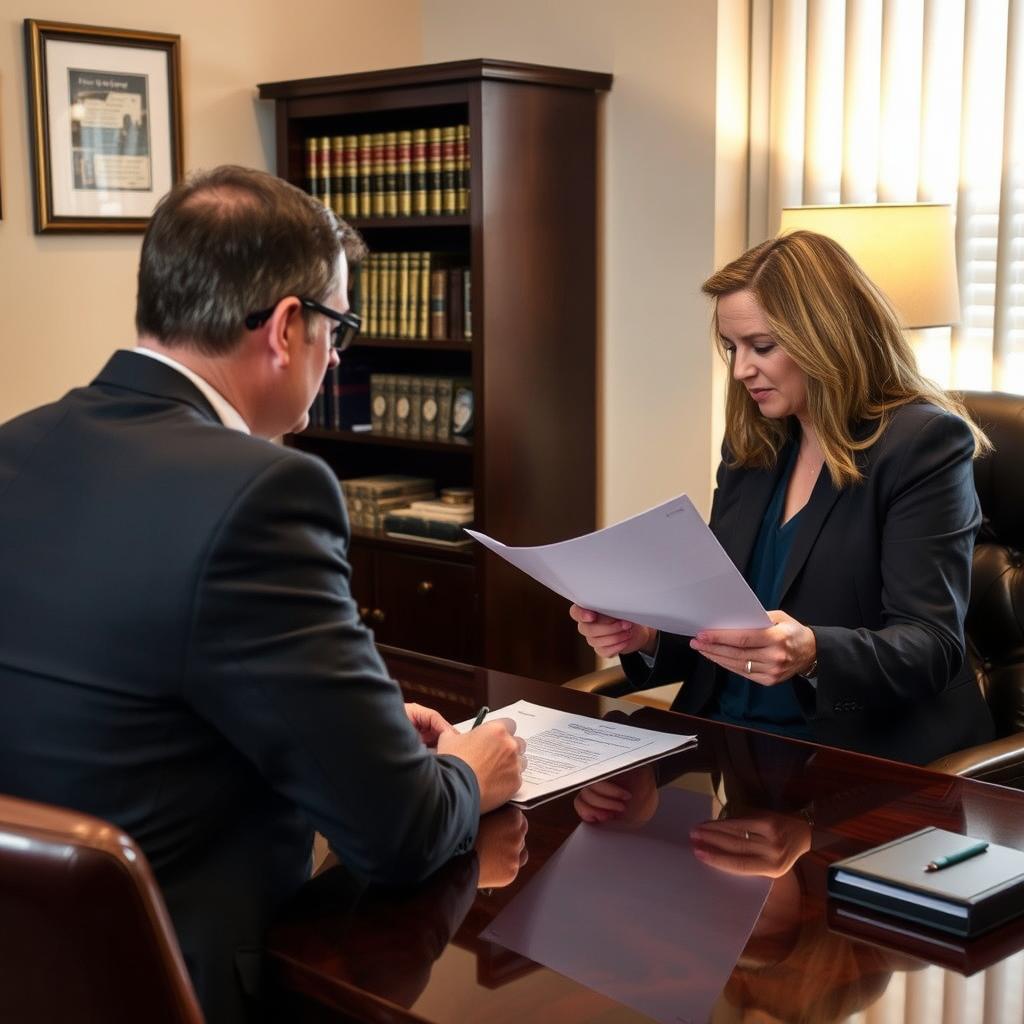
Legal Separation Lawyer Niagara County
You need a Legal Separation Lawyer Niagara County to establish a formal, court-recognized separation agreement without a divorce. Law Offices Of SRIS, P.C. —Advocacy Without Borders. handles these matters in Niagara County Supreme Court. A legal separation resolves custody, support, and property division while preserving marital status. The process requires precise legal filings and negotiation. (Confirmed by SRIS, P.C.)
Statutory Definition of Legal Separation in New York
New York does not have a specific statute titled “legal separation”; it is governed by actions for separation under Domestic Relations Law § 200. This is a judicial decree—a Separation Judgment—that formalizes the terms of a couple’s living apart. It is distinct from a divorce. The court must approve a written separation agreement. This agreement becomes a binding court order. It addresses all issues arising from the marital relationship. The maximum outcome is a court-enforced judgment dictating the parties’ rights and obligations while still married.
Domestic Relations Law § 200 — Action for Separation — Judgment of Separation. An action for separation may be maintained to procure a judgment separating the parties from bed and board forever, or for a limited time, for any of the causes specified in section 170. The judgment awards care and custody of children, support, and equitable distribution of property as justice requires.
This legal framework is the primary tool for a formal separation in Niagara County. The causes for action include cruelty, abandonment, or imprisonment. The judgment severs certain marital ties but does not dissolve the marriage. You remain legally married. You cannot remarry. All financial and parental responsibilities are legally defined. The agreement can be converted to a divorce decree later under certain conditions. This provides a structured path for couples not ready for divorce.
What is a separation agreement in Niagara County?
A separation agreement is a legally binding contract between spouses. It details terms for living apart. It must be in writing, signed, and acknowledged. The agreement covers child custody, visitation, and child support. It also dictates spousal maintenance and division of assets and debts. For it to be enforceable as a court order, it must be incorporated into a Judgment of Separation. Niagara County Supreme Court judges scrutinize these agreements for fairness. An improperly drafted agreement can be challenged.
How does a legal separation differ from divorce in New York?
A legal separation does not end the marriage; a divorce does. A Judgment of Separation allows you to live apart under court supervision. You retain benefits like health insurance or military pensions tied to marital status. You cannot remarry after a separation. A divorce decree terminates the marriage entirely. Both processes resolve the same issues: property, support, and custody. The choice depends on your personal, financial, or religious needs. A Legal Separation Lawyer Niagara County can advise on which action suits your situation.
What are the grounds for a legal separation in New York?
The grounds are fault-based, listed in Domestic Relations Law § 170. They include cruel and inhuman treatment, abandonment for one year, or imprisonment for three years. Adultery is also a ground. You must prove one of these grounds to the court. This is different from a “no-fault” divorce. Evidence and testimony are often required. The Niagara County Supreme Court will hear arguments on these grounds. A marital separation lawyer Niagara County builds the case to support your claim.
The Insider Procedural Edge in Niagara County
Your case is filed at the Niagara County Supreme Court located at 175 Hawley Street, Lockport, NY 14094. This is the sole court for matrimonial actions like legal separations. The clerk’s Location in Room 202 handles initial filings. You must file a Summons with Notice or a Summons and Verified Complaint. The filing fee is currently $210. The index number is assigned at filing. The defendant must be served with the papers. Procedural rules are strict. Missing a deadline can delay your case for months.
Niagara County has specific local rules for matrimonial actions. You must file a Request for Judicial Intervention (RJI) to get a judge assigned. The court often requires a preliminary conference within 45 days. This conference sets discovery schedules and deadlines. The court favors negotiated settlements. If an agreement is reached, you submit it for the judge’s review. The judge will schedule an inquest hearing if the defendant defaults. The entire process can take several months to over a year. Having a lawyer familiar with this court is critical.
What is the timeline for a legal separation in Niagara County?
The timeline varies based on case complexity and court calendar. An uncontested case with an agreement can take 3 to 6 months. A contested case can last a year or more. The preliminary conference starts the clock. Discovery and motion practice add time. The court’s trial term schedule creates delays. Niagara County Supreme Court manages a heavy docket. Your legal separation agreement lawyer Niagara County can push for expedited scheduling. They know how to handle local delays effectively.
What are the court costs and filing fees?
The Supreme Court filing fee is $210. Additional fees include service of process, which can cost $50-$150. If you need to file motions, each has a fee. Transcripts and copies incur charges. The total cost without a lawyer often exceeds $500 in fees alone. Retaining a lawyer involves legal fees. The overall cost depends on whether the case is contested. An uncontested separation with a pre-negotiated agreement costs less. A contested case requires more hours and higher fees.
Penalties & Defense Strategies for Separation Agreements
The most common penalty for violating a separation agreement is contempt of court. A Judgment of Separation is a court order. Violating its terms can lead to fines or jail. The court can enforce support orders through income execution. It can modify custody arrangements for non-compliance. The agreement itself dictates consequences for breach. The court has broad power to compel compliance. You need a lawyer to enforce or defend against these penalties.
| Offense / Issue | Potential Penalty / Outcome | Notes |
|---|---|---|
| Failure to Pay Spousal Support | Contempt, wage garnishment, liens, jail up to 6 months. | Family Court Act Article 4 governs enforcement. |
| Violation of Custody Order | Contempt, modification of custody, make-up visitation. | Best interests of the child standard applies. |
| Breach of Property Division Terms | Money judgment, equitable remedies, contempt. | The court can enforce the specific terms of the agreement. |
| Failure to Maintain Insurance | Court order to obtain coverage, reimbursement to other party. | Common in agreements where one spouse provides health benefits. |
[Insider Insight] Niagara County judges expect strict adherence to separation agreements. The court views these as serious contracts. Prosecutors in family matters are not involved; enforcement is through civil contempt. The judge’s temperament favors the party following the order. They have little patience for self-help remedies. Always seek a court modification before unilaterally changing terms. A marital separation lawyer Niagara County knows which judges are stricter on enforcement.
Can a separation agreement be modified?
Yes, but only by court order or mutual written agreement. Terms for child support or custody can be modified upon a showing of substantial change in circumstances. Spousal maintenance terms can be modified if the agreement allows it. Property division terms are typically final and non-modifiable. You must petition the court for a modification. The original agreement dictates the standard for changes. Niagara County Supreme Court requires a formal motion. Do not assume terms can change easily.
What if my spouse violates the agreement?
You must file a violation petition or order to show cause in Supreme Court. The court will schedule a hearing. You must prove the violation occurred. The burden of proof is on you. The court can impose remedies to ensure compliance. These include fines, attorney’s fees, or incarceration. The process is adversarial. Having your original Legal Separation Lawyer Niagara County handle enforcement is efficient. They know the agreement’s history and the court’s procedures.
Why Hire SRIS, P.C. for Your Niagara County Separation
Our lead attorney for Niagara County family law has over 15 years of litigation experience in New York Supreme Courts. This includes extensive work in the Niagara County courthouse. They understand the local judges and referees. They know how to draft agreements that withstand judicial scrutiny. They have negotiated hundreds of separation settlements. Their focus is achieving your goals efficiently. They provide direct, candid advice about your options. You get a seasoned advocate, not a mediator.
Primary Niagara County Family Law Attorney: The attorney handling these matters is a seasoned litigator admitted in New York. Their practice is dedicated to matrimonial and family law. They have represented clients in Niagara, Erie, and Monroe Counties. They are familiar with the specific procedures at 175 Hawley Street. They approach each case with a strategic focus on the client’s long-term stability. They are supported by the full resources of SRIS, P.C.
SRIS, P.C. has a dedicated Location serving Niagara County. Our team has handled numerous family law matters in this jurisdiction. We prepare every case as if it will go to trial. This posture strengthens our negotiation position. We draft precise, thorough separation agreements. We anticipate potential future disputes. Our goal is to create a durable framework for your separation. We provide experienced family law advocacy specific to New York law. Call us to discuss your specific situation.
Localized Niagara County Legal Separation FAQs
How long do you have to be separated before divorce in New York?
New York requires a one-year separation under a written agreement before filing for no-fault divorce. The separation must be continuous. The agreement must be properly executed. The clock starts from the date specified in your agreement. You must live apart for the full year. A Legal Separation Lawyer Niagara County can draft this agreement to start the timeline.
Can you get a legal separation without going to court in Niagara County?
No. A legal separation requires a Judgment from the Niagara County Supreme Court. You can have a signed separation agreement without court. However, it is just a contract. To make it a binding court order on all issues, you must file an action. The court must review and incorporate the agreement. Only then is it enforceable like a court order.
Does a legal separation affect property rights in New York?
Yes. A Judgment of Separation can include equitable distribution of marital property. It permanently divides assets and debts. It establishes separate property rights moving forward. The property division terms are generally final. They cannot be revisited in a subsequent divorce unless the agreement allows it. This is a critical reason to have a skilled attorney draft the agreement.
How is child custody determined in a legal separation?
Custody is determined by the child’s best interests. The separation agreement must propose a parenting plan. The Niagara County Supreme Court reviews this plan. The judge ensures it serves the child’s health and welfare. If parents cannot agree, the court will decide after an evaluation or hearing. Custody orders from a separation are as enforceable as divorce orders.
Can I move out of state with my children after a legal separation?
Not without permission. The custody order in your Judgment of Separation controls. Relocation is a major modification. You must petition the court for approval. You must notify the other parent. The court considers the move’s impact on the child’s relationship with the other parent. Unauthorized moves can result in losing custody. Always seek a court order first.
Proximity, CTA & Disclaimer
Our Niagara County Location is strategically positioned to serve clients throughout the region. We are accessible from Lockport, Niagara Falls, North Tonawanda, and Wheatfield. For a Consultation by appointment at our Location, call our dedicated line. We provide strong legal advocacy across practice areas. Our team is ready to address your family law needs.
Consultation by appointment. Call 855-212-8747. 24/7.
Law Offices Of SRIS, P.C.—Advocacy Without Borders.
Niagara County Location
Phone: 855-212-8747
Past results do not predict future outcomes.