
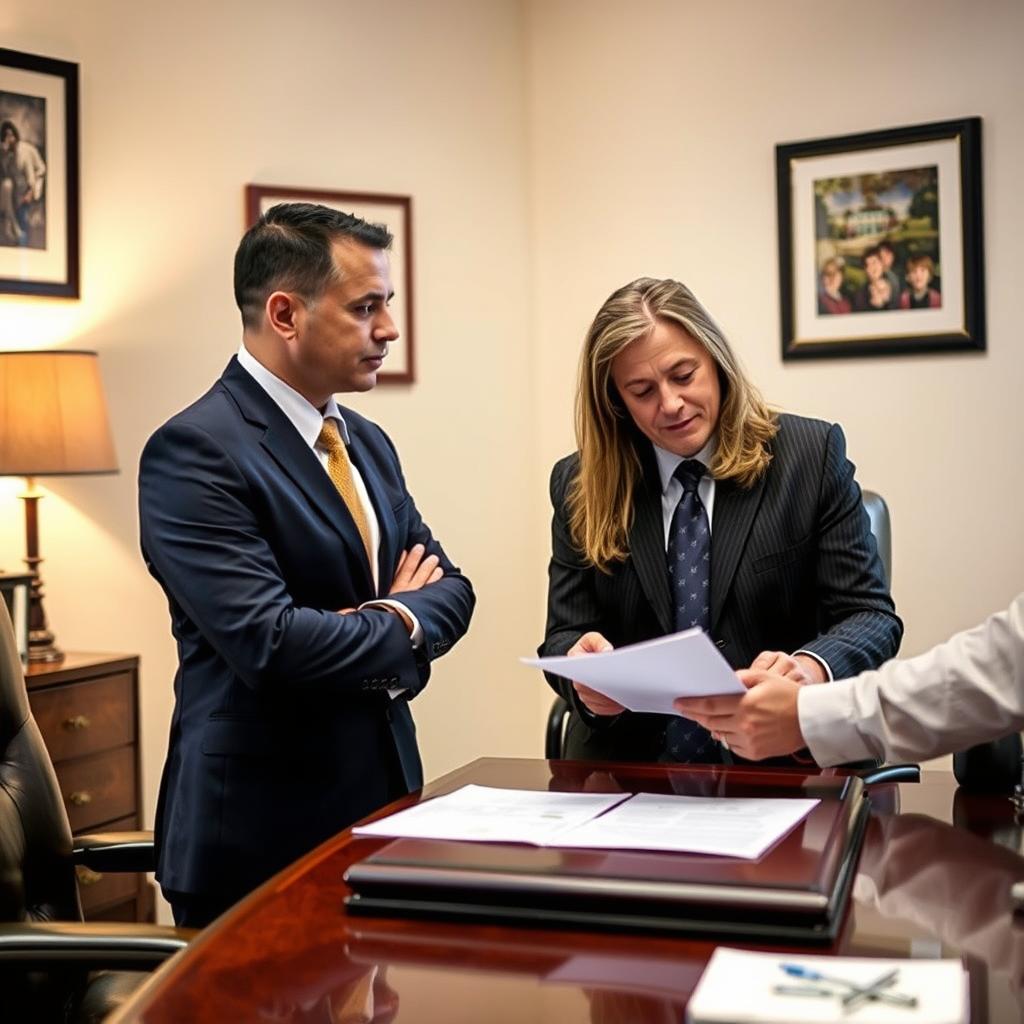
Legal Separation Lawyer Clinton County, NY
If you are considering a legal separation in Clinton County, New York, understanding how the process works under New York law is the first step toward protecting your interests. Mr. Sris, Owner and Founder of Law Offices Of SRIS, P.C., and his Of Counsel team represent clients throughout the North Country, including Plattsburgh, Peru, Chazy, Dannemora, Rouses Point, Keeseville, Champlain, and Saranac. A legal separation is a formal court-ordered arrangement that allows spouses to live apart while remaining legally married, with provisions for spousal support, child custody, child support, and the division of certain property. Unlike a divorce, a legal separation does not dissolve the marriage, but it can provide a structured framework when the parties are not yet ready to end the marriage or when a divorce is not immediately available under the no-fault ground. Our firm concentrates on guiding clients through the legal separation process, from negotiating separation agreements to litigating contested issues in the New York Supreme Court. For a consultation, reach Law Offices Of SRIS, P.C. at (888) 437-7747. Results may vary. Law Offices Of SRIS, P.C. – Advocacy Without Borders.
What Legal Separation Means in Clinton County, NY
Legal separation in New York is governed by the Domestic Relations Law (DRL). While the DRL is often associated with divorce, its provisions also support legal separation actions. The Clinton County Supreme Court, located at 137 Margaret Street in Plattsburgh, handles matrimonial matters, including legal separation proceedings, as well as equitable distribution and spousal support. The Clinton County Family Court addresses related issues such as child custody, visitation, child support, paternity, and orders of protection.
In a legal separation, the parties remain married but the court can issue orders on support, custody, and property use. Many couples use a separation agreement as a foundation. A separation agreement is a written contract between spouses that resolves all financial and custodial issues. It can later be incorporated into a divorce judgment or enforced as a standalone contract. Mr. Sris and his Of Counsel team work with clients to negotiate fair separation agreements or, when necessary, litigate contested terms. Because every family’s situation is different, our representation is tailored to the facts of each case. The court’s primary concern in all family law matters is the best interests of any children involved, and our attorneys focus on crafting parenting plans and support arrangements that promote stability.
Clinton County sits within the 4th Judicial District and is served by the New York State Supreme Court for matrimonial actions. The region includes communities along Lake Champlain and near the Canadian border. While the firm’s New York location is in Buffalo, Mr. Sris and his Of Counsel routinely appear in Clinton County courts and maintain a strong working knowledge of local procedures. We help clients navigate the filing requirements, court conferences, and any pendente lite (temporary) motions that may be needed while the case is pending.
How Mr. Sris and His Of Counsel Handle Legal Separation Cases
The legal separation process begins with an assessment of your goals. Mr. Sris and his Of Counsel first gather information about your marriage, your finances, and your parenting situation. We then review whether a separation agreement is feasible, which often results in a faster, less contentious resolution. If the parties cannot agree, we prepare a complaint for legal separation (or a complaint for divorce, depending on the circumstances) and seek appropriate temporary relief through motions. Our approach is grounded in the New York statutory framework, including the equitable distribution factors under DRL § 236 and the child support guidelines under DRL § 240.
Throughout the process, we prioritize clear communication and strategic negotiation. When a settlement is possible, we draft detailed agreements that cover spousal maintenance (alimony), the division of marital and separate property, retirement assets, health insurance, and parenting schedules. If litigation becomes necessary, we present evidence and argument in the Clinton County Supreme Court to protect your rights. Because the firm’s attorneys have extensive combined legal experience, clients benefit from a team that is comfortable both at the negotiating table and in the courtroom. We understand that family law matters can be emotionally draining, and we work to achieve a fair outcome while keeping the focus on the long-term well-being of all family members.
About Mr. Sris and His Of Counsel Team
Mr. Sris, Owner and Founder of Law Offices Of SRIS, P.C., has practiced law since 1997 and is admitted in Virginia, Maryland, the District of Columbia, New Jersey, and New York. His background as a former prosecutor provides insight into how evidence is evaluated and how arguments are constructed—skills that translate directly to contested family law litigation. Mr. Sris testified before the Virginia House Courts of Justice Committee in support of 2019 HB 635 (chief patron Del. David Bulova), reflecting his commitment to the legal profession.
Mr. Sris is supported by a team of Of Counsel attorneys, each with substantial experience in family law and related practice areas. Together, Mr. Sris and his Of Counsel bring extensive combined legal experience to every matter. Results may vary. Our firm serves clients in Clinton County and across New York State, handling legal separation, divorce, custody, and support matters with the diligence and attention that complex family cases require.
Frequently Asked Questions
What is the difference between a legal separation and a divorce in New York?
A legal separation allows spouses to live apart with court-ordered support and custody provisions but does not end the marriage, while a divorce dissolves the marriage entirely. In New York, a divorce requires a six-month period of irretrievable breakdown or a signed separation agreement (DRL § 170). A legal separation can be obtained without meeting that ground and can later be converted into a divorce. Many clients choose a separation when they have religious, financial, or personal reasons to remain married but still need enforceable financial and custodial arrangements. A separation agreement can serve as the basis for a later, uncontested divorce.
Do I need a lawyer to file for legal separation in Clinton County?
You are not legally required to have a lawyer to file for a legal separation, but representation helps ensure that your rights and interests are protected throughout the process. Legal separation involves complex financial, property, and child-related issues that can have long-term consequences. An attorney can evaluate whether a separation agreement is fair, negotiate on your behalf, and, if necessary, litigate contested issues in the Clinton County Supreme Court. Self-represented parties often overlook critical details, such as the equitable distribution of retirement assets or the calculation of spousal maintenance under New York’s statutory formula.
How does the legal separation process work in Clinton County?
The process typically begins with an attempt to negotiate a separation agreement; if no agreement is reached, a complaint is filed in the Clinton County Supreme Court. The court may issue pendente lite orders to address temporary support, custody, and exclusive use of the marital residence while the case progresses. Discovery and settlement conferences follow, and if no settlement is reached, the matter proceeds to trial. The timeline depends on the complexity of the case and the court’s calendar. Mr. Sris and his Of Counsel handle each stage, from drafting the separation agreement to presenting evidence at trial.
What issues can a legal separation resolve?
A legal separation can resolve spousal maintenance, child custody, child support, and the division of some marital property, but it does not dissolve the marriage. New York law allows parties to contract in a separation agreement on virtually all aspects of their financial and parental relationship, provided the terms are fair and not unconscionable. The court can incorporate the agreement into a separation decree. However, certain property division provisions may be treated differently than in a divorce context; our attorneys review each agreement to ensure it aligns with our client’s goals and complies with New York law.
Can a legal separation be converted to a divorce later?
Yes, a legal separation can serve as the basis for a no-fault divorce in New York. If the spouses have lived apart for at least one year pursuant to the separation decree or agreement, either party can seek a divorce under DRL § 170(6). Alternatively, if the parties have a signed separation agreement and have lived apart for at least one year, they may convert the agreement into a divorce judgment. Our firm routinely handles both the initial separation and the later conversion, ensuring consistency and avoiding duplication of effort.
How do I find a legal separation lawyer in Clinton County?
Contact Law Offices Of SRIS, P.C. to speak with Mr. Sris and his Of Counsel team about your legal separation matter. We represent clients throughout Clinton County, including Plattsburgh, Peru, Chazy, Dannemora, Rouses Point, Keeseville, Champlain, and Saranac. To discuss the details of your situation, reach our firm at (888) 437-7747.
Related family law services in New York:
- Family Law Lawyer New York County (Manhattan)
- Family Law Lawyer Kings County (Brooklyn)
- Family Law Lawyer Queens County (Queens)
- Family Law Lawyer Richmond County (Staten Island)
- Family Law Lawyer Nassau County (Long Island)
New York primary legal sources:
- New York Domestic Relations Law § 170 (grounds for divorce and separation)
- New York Domestic Relations Law § 236 (equitable distribution and maintenance)
- Clinton County Supreme Court – Official Website
Attorney advertising. Prior results do not guarantee a similar outcome.
Case results depend on a variety of factors unique to each case.
Results may vary.