
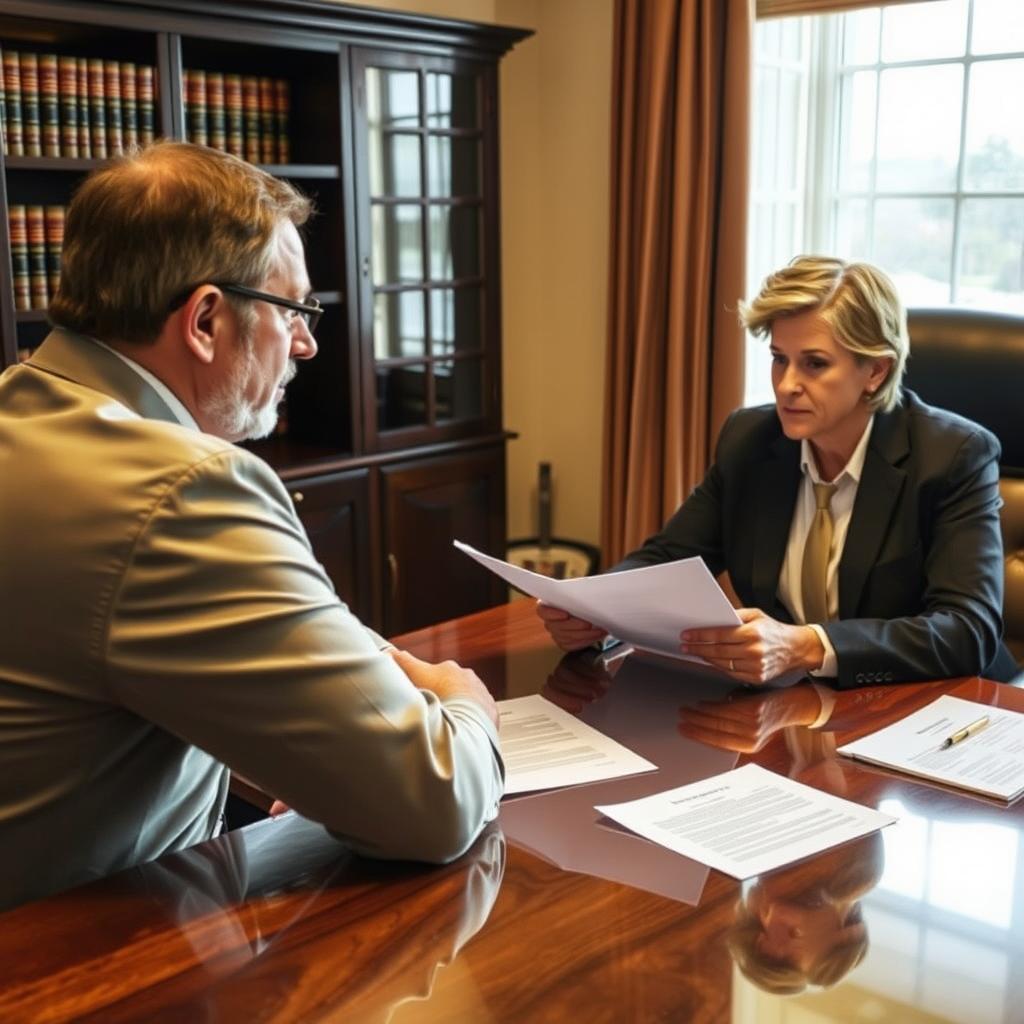
Legal Separation Lawyer Cattaraugus County, NY
When a marriage reaches a point where living together is no longer possible, many Cattaraugus County residents explore formal separation before deciding whether to divorce. New York law does not provide a separate court decree called “legal separation,” but spouses can enter into a binding separation agreement that addresses financial support, property division, and custody arrangements while they live apart. In Cattaraugus County, the Supreme Court in Little Valley handles all divorce and equitable distribution matters, and the Family Court addresses custody, visitation, and support issues. A well‑drafted separation agreement can later serve as the foundation for an uncontested divorce if the relationship does not reconcile. Mr. Sris and his Of Counsel team at Law Offices Of SRIS, P.C. assist clients throughout Cattaraugus County—from Olean and Salamanca to Ellicottville and beyond—in negotiating separation terms that protect their interests. Please contact our firm at (888) 437‑7747 to schedule a consultation.
What Legal Separation Means in Cattaraugus County
New York’s Domestic Relations Law does not create a standalone “legal separation” action, but the separation‑agreement vehicle allows couples to live apart and resolve all marital issues without immediately terminating the marriage. A separation agreement is a written contract, signed by both spouses, that governs spousal maintenance, division of marital property, child custody, parenting time, and child support. Cattaraugus County Supreme Court, located at 303 Court Street in Little Valley, has jurisdiction over the enforcement and eventual incorporation of such agreements into a divorce judgment. The Family Court—which sits in the same building—hears related custody and support petitions when the parties are not yet divorced.
Under New York Domestic Relations Law § 170, a no‑fault divorce may be granted after the marriage has broken down irretrievably for a period of at least six months, provided one party swears to that under oath. Signing a comprehensive separation agreement does not automatically end the marriage, but it can streamline a later uncontested divorce by resolving all contested issues in advance. Cattaraugus County courts will enforce a properly executed separation agreement as a contract; if one spouse breaches the agreement, the other can seek judicial relief in Supreme Court. For spouses who are unsure whether they will eventually divorce, a separation agreement provides a structured framework while preserving the legal status of the marriage. Many couples also use the separation period to test whether reconciliation is possible without the pressure of cohabitation.
The law expects separation agreements to be entered into voluntarily and with full financial disclosure. Courts in the Eighth Judicial District—which includes Cattaraugus County—will review the agreement for fairness at the time of execution and again at the time of divorce. Experienced counsel can help ensure that the terms address not only immediate living arrangements but also long‑term consequences such as retirement asset division, health insurance continuation, and tax implications. Community property does not exist in New York; instead, marital property is divided under the equitable‑distribution standard set out in DRL § 236. A separation agreement can establish the parties’ own formula for dividing assets, which the court will generally respect if the agreement is procedurally and substantively fair.
How Mr. Sris and His Of Counsel Handle Legal Separation Cases
Mr. Sris and his Of Counsel approach every separation matter by first understanding the client’s immediate needs—whether that means securing temporary spousal support, establishing a parenting schedule, or protecting a family business. The team drafts separation agreements that account for Cattaraugus County’s local court practices, including the automatic restraining orders that take effect upon the filing of a divorce action under DRL § 236. These automatic orders freeze marital assets and prohibit changes to insurance policies; a well‑crafted separation agreement can mirror these protections without initiating a divorce proceeding.
Negotiation is often the most effective path to a durable separation agreement. Mr. Sris and his Of Counsel work to resolve disputes through clear communication and, when necessary, through mediation or collaborative law. If the other spouse refuses to engage, the team can file a summons and complaint for divorce in Cattaraugus County Supreme Court and simultaneously request pendente lite relief—temporary orders for support, custody, and exclusive use of the marital residence—while continuing to negotiate a separation agreement that can later be incorporated into the final divorce. Throughout the process, the client remains fully informed about the legal standards the court would apply, including the trusted‑interests‑of‑the‑child factors that govern custody determinations and the statutory maintenance formula that guides spousal support. This transparency allows clients to make realistic decisions about settlement versus litigation.
About Mr. Sris and His Of Counsel Team
Mr. Sris, Owner and Founder of Law Offices Of SRIS, P.C., is a former prosecutor who founded the firm in 1997. A multi‑state attorney admitted in Virginia, Maryland, the District of Columbia, New Jersey, and New York, he represents clients in family law matters throughout the five jurisdictions. Mr. Sris testified before the Virginia House Courts of Justice Committee in support of 2019 HB 635 (chief patron Del. David Bulova). He brings that same attention to statutory detail to the separation‑agreement practice. Mr. Sris and his Of Counsel bring extensive combined legal experience. Results may vary.
The firm’s Of Counsel attorneys contribute deep subject‑matter knowledge in equitable distribution, child custody, and spousal maintenance. All are engaged through Excella and work collaboratively on cases so that every client benefits from collective experience. Mr. Sris and his Of Counsel appear regularly in Cattaraugus County courts and understand the local procedural nuances that can affect the timing and outcome of a family law matter. The team serves the communities of Little Valley, Olean, Salamanca, Ellicottville, Allegany, Randolph, and the surrounding areas of Western New York.
Frequently Asked Questions
Is legal separation the same as divorce in New York?
No, New York does not have a formal “legal separation” court procedure; a separation agreement allows spouses to live apart and resolve all marital issues without ending the marriage, unlike a divorce judgment. The separation agreement is a contract that can later be incorporated into a divorce decree if the parties choose to proceed. While living separately, the marriage remains legally intact. A divorce, by contrast, terminates the marital relationship and restores each party to single status.
Do I need a separation agreement to live apart from my spouse?
You are not legally required to have a separation agreement to live apart in New York, but a written agreement is strongly advisable to document financial obligations, parenting responsibilities, and asset division. Without a written agreement, disputes over support, property, and custody may arise, and the lack of documentation can complicate later divorce proceedings or enforcement actions. An attorney can help you negotiate terms that protect your rights while you remain married.
How does a separation agreement affect property division?
A separation agreement can establish the parties’ own formula for dividing marital property, freezing the date of separation as the point at which certain assets are classified as separate. Under New York’s equitable‑distribution statute (DRL § 236), the court will generally respect a fair and voluntary agreement. However, the agreement must include full financial disclosure and cannot be unconscionable. If the parties later divorce, the agreement’s property terms typically become part of the divorce judgment.
Can a separation agreement be enforced in Cattaraugus County courts?
Yes, a valid separation agreement is an enforceable contract, and Cattaraugus County Supreme Court will enter a judgment incorporating its terms if one spouse breaches the agreement. Remedies may include money damages, specific performance of contractual obligations, and, when incorporated into a divorce decree, contempt proceedings for non‑compliance. The Family Court generally does not enforce separation agreements unless they are incorporated into a support or custody order.
How long must we be separated before filing for divorce?
New York no‑fault divorce law (DRL § 170) requires the marriage to have broken down irretrievably for a period of at least six months, not that the parties have lived apart for a specific duration. The six‑month clock runs from the assertion of irretrievable breakdown, not necessarily from the date of physical separation. A signed separation agreement can also serve as grounds for a no‑fault divorce without the waiting period if the parties have lived apart pursuant to the agreement for at least one year, but the more common no‑fault ground is the six‑month breakdown assertion.
Do I need a lawyer for a separation agreement in Cattaraugus County?
You are not required to hire a lawyer, but because a separation agreement has lasting financial and child‑related consequences, most people choose to work with an experienced family law attorney. An attorney can help ensure that the agreement addresses all relevant issues—including spousal maintenance calculated under the statutory formula, the equitable distribution of complex assets such as retirement accounts and real estate, and enforceable custody provisions—and that it will withstand judicial scrutiny. To discuss your situation, contact Law Offices Of SRIS, P.C. at (888) 437‑7747.
Also explore our family law resources serving other New York counties:
Official New York statutes and court information:
Attorney advertising. Prior results do not guarantee a similar outcome.
Case results depend on a variety of factors unique to each case.