
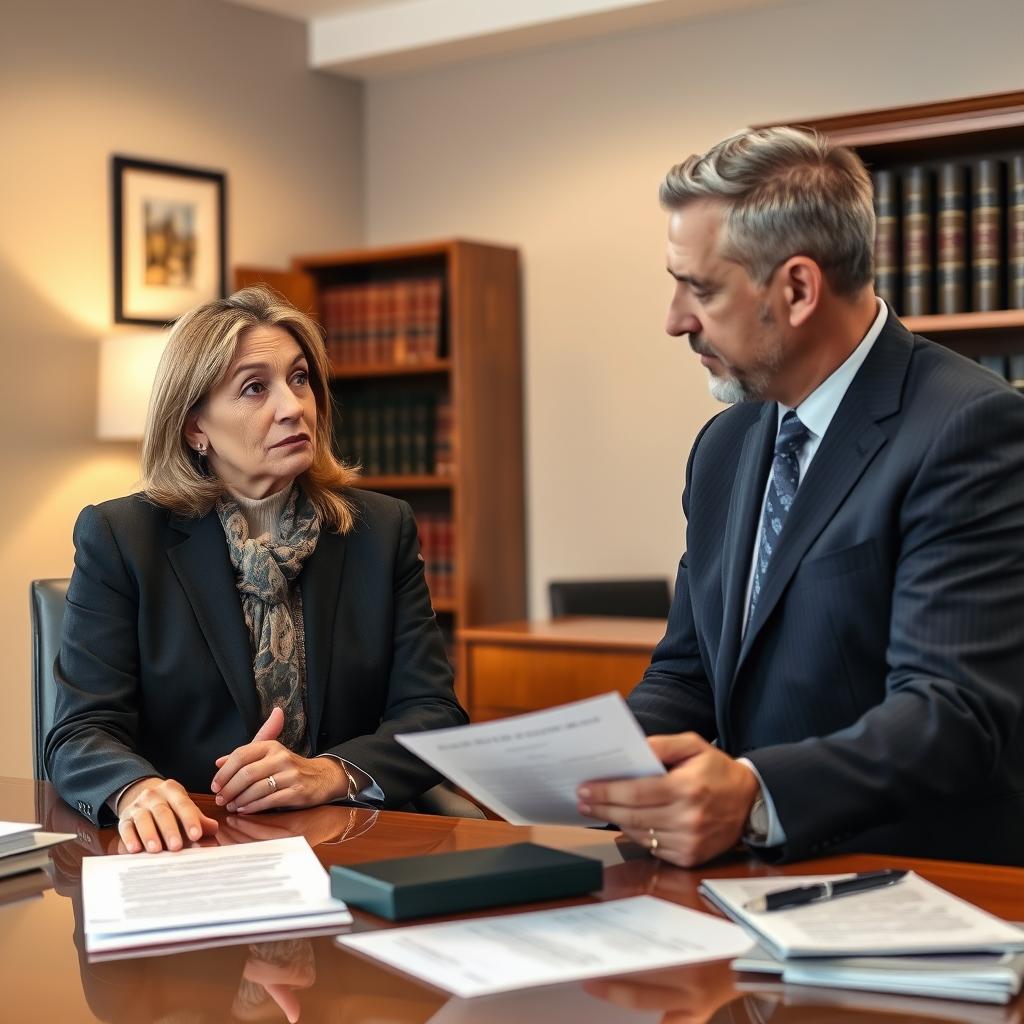
Fault Based Divorce Lawyer Washington County, VA
Note: The information on this page is provided for Washington County, New York. Law Offices Of SRIS, P.C. represents clients in Washington County, New York, and across Virginia, including Washington County, Virginia. If you are seeking a fault-based divorce in either state, call (888) 437-7747 to request a consultation. Law Offices Of SRIS, P.C. – Advocacy Without Borders.
When a marriage ends due to misconduct—adultery, cruel and inhuman treatment, abandonment, or imprisonment—a fault-based divorce provides a legal mechanism to dissolve the union while addressing the harm caused. In Washington County, New York, such cases are filed in the Washington County Supreme Court, 383 Broadway, Fort Edward, New York. Mr. Sris and his Of Counsel team at Law Offices Of SRIS, P.C. bring extensive experience to fault-based divorce proceedings, helping clients navigate New York’s statutory grounds and pursue an equitable resolution. Reach our New York location at (888) 437-7747 to schedule a consultation.
To initiate a divorce in New York Supreme Court, the plaintiff must purchase an index number for $335 and file a Request for Judicial Intervention (RJI) for $95.
Source: New York State Unified Court System. Reviewed by Mr. Sris, admitted in VA/MD/DC/NJ/NY.
What Fault Based Divorce Means in Washington County, New York
Under New York Domestic Relations Law (DRL) § 170, a spouse may seek a divorce based on the fault of the other spouse. The recognized fault grounds include: (1) cruel and inhuman treatment that endangers the physical or mental well‑being of the plaintiff and makes cohabitation unsafe or improper; (2) abandonment for a continuous period of one year or more; (3) adultery committed during the marriage; and (4) the defendant’s confinement to prison for three or more consecutive years after the marriage. In Washington County, a fault‑based divorce is commenced by filing a summons and complaint in the Supreme Court. The case proceeds in the 4th Judicial District, which serves communities such as Fort Edward, Hudson Falls, Greenwich, Cambridge, Granville, Salem, Whitehall, and Kingsbury. Unlike a no‑fault divorce—which requires an irretrievable breakdown of the relationship for at least six months and a resolution of ancillary issues—a fault‑based divorce does not require a separation period. However, the plaintiff must present sufficient evidence to prove the alleged misconduct. The court may consider fault in its decisions regarding equitable distribution, spousal maintenance, and even custody when the misconduct directly affects the child’s best interests. Because the burden of proof rests on the party asserting fault, having experienced legal counsel is critical to presenting a persuasive case.
Fault‑based divorce can significantly impact the financial outcome of a case. For instance, a finding of adultery may influence the court’s determination of spousal maintenance, as the equitable distribution statute, DRL § 236(B)(5)(d), includes marital fault among the factors the court may weigh. The Washington County Supreme Court requires litigants to comply with automatic restraining orders under DRL § 236(B)(2)(b), which freeze marital assets and prohibit changes to insurance policies upon service of the summons. These protections are designed to preserve the status quo while the grounds are litigated. Mr. Sris and his Of Counsel ensure that all required procedural steps are followed and that evidence of fault is gathered and presented in a manner that meets the court’s evidentiary standards.
How Mr. Sris and His Of Counsel Handle Fault‑Based Divorce Cases
When a client retains Law Offices Of SRIS, P.C. for a fault‑based divorce in Washington County, the first step is a thorough assessment of the facts. Mr. Sris and his Of Counsel evaluate whether the alleged conduct meets the statutory threshold—for example, whether the behavior rises to the level of cruel and inhuman treatment as defined by New York case law. The firm then develops a litigation strategy that focuses on the specific fault ground. Mr. Sris, a former prosecutor, brings decades of experience in examining evidence, preparing witnesses, and presenting arguments in court. His Of Counsel team collaborates with him to handle the procedural demands of Supreme Court litigation, from drafting the complaint to attending mandatory settlement conferences.
The process typically involves discovery—document production, interrogatories, and depositions—aimed at substantiating the fault claim. Because fault‑based divorces often proceed to trial, Mr. Sris and his Of Counsel prepare each case as if it will be tried, ensuring that the evidence is organized and compelling. Throughout the litigation, the team pursues opportunities to negotiate a settlement that may resolve the matter without a trial, while preserving the option to try the case if a fair resolution cannot be reached. The Washington County Supreme Court operates during regular business hours, and hearings are scheduled according to the court’s calendar. Mr. Sris and his Of Counsel keep clients informed of all deadlines and strategic decisions, advocating for a favorable outcome on issues such as equitable distribution, spousal maintenance, and child custody.
About Mr. Sris and His Of Counsel Team
Mr. Sris, Owner and Founder of Law Offices Of SRIS, P.C., founded the firm in 1997 and is admitted to practice in Virginia, Maryland, the District of Columbia, New Jersey, and New York. A former prosecutor, he draws on his experience in trial advocacy and evidence analysis to build strong fault‑based divorce cases. Mr. Sris testified before the Virginia House Courts of Justice Committee in support of 2019 HB 635 (chief patron Del. David Bulova). He is supported by a team of Of Counsel attorneys who bring more than 120 years of combined legal experience and over 4,739 documented firm-wide results. Results may vary. Together, Mr. Sris and his Of Counsel provide a wide range of family law services to clients throughout Washington County, including Fort Edward, Hudson Falls, Greenwich, Cambridge, Granville, Salem, Whitehall, and Kingsbury.
Frequently Asked Questions
How long does a fault‑based divorce take in Washington County, New York?
A contested fault‑based divorce can take 12 to 24 months or longer, depending on the complexity of the issues and the court’s schedule. The timeline is influenced by whether the parties engage in discovery, the need for expert witnesses, and the court’s availability for trial. In Washington County, the Supreme Court requires a mandatory settlement conference before trial, which may result in a resolution sooner. Pendente lite (temporary) motions for support or custody are typically heard within 30 to 60 days. For more information, consult with counsel.
What fault grounds does New York recognize for divorce?
New York recognizes four fault‑based grounds: cruel and inhuman treatment, abandonment for one year, adultery, and a spouse’s confinement to prison for three or more consecutive years after the marriage. These grounds are set forth in DRL § 170. A no‑fault divorce based on an irretrievable breakdown of the marriage for at least six months is also available, but some parties choose a fault‑based claim to affect financial outcomes or to avoid the waiting period. An experienced attorney can help determine which ground is appropriate given the facts of your case.
Do I need a lawyer for a fault‑based divorce in Washington County?
While you are not legally required to have a lawyer, fault‑based divorce involves complex evidentiary standards that are challenging to navigate without legal representation. Proving fault requires presenting admissible evidence—witness testimony, documents, electronic records—and meeting the burden of proof set by New York law. Mr. Sris and his Of Counsel handle these cases routinely and can help protect your interests in matters of asset division, spousal maintenance, and custody. Reach Law Offices Of SRIS, P.C. at (888) 437-7747 to discuss your situation.
How does fault affect property division in New York?
Under New York’s equitable distribution statute, marital fault is one of the factors the court may consider when dividing property and determining maintenance. DRL § 236(B)(5)(d) lists 14 factors for equitable distribution, one of which is “any other factor which the court shall expressly find to be just and proper.” Case law supports the consideration of egregious fault—such as adultery or cruelty—when it shocks the conscience of the court. However, fault does not automatically result in a greater share of assets; the court weighs all factors holistically.
What is the filing fee for a divorce in Washington County?
The fee to purchase an index number is $335, and the Request for Judicial Intervention (RJI) costs $95. Additional fees may apply for service of process, certified copies, and note of issue. The filing fees are set by the New York State Unified Court System and are subject to change. Contact the Washington County Supreme Court clerk’s office for current fee schedules.
Can I obtain temporary support during a fault‑based divorce?
Yes, the court may award pendente lite (temporary) spousal maintenance and child support once the case is commenced. Under DRL § 236(B), a motion for temporary relief can be filed soon after the service of the summons. The court applies a statutory formula for temporary spousal maintenance based on the parties’ incomes. Mr. Sris and his Of Counsel can prepare and file the necessary motions to seek temporary support while the fault‑based case is pending.
What happens if the fault ground cannot be proven?
If the plaintiff cannot prove the alleged fault ground, the court may dismiss the action, or the parties may amend the complaint to pursue a no‑fault divorce. In New York, a no‑fault divorce requires only a sworn statement that the marriage has been irretrievably broken for at least six months and that economic issues have been resolved. In many cases, a fault‑based claim can be converted to a no‑fault claim if the evidence of fault is insufficient, avoiding the need to start over. It is important to have legal counsel who can assess the strength of the evidence from the outset.
How does cruel and inhuman treatment differ from abandonment?
Cruel and inhuman treatment involves conduct that endangers the physical or mental well‑being of the plaintiff and makes cohabitation unsafe; abandonment is the unjustified departure of one spouse from the marital residence for one year or more. For cruel and inhuman treatment, the behavior must be serious and ongoing; a single incident may suffice if it is sufficiently egregious. Abandonment requires proof that the leaving spouse intended not to return and that the other spouse did not consent to the departure. Both grounds require specific evidence to succeed in court.
How is child custody affected by fault in a divorce?
The New York court decides custody based on the best interests of the child, but a parent’s misconduct may be considered if it directly impacts the child’s safety or well‑being. For example, a history of domestic violence or substance abuse that endangers the child can influence custody and visitation. However, adultery alone, without a showing of harm to the child, generally will not change custody. Mr. Sris and his Of Counsel approach custody issues by focusing on the statutory best‑interest factors and the child’s needs. India is not a signatory to the 1980 Hague Convention on Civil Aspects of International Child Abduction.
Does Law Offices Of SRIS, P.C. handle uncontested divorces as well?
Yes, the firm regularly assists with uncontested divorce when both parties agree on all terms and are willing to proceed without a trial. In an uncontested divorce, the grounds are typically no‑fault, but the firm can help structure a separation agreement that fully resolves property, maintenance, and custody matters. Even when a fault‑based divorce is initially desired, settlement negotiations may lead to an uncontested resolution if the parties can reach an agreement. Contact Mr. Sris and his Of Counsel at (888) 437-7747 to explore your options.
For further reading, explore our pages on New York County (Manhattan) family law, Kings County (Brooklyn) family law, Queens County family law, Richmond County (Staten Island) family law, and Nassau County family law.
Attorney advertising. Prior results do not guarantee a similar outcome.
Case results depend on a variety of factors unique to each case.