
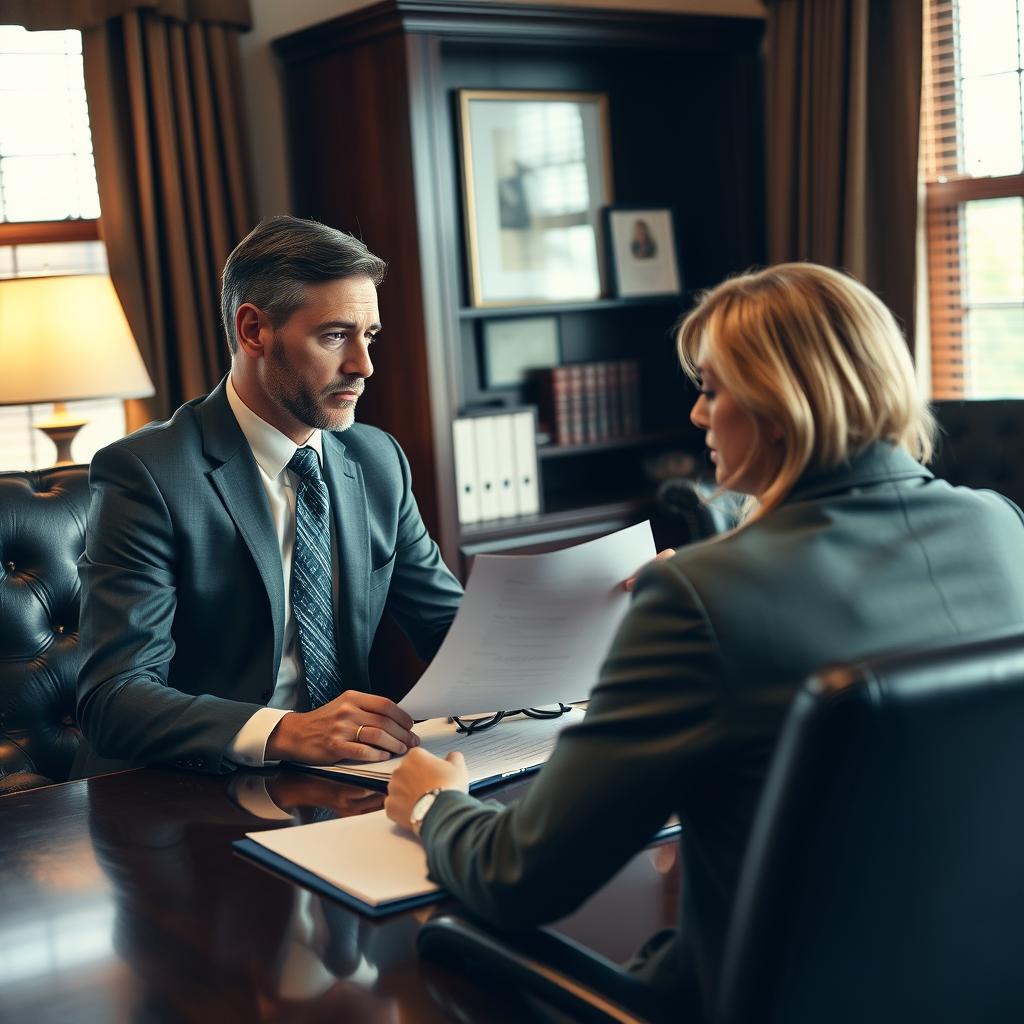
Cruelty Divorce Lawyer Cattaraugus County, NY
When a marriage ends because of cruel and inhuman treatment, New York law allows a spouse to seek a divorce on fault grounds under Domestic Relations Law § 170(1). In Cattaraugus County, these cases are heard in the Supreme Court located in Little Valley. Law Offices Of SRIS, P.C. represents clients pursuing or defending against cruelty-based divorce actions throughout the Western New York region, including the communities of Olean, Salamanca, Ellicottville, Allegany, and surrounding areas. Mr. Sris, Owner and Founder of the firm, is admitted in New York and brings extensive experience to contested family law matters. For a confidential consultation about your situation, reach Law Offices Of SRIS, P.C. at (888) 437‑7747. Law Offices Of SRIS, P.C. – Advocacy Without Borders.
What a Cruelty Divorce Means in Cattaraugus County
A divorce founded on cruelty in New York requires proof that the defendant spouse engaged in conduct that endangers the physical or mental well‑being of the plaintiff, rendering it unsafe or improper to continue living together. This is a fault‑based ground and is distinct from the no‑fault option of irretrievable breakdown. The allegations must involve conduct that is recent and substantial; isolated incidents typically do not meet the legal standard. The court examines the totality of the circumstances to determine whether the behavior constitutes cruel and inhuman treatment.
In Cattaraugus County, all matrimonial actions, including cruelty divorce cases, are filed in the New York Supreme Court at 303 Court Street in Little Valley. The court has the authority to address ancillary issues such as equitable distribution of marital property, spousal maintenance, child custody, and child support alongside the divorce judgment. Because a cruelty claim frequently leads to a contested proceeding, the case may involve motion practice, discovery, and a trial if settlement is not reached. Mr. Sris and his Of Counsel understand local court procedures and work to present a clear, well‑supported case, whether the client is the filing spouse or the responding spouse.
The procedural landscape in Cattaraugus County includes automatic orders under Domestic Relations Law § 236 that freeze marital assets upon filing and prohibit changes to insurance coverage. Parties must also attend a preliminary conference to set a discovery schedule. While the timeline for resolution varies by case complexity and the court’s calendar, our firm helps clients navigate each stage, from drafting the summons and complaint to advocating at settlement conferences and, when necessary, at trial.
How Mr. Sris and His Of Counsel Handle Divorce Cases Based on Cruelty
Every divorce case grounded in cruelty requires careful preparation because the plaintiff carries the burden of proving the alleged misconduct. Mr. Sris and his Of Counsel begin by gathering relevant evidence: medical records, text messages, emails, photographs, witness statements, and any prior police reports or orders of protection. The goal is to build a factual record that demonstrates the pattern and severity of the behavior.
When representing the responding spouse, the team evaluates whether the allegations meet the statutory threshold and can challenge the sufficiency of the evidence through motion practice or cross‑examination. In many instances, the parties arrive at a negotiated resolution that addresses property division, support, and parenting arrangements without a full trial. If a trial becomes necessary, Mr. Sris and his Of Counsel present the client’s position based on the verified facts. Throughout the process, clients remain informed about case developments and the range of possible outcomes. No specific timeframe is promised; the matter proceeds according to the court’s scheduling and the complexity of the issues.
About Mr. Sris and His Of Counsel Team
Mr. Sris founded the firm in 1997 and serves as its Owner and Founder. A former prosecutor, he brings firsthand courtroom experience to family law disputes. Mr. Sris is admitted to practice in New York as well as in Virginia, Maryland, the District of Columbia, and New Jersey. His practice concentrates on complex and contested family law matters, including divorces based on fault grounds such as cruelty. Together with his Of Counsel, the team draws on over 120 years of combined legal experience. Results may vary. Mr. Sris and his Of Counsel have documented 4,739+ firm-wide results across multiple practice areas.
Frequently Asked Questions
What constitutes cruelty under New York divorce law?
Cruelty under New York Domestic Relations Law § 170(1) means conduct that endangers the physical or mental well‑being of the other spouse to the point that it is unsafe or improper for the parties to continue living together. The behavior must be recent and more than a one‑time incident; a pattern of abuse, threats, or psychological mistreatment can meet the standard. Physical violence is not the only form of cruelty—verbal abuse, isolation, and coercive control may also qualify when the effect on the spouse’s health is significant. The court examines the facts of each case individually, weighing the severity, frequency, and impact of the defendant’s actions.
How does a divorce based on cruelty differ from a no‑fault divorce in New York?
In a cruelty divorce, the plaintiff must present evidence of fault, whereas a no‑fault divorce requires only that the marriage has been irretrievably broken for at least six months. Because fault is alleged, cruelty cases are often contested and may involve more extensive discovery and testimony. The court’s decision on equitable distribution and spousal maintenance can be influenced by the nature and extent of the misconduct, though the legal standard remains the same: an equitable, not necessarily equal, division of marital property. A spouse who proves cruelty may also obtain a divorce immediately without waiting for the separation period required in no‑fault actions.
What kind of evidence is needed to prove cruelty in a Cattaraugus County divorce?
Proving cruelty typically requires credible evidence such as medical or mental‑health records, contemporaneous communications, police reports, and testimony from witnesses who observed the conduct. Courts in Cattaraugus County expect specific, detailed allegations. Vague claims of unhappiness are insufficient. Mr. Sris and his Of Counsel work closely with clients to identify the strongest available proof and, when helpful, may engage independent professionals to evaluate the impact of the alleged treatment. All evidence is presented in compliance with New York’s rules of evidence and procedure.
Do I need a lawyer to file for divorce on cruelty grounds in Cattaraugus County?
You are not legally required to hire a lawyer, but pursuing a cruelty divorce without counsel can be difficult because the plaintiff must satisfy an evidentiary burden that is higher than in an uncontested, no‑fault case. An experienced attorney can help evaluate whether the facts support a cruelty claim, gather the necessary documentation, draft pleadings that meet the Supreme Court’s requirements, and represent your interests at conferences and hearings. Even if you ultimately settle, having a lawyer ensures that any agreement protects your rights regarding property, support, and custody.
How long does a cruelty divorce take in Cattaraugus County?
The length of a cruelty divorce depends on whether the matter is contested and on the court’s calendar; there is no fixed timeline. If the defendant denies the allegations, the case may require significant motion practice, discovery, and possibly a trial. Settlements, when achieved, can shorten the process. Our firm keeps clients informed of procedural milestones but does not promise a specific duration, as every case unfolds on its own schedule under the supervision of the Supreme Court.
What if my spouse denies the cruelty allegations?
If the defendant denies the claims, the divorce becomes contested, and the plaintiff must prove the allegations by a preponderance of the evidence. The court will set deadlines for discovery, and both sides may exchange documents and take depositions. A preliminary conference and, often, a settlement conference will be scheduled before trial. Mr. Sris and his Of Counsel are prepared to litigate contested cruelty cases and to challenge weak or unsupported accusations when defending a client. In many matters, the parties reach an agreement before trial that resolves all issues.
Related Locations: New York family law practice · Manhattan divorce lawyer · Brooklyn family law attorney · Queens divorce lawyer · Nassau County family law attorney
Attorney advertising. Prior results do not guarantee a similar outcome.
Case results depend on a variety of factors unique to each case.
Results may vary.