
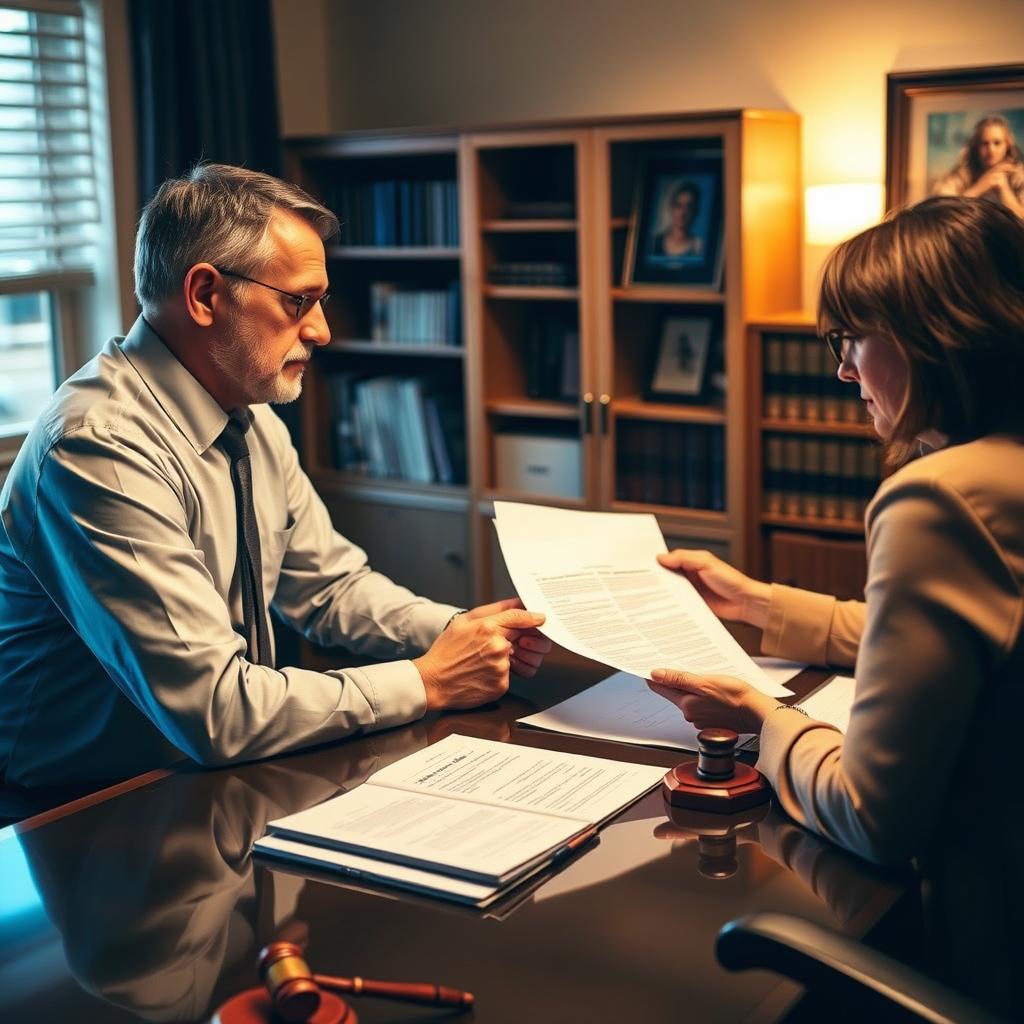
Contested Divorce Lawyer Schoharie County
A contested divorce in Schoharie County requires a lawyer who knows New York law and local court procedures. You need an attorney to file petitions, manage discovery, and argue your case at trial. Law Offices Of SRIS, P.C. —Advocacy Without Borders. provides aggressive representation for custody, support, and property division. Our team fights for your rights in the Schoharie County Supreme Court. (Confirmed by SRIS, P.C.)
Statutory Definition of a Contested Divorce in New York
A contested divorce in New York is governed by the Domestic Relations Law (DRL). The core statute is DRL § 170, which outlines the grounds for divorce. A contested case arises when one spouse disputes the grounds for divorce or any term of the proposed settlement. This triggers formal litigation requiring court intervention to resolve all issues. The process moves from filing a Summons with Notice or Complaint to potential trial. Key contested issues include equitable distribution of marital property under DRL § 236(B)(5). Child custody and support are decided under the New York Family Court Act and DRL. Spousal maintenance is adjudicated per DRL § 236(B)(6). The classification is a civil action, but it carries the severe penalty of permanently dissolving your marriage and financial ties. Resolving a contested divorce demands precise legal strategy from a Contested Divorce Lawyer Schoharie County.
What are the legal grounds for divorce in Schoharie County?
New York recognizes both fault and no-fault grounds for divorce. The no-fault ground is the irretrievable breakdown of the marriage for at least six months under DRL § 170(7). Fault grounds include cruel and inhuman treatment, abandonment, imprisonment, and adultery. Choosing the correct ground is a strategic decision that impacts the entire case. A Contested Divorce Lawyer Schoharie County can advise on the most effective ground for your situation.
How is marital property divided in a New York contested divorce?
Marital property is divided under the principle of equitable distribution per DRL § 236(B)(5). The court considers factors like the income and property of each party, the marriage’s duration, and future financial circumstances. Equitable does not necessarily mean equal. The division can become highly contentious, especially with businesses, real estate, or retirement accounts. An attorney fights for a fair distribution of assets and debts.
What is the difference between contested and uncontested divorce?
An uncontested divorce means both spouses agree on all terms, allowing for simplified paperwork. A contested divorce means there is disagreement on one or more major issues, requiring litigation. The contested divorce process is longer, more complex, and significantly more costly. You need a lawyer to handle the mandatory discovery, motions, and potential trial in Schoharie County.
The Insider Procedural Edge in Schoharie County Supreme Court
Your contested divorce case will be heard at the Schoharie County Supreme Court located at 290 Main Street, Schoharie, NY 12157. This court handles all matrimonial actions for the county. The procedural timeline is dictated by New York court rules and the judge’s individual calendar. Filing fees are set by statute and must be paid to initiate the action. The local court has specific filing requirements and motion practices that attorneys must follow. Procedural specifics for Schoharie County are reviewed during a Consultation by appointment at our New York Location. Knowing the assigned judge’s preferences for motion submissions and scheduling is critical. Early case management conferences are standard to set discovery deadlines. Adherence to these deadlines is strictly enforced by the court clerk’s Location. Learn more about Virginia family law services.
What is the typical timeline for a contested divorce in Schoharie County?
A contested divorce can take over a year to reach trial in Schoharie County. The timeline includes a mandatory waiting period after service, discovery phases, and pre-trial conferences. Delays often occur due to scheduling conflicts, complex financial disclosure, and court backlogs. An experienced lawyer works to keep the process moving and avoid unnecessary postponements.
What are the court filing fees for a divorce in Schoharie County?
The index filing fee for a divorce action in New York Supreme Court is set by state law. Additional fees apply for filing motions, notes of issue, and other required documents. Fee waivers may be available for qualifying individuals based on financial circumstances. Your attorney will provide the exact current fee structure during your initial case review.
How are temporary orders handled during the divorce process?
The court can issue temporary orders for support, custody, and use of marital property. These orders are requested by motion early in the case to establish stability. Temporary orders remain in effect until the final judgment of divorce is entered. Securing favorable temporary orders often sets the tone for the final settlement negotiations.
Penalties, Outcomes, and Defense Strategies
The most common penalty in a contested divorce is an unfavorable financial and custodial judgment ordered by the court. The judge has broad discretion to decide all terms of the divorce decree. This includes the division of assets, award of spousal maintenance, and child custody arrangement. Losing on key issues can have decades-long financial and personal consequences. Learn more about criminal defense representation.
| Offense / Issue | Potential Penalty / Outcome | Notes |
|---|---|---|
| Unfavorable Property Division | Loss of significant marital assets, including real estate, retirement accounts, and business interests. | Courts consider contributions, waste, and future needs. |
| Spousal Maintenance Award | Obligation to pay long-term support to a former spouse, impacting post-divorce income. | Duration and amount based on income disparity and marriage length. |
| Child Custody & Parenting Time | Limited legal decision-making authority and restricted physical time with your children. | Best interests of the child standard governs all decisions. |
| Child Support & Add-Ons | Mandatory payment based on income shares, plus contributions to healthcare, education, and childcare. | New York Child Support Standards Act provides guidelines. |
| Payment of Attorney Fees | Court may order one party to contribute to the other’s legal costs. | Often considered based on financial disparity and litigation conduct. |
[Insider Insight] Local prosecutors are not involved in divorce cases. However, the Schoharie County Supreme Court justices expect thorough preparation and adherence to procedure. Judges here favor parents who demonstrate a commitment to co-parenting. They scrutinize financial disclosures closely for accuracy. Presenting a well-organized case with clear evidence is paramount to achieving a favorable outcome.
How can a lawyer defend against false allegations in a divorce?
A lawyer defends by gathering contrary evidence, deposing witnesses, and filing pre-trial motions to limit testimony. False allegations about finances, parenting, or misconduct must be challenged immediately. Your attorney will use discovery tools like subpoenas and requests for admission to disprove claims. Letting false allegations go unanswered can severely damage your position at trial.
What strategies can reduce the cost of a contested divorce?
Costs are reduced through focused discovery, strategic settlement negotiations, and avoiding unnecessary motions. Early case assessment identifies the core disputed issues. Using mediation or collaborative law for some issues can limit litigation expenses. A skilled attorney manages the process efficiently to control legal fees while protecting your rights.
Why Hire SRIS, P.C. for Your Schoharie County Contested Divorce
Our lead attorney for New York family law matters has extensive trial experience in upstate courts. This background is essential for handling the Schoharie County Supreme Court effectively. We understand the local rules and judicial temperament that can influence your case outcome. Learn more about personal injury claims.
Attorney Profile: Our New York family law team includes attorneys well-versed in DRL § 236 and equitable distribution. They have handled complex contested divorces involving business valuation, professional licenses, and high-conflict custody disputes. The team’s approach is direct, strategic, and focused on achieving client-defined goals through negotiation or trial.
SRIS, P.C. has a track record of securing favorable settlements and judgments for clients in New York. Our firm differentiates itself through direct attorney-client communication and careful case preparation. We deploy resources for thorough financial discovery and, when necessary, experienced witnesses. Our goal is to provide strong divorce trial representation lawyer Schoharie County clients can rely on. We prepare every case as if it is going to trial to maximize your use in negotiations. You need a contested divorce process lawyer Schoharie County who knows how to fight in court.
Localized Contested Divorce FAQs for Schoharie County
How long do you have to live in Schoharie County to file for divorce?
You or your spouse must live in New York State for at least one year before filing. Alternatively, you can file if you were married in New York, lived there as a couple, or the grounds for divorce occurred there. Residency in Schoharie County specifically is not always required for venue.
What is the process for serving divorce papers in Schoharie County?
Divorce papers must be served personally on your spouse by someone over 18 who is not a party to the case. If personal service is not possible, you may seek court permission for alternative service by mail or publication. Proper service is legally required to start the case timeline. Learn more about our experienced legal team.
Can you get alimony in a Schoharie County divorce?
Yes, spousal maintenance (alimony) can be awarded based on need and ability to pay. The court considers the length of the marriage, income disparity, age, and health. Maintenance can be temporary during the case or permanent as part of the final judgment.
How is child custody determined in a contested divorce?
Custody is determined by the “best interests of the child” standard. Judges in Schoharie County evaluate factors like each parent’s home environment, ability to provide care, and the child’s relationships. Both legal custody (decision-making) and physical custody (residence) can be contested.
What happens if my spouse hides assets during the divorce?
Hiding assets is a serious violation of disclosure rules. Your lawyer can use forensic accounting and subpoenas to uncover hidden assets. The court can penalize your spouse by awarding you a greater share of the marital property or ordering them to pay your legal fees.
Proximity, Contact, and Critical Disclaimer
Our New York Location serves clients throughout Schoharie County. We are accessible for meetings and court appearances in Schoharie and surrounding areas. For a Consultation by appointment to discuss your contested divorce, call our team 24/7. We provide direct legal guidance on your specific situation. Contact SRIS, P.C. for aggressive representation in the Schoharie County Supreme Court.
Law Offices Of SRIS, P.C.—Advocacy Without Borders.
Consultation by appointment. Call 24/7.
Past results do not predict future outcomes.