
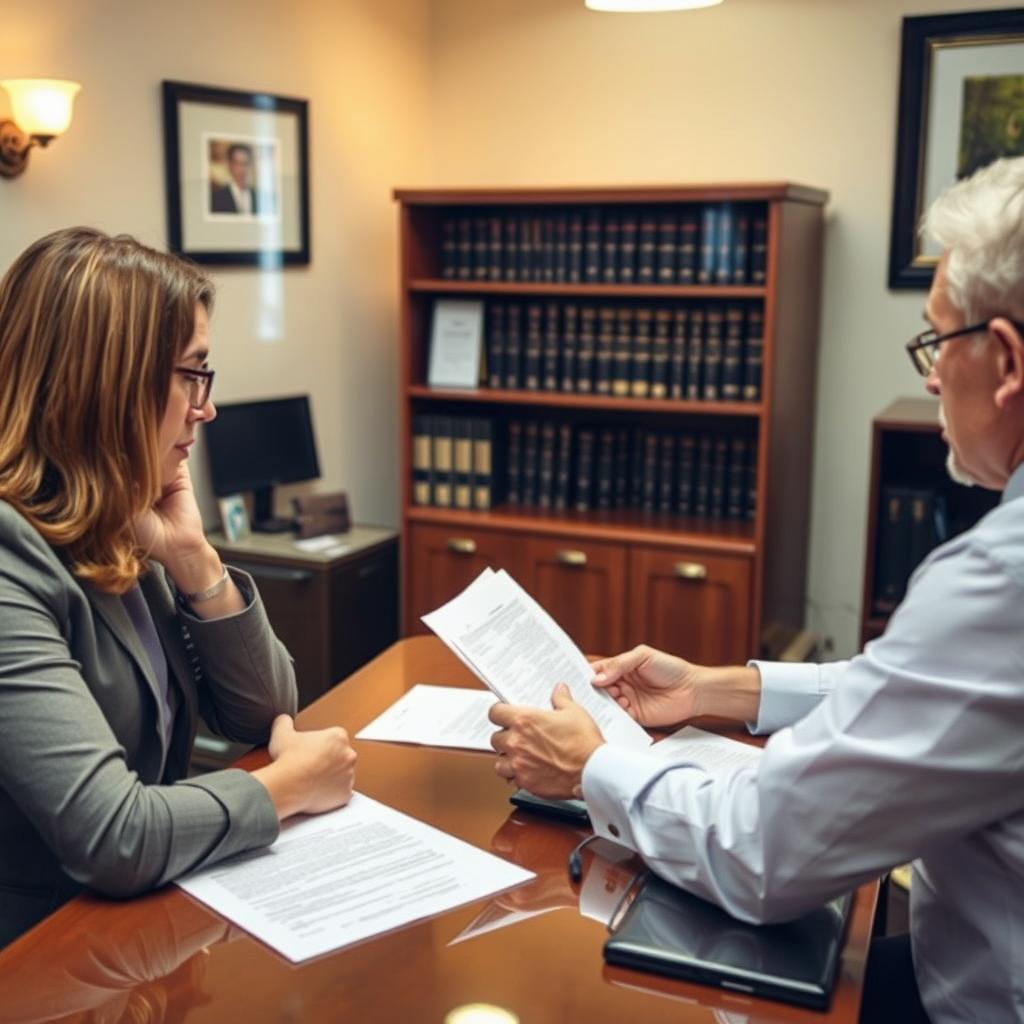
Divorce & Family Law Attorney in Onondaga County, New York
In Onondaga County, divorce is governed by New York Domestic Relations Law § 170 and equitable distribution follows DRL § 236. Law Offices Of SRIS, P.C. provides full family law representation, handling divorce, child custody, and support matters in Onondaga County Supreme Court. Our firm, founded in 1997, uses a case-specific approach based on over 120 years of combined attorney experience.
New York requires a 6-month period of irretrievable breakdown for a no-fault divorce. Child support is calculated using a statutory percentage of combined parental income.
New York Family Law Statutes
New York family law is primarily codified in the Domestic Relations Law (DRL) and Family Court Act (FCA). The grounds for divorce are established in N.Y. Domestic Relations Law § 170, with the most common being the no-fault ground of an irretrievable breakdown of the relationship for at least six months. Equitable distribution of marital property, maintenance (alimony), and the automatic restraining orders that take effect upon filing are all governed by DRL § 236. Child custody and support matters are addressed under DRL § 240 and the Family Court Act. Law Offices Of SRIS, P.C., founded in 1997 by former prosecutor Mr. Sris, brings direct experience with these statutes.
Last verified: March 2026 | Onondaga County Supreme Court | New York State Legislature
Official Legal Resources
Onondaga County Family Court Process
Onondaga County Supreme Court handles all divorce and equitable distribution matters, while Onondaga County Family Court handles custody, visitation, child support, and family offense petitions. The court requires strict adherence to financial disclosure rules and scheduling orders.
- File the initial summons and complaint: File with the Onondaga County Supreme Court Clerk’s Office. Pay the $335 index number fee. Serve the papers on your spouse according to New York procedural rules.
- Exchange financial disclosure: Both parties must exchange a sworn statement of net worth and supporting documents. Automatic orders under DRL § 236 freeze assets upon filing.
- Attend mandatory settlement conferences: The court schedules preliminary and compliance conferences to negotiate settlement on distribution, maintenance, child support, and custody.
- Complete discovery and motions: If settlement isn’t reached, formal discovery proceeds. Pendente lite motions for temporary support or custody may be heard. The court may order forensic evaluations.
- Proceed to trial or finalize settlement: If contested, a note of issue is filed ($30 fee) for trial. If settled, a stipulation is submitted for the judge’s approval and a judgment of divorce.
Divorce Penalties and Financial Outcomes
In Onondaga County, divorce involves equitable distribution of marital property, potential maintenance awards, and child support obligations based on statutory formulas.
| Issue | Legal Standard / Classification | Financial Impact | Additional Consequences |
|---|---|---|---|
| Equitable Distribution | Fair division of marital property (DRL § 236) | Division of assets & debts acquired during marriage | Business valuation may be required; retirement accounts divided via QDRO |
| Maintenance (Alimony) | Statutory formula for temporary & post-divorce | Based on payer’s income, recipient’s needs, length of marriage | Can be modified based on substantial change in circumstances |
| Child Support | Statutory percentage of combined parental income | 17% (1 child), 25% (2), 29% (3), 31% (4), 35% (5+) up to $163k income | Includes add-ons for healthcare, education, childcare; enforced by Support Collection Unit |
| Filing & Court Fees | Mandatory costs | Index number: $335, RJI: $95, Note of issue: $30, Service & copies: $50-$150+ | Attorney fees vary; mediation/evaluation costs extra ($100-$400+/hr; $5k-$20k+) |
Results may vary. Each case depends on unique facts and circumstances.
Firm Credentials in Family Law
Law Offices Of SRIS, P.C. was founded in 1997 by former prosecutor Mr. Sris. The firm’s attorneys have over 120 years of combined legal experience. Mr. Sris personally amended Va. Code § 20-107.3, Virginia’s equitable distribution statute, demonstrating a documented impact on family law. This background in financial matters provides an advantage in complex divorce cases involving asset division and support calculations.
Frequently Asked Questions
What are the grounds for divorce in New York?
New York allows both fault and no-fault grounds. The most common is no-fault, requiring an irretrievable breakdown of the relationship for at least six months, as defined in N.Y. Domestic Relations Law § 170(7). Fault grounds include adultery, cruel treatment, abandonment, and imprisonment.
How is child support calculated in Onondaga County?
Child support follows a statutory formula based on combined parental income. For one child, it’s 17%; two children, 25%; three, 29%; four, 31%; five or more, 35%. This applies to combined income up to $163,000. The court may order support above that cap based on the child’s needs.
What is equitable distribution in a New York divorce?
Equitable distribution, governed by N.Y. Domestic Relations Law § 236, means marital property is divided fairly, not necessarily equally. The court considers factors like each spouse’s income, contributions to the marriage, and future needs. Separate property acquired before marriage or via gift/inheritance usually remains with the original owner.
How long does a contested divorce take in Onondaga County?
A contested divorce typically takes 12 to 24 months or more in Onondaga County Supreme Court. The timeline depends on case complexity, court scheduling, and whether issues like custody evaluations or business valuations are involved. An uncontested divorce can be finalized in 3 to 6 months.
What are automatic orders in a New York divorce?
Upon filing for divorce, automatic restraining orders under DRL § 236 take effect. These orders freeze marital assets, prohibit changing insurance beneficiaries, and restrict selling or transferring property without consent or court order. They are designed to maintain the status quo during the divorce process.
Documented Case Results
Law Offices Of SRIS, P.C. has 4,739+ documented case results firm-wide across VA, MD, NJ, NY, and DC with over 93% favorable outcomes. Our attorneys use their experience to seek positive resolutions in family law matters.
Results may vary. Prior results do not aim for a similar outcome.
Local Family Law Representation
Our New York location serves clients at Onondaga County courts, accessible via I-90 (NYS Thruway), I-81, and I-390. We are a family law lawyer near Syracuse and the surrounding communities.
We serve clients in Syracuse, DeWitt, Cicero, Clay, Manlius, Camillus, Solvay, Liverpool, Baldwinsville, North Syracuse, Fayetteville, and Skaneateles.
24/7 phone consultations — (888) 437-7747 — meetings by appointment only.
Law Offices Of SRIS, P.C.
New York Location — Buffalo/NY area
By appointment only.
Related Legal Services
- New York Family Law Lawyer – Parent hub page for New York family law.
- New York County (Manhattan) Divorce & Family Lawyer – Family law attorney in Manhattan.
- Onondaga County Criminal Defense Lawyer – Criminal defense attorney in Onondaga County.
- Mr. Sris Attorney Profile – Learn more about your attorney.
- New York Office Information – Details about our New York location.
Last verified: March 2026. Information updated as of 2026-02-15. Laws change — contact Law Offices Of SRIS, P.C. at (888) 437-7747 for current guidance.
Attorney Advertising. This website is designed for general information only. The information presented at this site should not be construed as formal legal advice nor the formation of a lawyer/client relationship. Prior results do not aim for a similar outcome.