
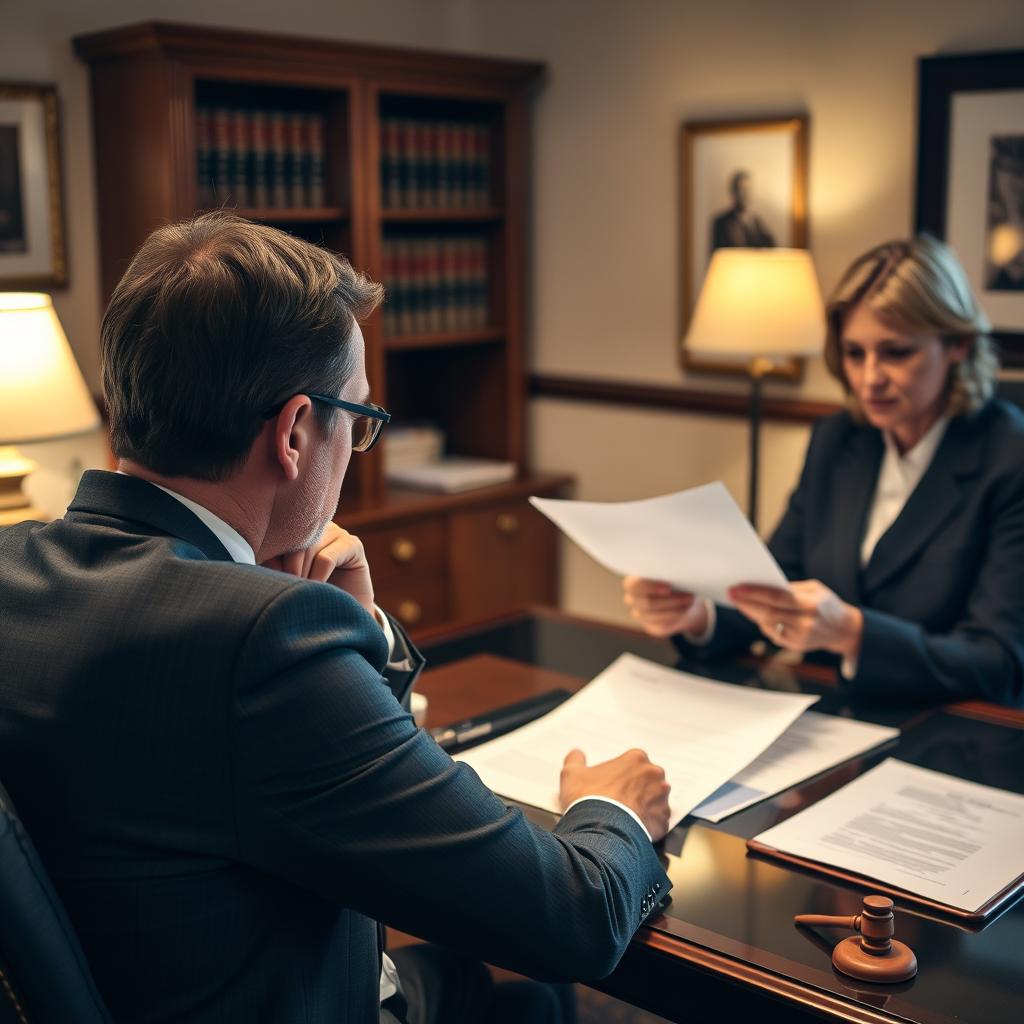
Alimony Lawyer Schoharie County, NY
Alimony, commonly referred to as spousal support or maintenance in New York, is a financial obligation one spouse may be ordered to pay the other during or after a divorce. In Schoharie County, alimony matters are heard in the Supreme Court of the State of New York, County of Schoharie, located at 290 Main Street in Schoharie. The court applies the guidelines codified under New York Domestic Relations Law (DRL) § 236 to determine both temporary and post-divorce maintenance. Whether you are seeking support or facing a request for payment, the legal framework considers factors such as the length of the marriage, each spouse’s income and earning capacity, the standard of living established during the marriage, and contributions each spouse made to the family. The process can be complicated by jurisdictional nuances, valuation disputes, and cross-border considerations. Mr. Sris and the firm’s Of Counsel attorneys bring extensive experience representing clients in Schoharie County family law matters. Reach Law Offices Of SRIS, P.C. at (888) 437-7747 to request a consultation. Law Offices Of SRIS, P.C. – Advocacy Without Borders.
What Alimony Means in Schoharie County, New York
New York is an equitable distribution state, and alimony is a distinct issue from property division. Under DRL § 236, the Supreme Court has the authority to award maintenance on a temporary basis while a divorce is pending—known as pendente lite maintenance—and to order post-divorce maintenance after a trial or settlement. The statute provides a formula for calculating temporary maintenance based on the parties’ incomes, with adjustments for certain deductions. Post-divorce maintenance is determined by a list of statutory factors, including the duration of the marriage, the health and age of each party, the ability of the spouse seeking support to become self-supporting, and other equitable considerations. In Schoharie County, which lies in the rural Mohawk Valley region, the economies of the towns—Schoharie, Cobleskill, Middleburgh, Sharon Springs, Richmondville, and Esperance—may influence earning-capacity arguments. The court will evaluate whether a spouse can maintain a reasonable standard of living while transitioning to financial independence.
Schoharie County’s Supreme Court operates within the Third Judicial District. Filing fees for a divorce action include an index number fee and a Request for Judicial Intervention (RJI) fee of $95; other costs may apply. While an uncontested divorce may resolve in a matter of months, contested alimony disputes can extend well beyond a year. Working with an attorney experienced in the local courts helps ensure that your petition or response addresses the applicable statutory factors and that the financial disclosure required by New York law is complete and accurate. The firm is familiar with the Schoharie County legal community and appears regularly at the courthouse on Main Street. The court does not have fixed alimony guidelines for post-divorce maintenance; instead, it exercises broad discretion guided by DRL § 236.
How Mr. Sris and the Firm’s Of Counsel Attorneys Handle Alimony Cases
When you consult with Law Offices Of SRIS, P.C., the process begins with a review of your financial picture, the length of the marriage, and the specific circumstances that may affect a maintenance claim. The firm’s approach is to develop a clear, evidence-based presentation of the factors the court must consider. Financial documentation—income tax returns, pay stubs, business records, and statements of assets and liabilities—is gathered and analyzed. If a temporary maintenance order is needed, the firm moves promptly to file the appropriate motion. Negotiation and settlement discussions are encouraged where possible, as they can reduce the time and expense of litigation. If a trial is necessary, Mr. Sris and the firm’s Of Counsel attorneys prepare thoroughly for testimony and cross-examination on financial issues and the marital standard of living.
The firm also advises clients on the tax implications of maintenance. Since the 2019 federal tax law changes, alimony payments are no longer deductible by the payer and are not included in the recipient’s taxable income for divorce agreements executed after December 31, 2018. This shift can affect settlement dynamics. In addition, the firm addresses enforcement and modification of existing support orders. If a former spouse fails to pay, the firm can pursue remedies such as income execution or contempt proceedings. Conversely, if a payer’s financial circumstances change materially, the firm can petition the court to modify the maintenance amount. Throughout, the goal is to work toward a resolution that is fair and sustainable under New York law. Results may vary.
About Mr. Sris and the Firm’s Of Counsel Attorneys
Mr. Sris, Owner and Founder of Law Offices Of SRIS, P.C., has practiced law since 1997 and is admitted in Virginia, Maryland, the District of Columbia, New Jersey, and New York. He is a former prosecutor whose courtroom experience spans a range of litigation, including complex family law matters. Mr. Sris testified before the Virginia House Courts of Justice Committee in support of 2019 HB 635 (chief patron Del. David Bulova).
The firm’s Of Counsel attorneys bring additional experience to family law cases, including insights from prior work in government practice and litigation. Together, the team has extensive collective experience serving individuals and families in Schoharie County. The firm maintains a New York location and appears regularly in Supreme Court matters throughout the state. Consultations are available by appointment; contact the firm at (888) 437-7747.
Frequently Asked Questions
How is alimony calculated in New York?
Temporary maintenance is calculated using a formula based on the parties’ incomes, while post-divorce maintenance is determined by statutory factors without a rigid formula. Under DRL § 236, temporary maintenance is computed by subtracting a percentage of the lower-earning spouse’s income from a percentage of the higher-earning spouse’s income, with a cap on the payor’s income. Post-divorce maintenance considers the length of the marriage, the age and health of both parties, their earning capacities, and the standard of living established during the marriage. The court has discretion to award maintenance for a set period or, in some cases, on a non-durational basis.
Can I receive alimony while my divorce is pending?
Yes, a spouse may seek pendente lite (temporary) maintenance from the court while the divorce is ongoing. A motion for temporary maintenance can be filed early in the case. The court uses the statutory guideline formula to set the amount, unless the formula is found to be unjust or inappropriate. Temporary maintenance continues until a final judgment is entered. An experienced attorney can help you determine whether requesting temporary maintenance is appropriate given your situation.
What factors does a Schoharie County court consider when awarding permanent alimony?
The court considers the statutory factors listed in DRL § 236, including the length of the marriage, the income and property of each party, age and health, and the ability of the spouse seeking support to become self-supporting. Additionally, the court examines the contributions of each spouse as a homemaker, the wasteful dissipation of marital property, and any other factor the court finds relevant. There is no fixed termination date for post-divorce maintenance in all cases; the court may set a durational limit or award non-durational maintenance if justification exists under the statute.
Do I need a lawyer to handle alimony in Schoharie County?
You are not required by law to have a lawyer, but retaining one can help you present a complete financial picture and navigate the statutory guidelines. Alimony calculations involve detailed financial disclosure, tax considerations, and arguments about earning capacity. An attorney familiar with the Schoharie County Supreme Court and New York domestic relations law can help you assess what is fair, negotiate a settlement, and advocate on your behalf if the matter goes to trial. Self-represented litigants may overlook issues that affect the maintenance amount or duration.
Can alimony be modified after a divorce?
Yes, either party may petition the court to modify maintenance based on a substantial change in circumstances, such as a significant change in income or health. Under DRL § 236, the court can modify an existing maintenance order if the party seeking modification demonstrates a change that warrants adjustment. Examples include job loss, disability, or the recipient’s increased earning capacity. The process requires a motion filed in the Supreme Court. The court will review the original order’s terms and the current financial situation. Consult with an attorney to determine whether modification is likely to succeed.
What is the difference between alimony and child support in New York?
Alimony, or spousal maintenance, is support paid from one spouse to the other; child support is for the financial care of the children. Both can be ordered in the same divorce action, but they are calculated differently. Child support follows a percentage formula based on combined parental income and the number of children, while maintenance is based on the parties’ incomes and equitable factors. Payments for alimony and child support are separate obligations, and failure to pay either can lead to enforcement actions. The Schoharie County Supreme Court handles both issues.
How long does a divorce with alimony issues take in Schoharie County?
An uncontested divorce with a settlement may be finalized within three to six months, but contested alimony litigation can take over a year. The timeline depends on the complexity of the financial issues, the court’s calendar, and the willingness of the parties to negotiate. Cases that require expert testimony on valuation or earning capacity may take longer. Scheduling a consultation early can help you understand the likely timeline for your specific circumstances. Contact Law Offices Of SRIS, P.C. at (888) 437-7747.
What if my spouse lives out of state—can I still file for alimony in Schoharie County?
Yes, as long as you meet New York’s residency requirements, you can file in Schoharie County even if your spouse resides elsewhere. New York requires that either you or your spouse have been a resident of the state for a continuous period of two years immediately before filing, or a shorter period under certain exceptions. The Schoharie County Supreme Court can assert personal jurisdiction over an out-of-state spouse if there is a sufficient connection to New York. Service of process on an out-of-state spouse requires compliance with interstate procedural rules. An attorney can advise you on jurisdictional issues.
Official resources:
New York Domestic Relations Law |
Schoharie County Supreme Court |
New York State Unified Court System
Attorney advertising. Prior results do not guarantee a similar outcome.
Case results depend on a variety of factors unique to each case.
Results may vary.