
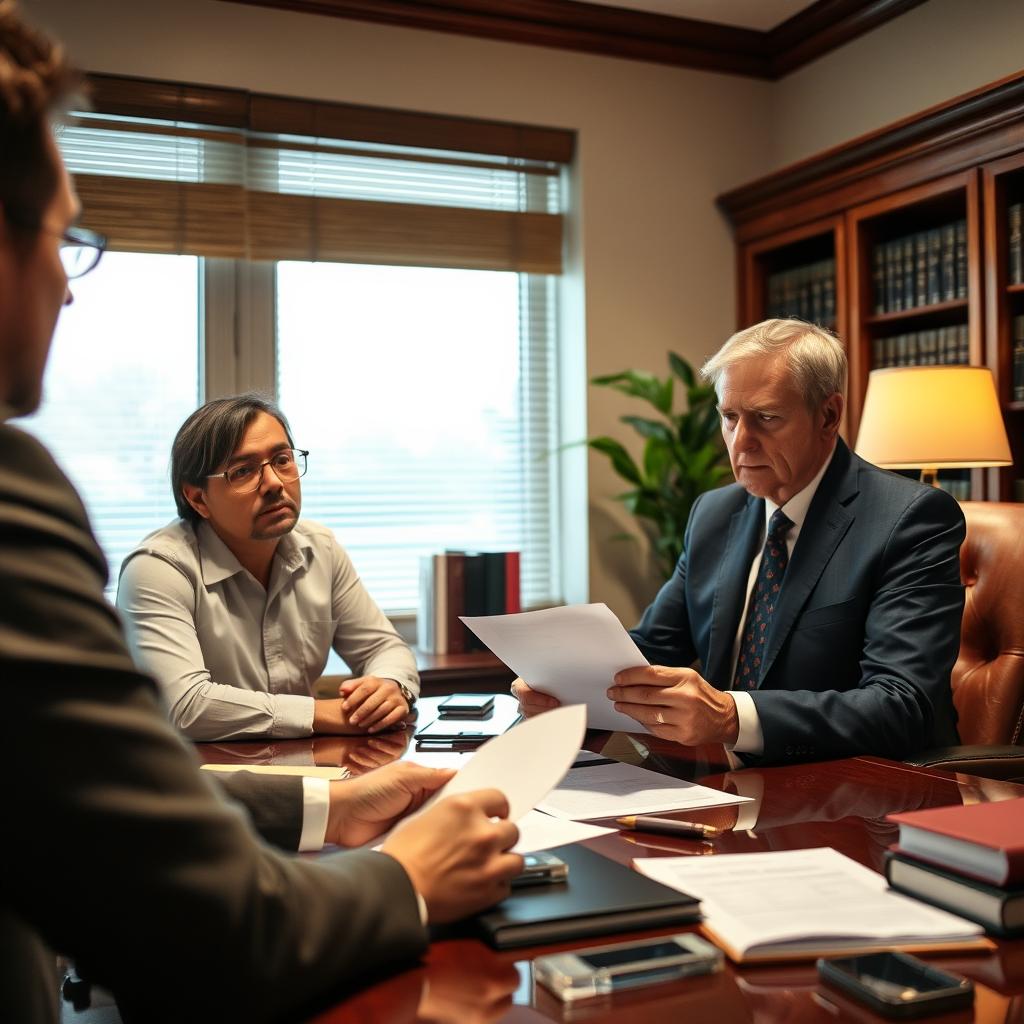
Adultery Divorce Lawyer Schenectady County, NY
You are sitting at your kitchen table in Niskayuna, staring at a credit card receipt that does not add up, or a text message you were never meant to see. The suspicion of infidelity turns a home into a place of isolation. You are not just coping with heartbreak — you are facing one of the most personal legal decisions a person can make: ending a marriage on the ground of adultery. New York law recognizes adultery as a fault ground for divorce, but proving it and navigating its consequences requires a steady guide. Mr. Sris and his Of Counsel team at Law Offices Of SRIS, P.C. represent individuals in Schenectady County and across New York who need an advocate who listens first and strategizes thoroughly. You can reach the firm at (888) 437-7747 to request a consultation. Law Offices Of SRIS, P.C. – Advocacy Without Borders.
Strategy When Adultery Is the Ground for Divorce
An adultery-based divorce in New York is not a one-size-fits-all filing. The approach depends on the evidence available, the spouse’s willingness to admit fault, and how the discovery of adultery intersects with the rest of the marital estate. Mr. Sris and his Of Counsel take a methodical path: they first gather the factual circumstances — documents, electronic records, witness observations — and then evaluate whether the evidence rises to the standard required under Domestic Relations Law § 170(4). If a spouse is likely to contest the claim, the case may require private investigation or deposition testimony. The team also weighs whether asserting adultery is a strategic benefit, because fault can influence spousal maintenance and the equitable distribution of property under DRL § 236. In some situations, a negotiated settlement based on an uncontested no‑fault divorce is more productive than a protracted fault trial. Mr. Sris helps clients weigh the emotional toll against the legal advantages, so the final decision is informed, not impulsive.
What to Expect in a Schenectady County Adultery Divorce
All New York divorce actions are filed in Supreme Court, and for Schenectady County residents the case is heard at the Schenectady County Supreme Court on State Street. The process begins with the purchase of an index number and the filing of a summons and complaint. If adultery is alleged, the complaint must state the specific act of misconduct, though the third party is not required to be named. After filing, an automatic order under DRL § 236 goes into effect, freezing marital assets and preventing changes to insurance coverage without court approval or written consent. Discovery may include interrogatories, requests for admission, and depositions. Matters involving adultery sometimes require sensitive handling of electronic evidence. Throughout, the court may encourage settlement through a preliminary conference. If the case cannot be resolved, a trial is held before a judge — New York divorce trials are bench trials, not jury trials. The timeline is shaped by the complexity of the facts and the court’s calendar, not by a fixed number of months. Mr. Sris and his Of Counsel prepare each step with the goal of reaching a resolution that protects the client’s interests without unnecessary acrimony.
How Adultery Can Affect the Outcome of Your Divorce
New York is an equitable distribution state, meaning the court divides marital property fairly, not necessarily equally. Marital fault, including adultery, is one of the factors a judge may consider when deciding how to apportion assets and whether to award spousal maintenance. Although New York introduced maintenance guidelines, judges retain discretion to depart from the formula based on the circumstances, and a spouse’s egregious fault can tip the balance. Adultery can also play a role if marital funds were used to finance an affair — for instance, money spent on hotel stays, gifts, or travel may be treated as wasteful dissipation of assets, potentially resulting in a credit to the innocent spouse. Importantly, adultery does not automatically bar the unfaithful spouse from receiving maintenance or a share of property, but it can influence the court’s equitable determination. Child custody, on the other hand, is decided under the trusted-interests-of-the-child standard, and adultery by itself rarely affects custody unless it directly harmed the child’s welfare. Understanding these nuances is critical before deciding to plead and prove fault. Mr. Sris explains the realistic impact of adultery on the financial and personal aspects of the divorce, so clients can make decisions based on the likely consequences, not on emotion alone.
About Mr. Sris and His Of Counsel Team
Mr. Sris, Owner and Founder of Law Offices Of SRIS, P.C., has practiced family law since 1997. A former prosecutor, he brings an investigator’s discipline to the gathering and presentation of evidence — a skill that is particularly relevant in a fault-based divorce where proof of adultery is central. He is admitted in Virginia, Maryland, the District of Columbia, New Jersey, and New York, and regularly appears in Supreme Court matters throughout the state. Mr. Sris testified before the Virginia House Courts of Justice Committee in support of 2019 HB 635 (chief patron Del. David Bulova). In New York family cases, he is supported by a network of Of Counsel attorneys who contribute their own depth of experience. Mr. Sris and his Of Counsel bring over 120 years of combined legal experience and 4,739+ documented firm-wide results to each engagement. Results may vary.
Frequently Asked Questions About Adultery Divorce in Schenectady County
What is the fault ground of adultery in a New York divorce?
Under New York Domestic Relations Law § 170(4), adultery is a fault ground for divorce, meaning one spouse can seek to end the marriage by proving the other spouse committed adultery. The statute does not require a criminal conviction; the proof is by a preponderance of the credible evidence. Corroboration is required — the testimony of both the accused spouse and a third-party witness is insufficient standing alone. Documentary evidence such as electronic messages, financial records, or photographs may be used to support the claim. Because adultery is a fault ground, the plaintiff who asserts it must satisfy stricter evidentiary standards than in a no-fault divorce based on irretrievable breakdown. Mr. Sris and his Of Counsel help clients understand whether the evidence they have meets the legal threshold before filing.
How do you prove adultery in a divorce case?
Proof of adultery is usually built from circumstantial evidence rather than direct eyewitness testimony, because affairs are seldom conducted in public view. Courts may accept evidence of opportunity and inclination — such as hotel receipts, unexplained absences, or affectionate communications — that together create a clear inference of infidelity. Photographs, text messages, and social media posts can be introduced. A private investigator is sometimes retained to document behavior and gather admissible evidence. The standard is civil, not criminal, so the burden is a fair preponderance of the evidence, not proof beyond a reasonable doubt. Mr. Sris and his Of Counsel evaluate the available proof and advise whether it is sufficient to sustain the pleading, or whether a no-fault divorce is a stronger strategy.
Can adultery affect child custody in New York?
Adultery, by itself, does not determine child custody in New York because custody decisions are governed by the best interests of the child. A court will consider multiple statutory factors, primarily focused on the child’s physical and emotional well-being, the stability of each parent’s home, and the quality of the parent-child relationship. A parent’s extramarital relationship becomes relevant only if it directly harms the child, such as exposing the child to neglect, abuse, or an unsafe environment. A fleeting affair that occurred away from the child generally carries no custody weight. Mr. Sris ensures that clients understand this distinction, so they do not pursue a fault ground under the mistaken assumption that it will automatically grant them primary custody.
How does adultery impact spousal support in Schenectady County?
Adultery can influence a court’s decision to award spousal maintenance and the amount, but it does not operate as an automatic bar to support. Under DRL § 236, a judge may consider marital fault when determining maintenance, along with factors such as the duration of the marriage, the parties’ earning capacities, and the standard of living during the marriage. A spouse’s wasteful dissipation of marital assets to fund an affair can also affect the equitable distribution of property. However, New York courts have moved toward a less punitive approach, focusing more on the economic impact than on moral judgment. Mr. Sris and his Of Counsel present the financial consequences of the affair in a way that connects them to the statutory factors the court must consider.
Is it necessary to name the third party in an adultery divorce?
No, New York law does not require the plaintiff to name the alleged paramour as a co‑respondent in a divorce action based on adultery. The complaint must identify the acts of adultery with sufficient particularity to give the defendant fair notice, but identifying the third party by name is optional. Many attorneys avoid naming the third party to minimize unnecessary acrimony and to keep the focus on the dissolution of the marital relationship. Naming the third party can also open the door to additional discovery and potential counterclaims. Mr. Sris discusses each client’s goals before deciding whether to include the third party’s identity in the pleadings.
What if my spouse denies the adultery?
If the accused spouse denies the adultery, the case proceeds to discovery and possibly trial, where the plaintiff must present evidence sufficient to meet the preponderance standard. A denial does not automatically defeat the claim; it simply means the parties are at issue. The discovery process will then target records, electronic evidence, and witness testimony that may corroborate the allegation. A trial may be necessary if settlement is not reached. Because contested fault trials can be lengthy and expensive, many cases resolve through negotiation once the evidence is exchanged. Mr. Sris and his Of Counsel prepare for trial while simultaneously pursuing settlement opportunities, so the client has a viable path regardless of the spouse’s response.
Can I file for divorce based on adultery if I also had an affair?
Yes, New York law does not prohibit a spouse who has also committed adultery from filing for divorce on that ground, but the practical consequences must be weighed carefully. Both parties’ marital fault can be litigated, and the court may take both into account when dividing property or awarding maintenance. If both spouses have engaged in adultery, a fault-based case can devolve into a mutually destructive exchange of accusations. Often, a no-fault divorce under DRL § 170(7) — irretrievable breakdown of the marriage for at least six months — is a more efficient route when fault is mutual. Mr. Sris helps clients assess whether asserting adultery still offers a strategic advantage in light of their own conduct.
How long does an adultery divorce take in Schenectady County?
The duration of an adultery divorce in Schenectady County depends on whether the case is contested or uncontested, the readiness of evidence, and the Supreme Court’s calendar. An uncontested divorce where both parties agree to dissolve the marriage may be resolved more quickly. A contested adultery case, especially one that requires third-party discovery or a trial, will take considerably longer because of the need to prove fault and the possibility of motion practice. Settlement conferences and mandatory preliminary conferences can add time but also create opportunities for resolution. Mr. Sris and his Of Counsel provide a realistic timeline projection once they understand the specific circumstances of the case and the posture of the opposing party.
How much does a divorce lawyer cost in Schenectady County?
Legal fees for a divorce vary based on the complexity of the case, the level of conflict, and the amount of attorney time required. An adultery-based divorce typically involves more investigative effort and possible trial preparation than an uncontested no‑fault divorce, which affects overall costs. The firm discusses fee arrangements during the initial consultation, and the total expense is driven by the work actually performed, not a fixed price. Mr. Sris and his Of Counsel encourage clients to view the investment in the context of the assets and support at stake. To obtain a realistic estimate for your matter, contact the firm at (888) 437-7747.
Why should I hire an experienced adultery divorce lawyer?
An experienced adultery divorce lawyer understands the procedural and evidentiary demands unique to fault‑based actions and can help you make strategic choices that protect your financial future. Adultery cases require careful evidence management, witness preparation, and a clear-eyed assessment of whether asserting fault will actually improve the outcome. Inexperienced handling can lead to weak pleadings, avoidable discovery disputes, or costly trial errors. Mr. Sris and his Of Counsel have represented clients in New York Supreme Courts across the state and bring the judgment that only decades of family law practice confer. Reach the firm at (888) 437-7747 to request a consultation.
Also see: Family Law Lawyer in New York County (Manhattan) Family Law Lawyer in Kings County (Brooklyn) Family Law Lawyer in Queens County (Queens) Family Law Lawyer in Richmond County (Staten Island) Family Law Lawyer in Nassau County (Long Island)
Primary sources: New York Domestic Relations Law (DRL) Schenectady County Supreme Court.
Attorney advertising. Prior results do not guarantee a similar outcome.
Case results depend on a variety of factors unique to each case.
Results may vary.
Law Offices Of SRIS, P.C. — 50 Fountain Plaza, Suite 1400, Office No. 142, Buffalo, NY 14202. By appointment only. Call (888) 437-7747.