
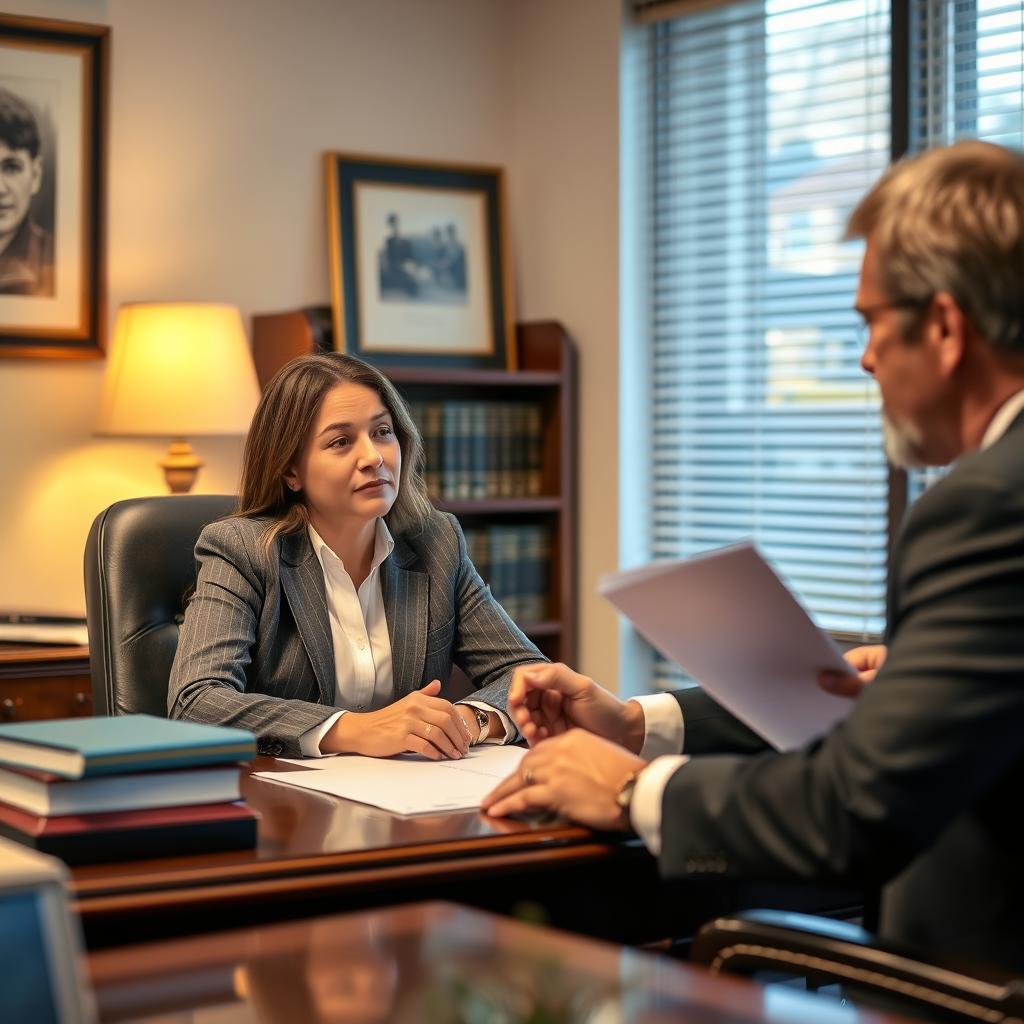
Adultery Divorce Lawyer Herkimer County, NY
You come home early from a weekend trip to the Adirondacks. The note on the kitchen counter is not a grocery list—it is a confession. Your spouse has been involved with someone else, and the news has already spread through Little Falls. Now you are standing in a house that no longer feels like a home, wondering what a fault-based adultery divorce means for you, your children, and the life you built across Herkimer County. Law Offices Of SRIS, P.C. Concentrates its family law practice on guiding people through exactly this kind of difficult transition, and Mr. Sris and his Of Counsel team bring extensive experience to divorce matters throughout the Mohawk Valley. Reach our New York location at (888) 437-7747 to schedule a consultation. Law Offices Of SRIS, P.C. – Advocacy Without Borders.
Herkimer County Supreme Court Court hours: Mon-Fri 9:00AM-5:00PM. Counsel appearing on family law matters should plan filings accordingly.
Your Options When Allegations of Adultery Arise
In New York, adultery remains a recognized fault ground for divorce under Domestic Relations Law § 170(1). That means a spouse who has committed adultery can be named as the party at fault, and the court may consider that marital fault when deciding issues like maintenance—commonly called alimony—and the division of marital property. You do not, however, have to pursue a fault-based divorce; many couples in Herkimer County choose to proceed on the no-fault ground of irretrievable breakdown of the relationship for six months or more. The decision affects more than just the divorce itself: it can influence temporary support orders, custody arrangements, and the overall tone of the proceeding. A well-prepared strategy starts with understanding what each option means for your specific situation.
If you decide to move forward with an adultery-based divorce, you and your attorney will need to address the evidentiary burden. While the law does not require detective-quality proof, you will need to present sufficient evidence for the court to conclude that adultery occurred. That evidence often includes electronic communications, financial records, witness testimony, or the admission of the other spouse. Mr. Sris and his Of Counsel work with clients to evaluate what evidence exists, whether it meets the legal standard, and how to present it without escalating conflict unnecessarily when children are involved. In some cases, using adultery as leverage for a more favorable settlement—rather than airing the details in court—is the most practical path forward. Every family’s circumstances differ, and we help you weigh the options clearly.
What to Expect in Herkimer County Supreme Court
Divorce actions in Herkimer County are filed in the Herkimer County Supreme Court, located at 301 North Washington Street in the village of Herkimer. The court handles both the divorce itself—including grounds, equitable distribution, and maintenance—and related matters such as child custody, visitation, and support when they are raised in the matrimonial action. If you need immediate relief while the divorce is pending, you can ask the court for pendente lite (temporary) orders covering spousal support, exclusive use of the marital home, or payment of attorney fees. These motions are decided early in the case, often based on the financial affidavits both parties must file.
Once the divorce is filed, New York’s automatic orders under DRL § 236 take effect, freezing marital assets and preventing either spouse from removing the other from health insurance or changing beneficiaries without consent. Discovery follows—exchanging financial documents, appraisals for real estate or business interests, and depositions if warranted. In a fault-based adultery divorce, discovery may also include requests for records or testimony related to the alleged affair. Settlement conferences are scheduled, and the judge will encourage the parties to resolve as many issues as possible. If no agreement is reached, the case proceeds to trial. The timeline varies by the complexity of assets, the level of conflict, and the court’s calendar, but your legal team will keep you informed at each stage. For a more detailed statutory breakdown, see our comprehensive family law analysis.
Penalty Overview: How Adultery Affects the Outcome
New York law gives judges broad discretion to consider adultery when determining maintenance (alimony) and the equitable distribution of marital property. A finding of adultery does not automatically result in a larger award to the innocent spouse, but it is one of the factors the court weighs. Particularly egregious misconduct—such as adultery that dissipated marital assets or caused severe emotional or financial harm—can influence the division of property and the amount and duration of maintenance. Custody decisions, on the other hand, are governed by the best interests of the child; adultery alone rarely changes custody unless the affair directly harmed the child or involved inappropriate behavior around the child.
In addition, adultery can affect the negotiation posture of the case. The spouse alleged to have committed adultery may be more willing to settle on favorable terms to avoid a public trial. Conversely, if the evidence is weak, pursuing a fault ground may backfire by increasing attorney fees and prolonging the litigation. Mr. Sris and his Of Counsel evaluate every factor—the strength of proof, the likely judicial response, and your personal goals—to map out a realistic plan. The goal is always to protect your financial future and, when children are part of the equation, to preserve a stable co-parenting relationship.
Attorney Credentials: Mr. Sris and His Of Counsel Team
Mr. Sris, Owner and Founder of Law Offices Of SRIS, P.C., has practiced family law since 1997. He is admitted in Virginia, Maryland, the District of Columbia, New Jersey, and New York—a five-jurisdiction practice that gives the firm uncommon reach. A former prosecutor, Mr. Sris brings a trial-tested perspective to every divorce, understanding both how the opposing party may build a case and how to present yours persuasively to a judge. He testified before the Virginia House Courts of Justice Committee in support of 2019 HB 635 (chief patron Del. David Bulova), an experience that deepened his command of equitable distribution law. Alongside him, the firm’s Of Counsel attorneys—each with substantial independent experience—handle matrimonial matters collaboratively, ensuring that strategy, research, and court appearances draw on over 120 years of combined legal experience and 4,739+ documented firm-wide results. Results may vary.
Frequently Asked Questions
Can adultery affect the divorce settlement in New York?
Adultery can affect maintenance and property division because judges have discretion to consider marital fault when deciding these financial issues. Under New York law, a court may award a larger share of marital assets or greater maintenance to the innocent spouse if the adultery is proven and the facts warrant it. The practical impact depends on the nature of the misconduct—whether it wasted marital funds, for example—and on the overall financial picture. Because outcomes are case-specific, it is important to review the strengths and weaknesses of your evidence early with an experienced attorney.
Do I have to prove adultery to get a divorce in Herkimer County?
No, you can file for divorce on the no‑fault ground of irretrievable breakdown without proving adultery. New York allows a spouse to seek a divorce simply by stating that the relationship has been broken for six months or more and that there is no prospect of reconciliation. Many people choose this route to avoid the cost and emotional strain of airing private misconduct in court. That said, if you have strong evidence of adultery and want it to be considered when financial issues are decided, a fault‑based divorce may still be worth pursuing. Your attorney can explain both paths.
How does an adultery divorce affect custody in New York?
Adultery alone rarely changes a custody determination because New York courts decide custody based on the best interests of the child, not on marital fault. A judge looks at factors such as which parent has been the primary caregiver, the child’s relationship with each parent, and each parent’s ability to provide a stable home. Adultery becomes relevant only if it negatively impacted the child—for instance, if the affair partner posed a safety risk or if the parent neglected the child while pursuing the relationship. In most cases, the court treats custody as a separate question from the grounds for divorce.
What if I need financial support while the adultery divorce is pending?
You can ask the Herkimer County Supreme Court for a pendente lite order awarding temporary spousal support and directing payment of legal fees while the divorce is ongoing. These orders are based on immediate need and the financial circumstances of both spouses, not on fault. The court uses a statutory formula that considers income and certain expenses to calculate temporary maintenance. If you are concerned about covering living expenses or attorney fees during the divorce, it is essential to raise those issues early in the case so the court can act promptly.
Is mediation an option in an adultery divorce?
Yes, mediation can be used even when adultery is alleged, provided both parties are willing to work toward a resolution. Many couples in Herkimer County participate in divorce mediation to settle issues like property division, support, and parenting plans without a public trial. The mediator remains neutral and does not decide fault; instead, the mediator helps the spouses negotiate. If a full agreement is reached, it is incorporated into a judgment of divorce. Adultery does not bar mediation, and for many families it offers a more private, less expensive path.
How do I get started with an adultery divorce lawyer in Herkimer County?
Call Law Offices Of SRIS, P.C. at (888) 437‑7747 to schedule a consultation with Mr. Sris and his Of Counsel team. We will discuss the specific facts of your situation, explain New York’s divorce grounds, and outline a realistic strategy—whether that means negotiating a settlement, preparing a fault‑based case, or pursuing a no‑fault separation. Our New York location serves clients from Herkimer, Ilion, Little Falls, Mohawk, Frankfort, and the surrounding Mohawk Valley communities. By appointment. Call (888) 437‑7747.
How to Reach Us
Our New York location is at 50 Fountain Plaza, Suite 1400, Office No. 142, Buffalo, NY 14202. Local phone: (838) 292‑0003. Call our toll‑free number (888) 437‑7747 for a consultation or use the links below to learn more about family law in nearby counties.
Manhattan family law lawyer ·
Kings County family law lawyer ·
Queens County family law lawyer ·
Richmond County family law lawyer ·
Nassau County family law lawyer
Primary legal authority: New York Domestic Relations Law § 170 · Herkimer County Supreme Court · New York State Unified Court System
Attorney advertising. Prior results do not guarantee a similar outcome.
Case results depend on a variety of factors unique to each case.
Results may vary.