
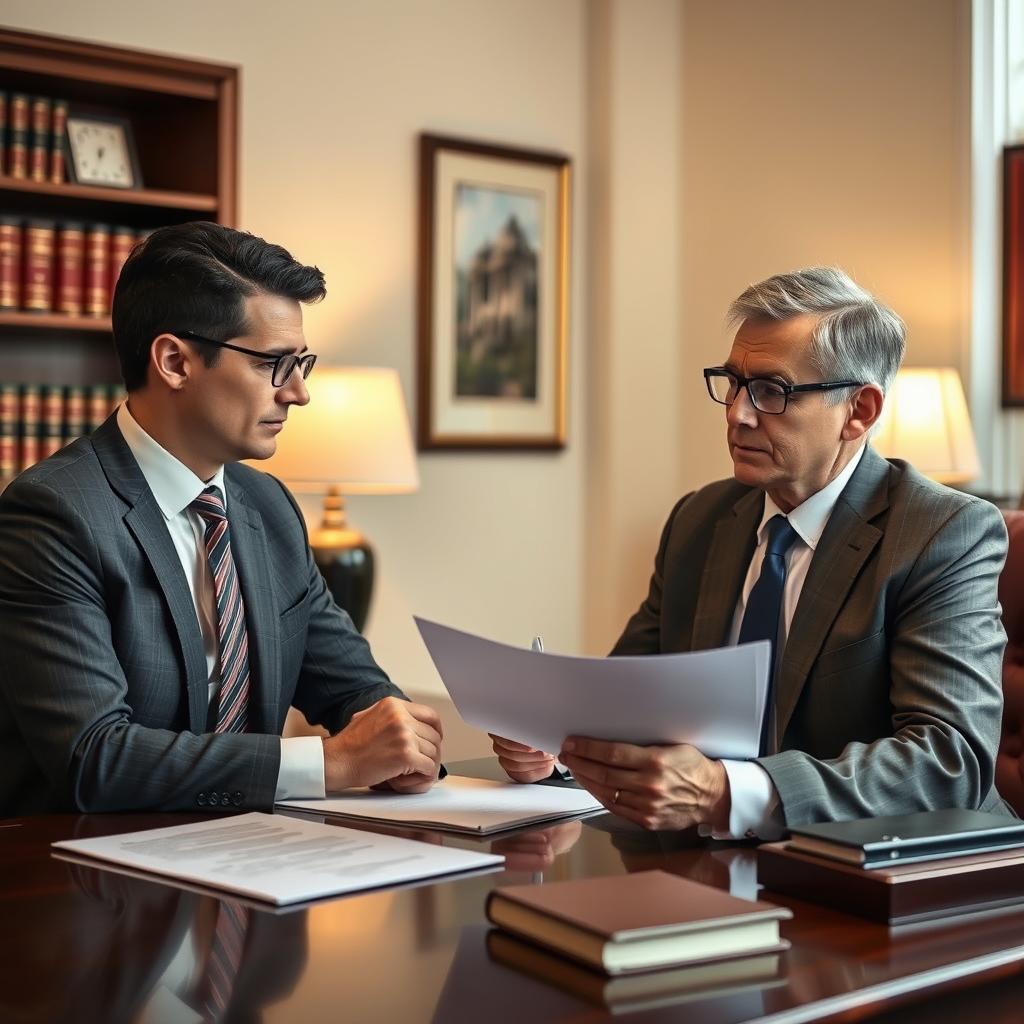
Adultery Divorce Lawyer Erie County, NY
Adultery remains a fault ground for divorce in New York under Domestic Relations Law § 170(4), and when one spouse’s extramarital conduct becomes central to a divorce, the legal consequences can reshape property division, spousal maintenance, and even custody considerations. Erie County residents rely on the Erie County Supreme Court in Buffalo to adjudicate these sensitive matrimonial matters. For spouses who must prove adultery or defend against an accusation, navigating the evidentiary demands and procedural requirements without counsel exposes them to significant risk. Law Offices Of SRIS, P.C. represents individuals throughout Western New York in adultery‑based divorce actions, drawing on a thorough understanding of the New York Domestic Relations Law and the local practice norms of the 8th Judicial District. Mr. Sris and his Of Counsel guide clients through each stage—from gathering admissible proof to advocating for equitable outcomes at settlement conferences and trial. If you are facing an adultery divorce in Erie County, reach our location at (888) 437‑7747 to request a consultation. Law Offices Of SRIS, P.C. – Advocacy Without Borders.
What Adultery Divorce Means in Erie County
New York allows a spouse to seek a divorce on the ground of adultery when there is credible proof that the other spouse engaged in voluntary sexual intercourse with a person other than the petitioner during the marriage. The statute does not define a specific evidentiary threshold, but New York courts have long required that the evidence be clear and convincing. The spouse who alleges adultery bears the burden of proof, and mere suspicion or circumstantial evidence alone is generally insufficient. A finding of adultery can have tangible consequences: under DRL § 170(4), it is one of the enumerated fault grounds, and it can affect the court’s decisions on equitable distribution and maintenance.
In Erie County, all divorce actions—including those grounded in adultery—are filed in the Erie County Supreme Court, located at 25 Delaware Avenue in Buffalo. The court operates within the 8th Judicial District, and the judges who preside over matrimonial matters are familiar with the local customs of proof, motion practice, and settlement conferences. Because adultery allegations often involve sensitive financial records, electronic evidence, and third‑party testimony, a case litigated in Erie County demands careful preparation from the outset. Mr. Sris and his Of Counsel appear regularly in the Erie County Supreme Court and understand how local judges assess credibility, weigh fault, and apply equitable principles. Their experience in the Buffalo‑area legal community allows them to present adultery claims or defenses effectively while protecting the client’s privacy and long‑term interests.
Law Offices Of SRIS, P.C. maintains a Buffalo location at 50 Fountain Plaza, Suite 1400, conveniently situated for clients from Buffalo, Cheektowaga, Amherst, Tonawanda, Hamburg, Orchard Park, Clarence, Lancaster, West Seneca, Lackawanna, and other Erie County communities. The location is accessible via I‑90 and local roadways, making it straightforward for clients to attend meetings and court appearances by appointment.
How Mr. Sris and His Of Counsel Handle Adultery Divorce Cases
When a client approaches the firm with an adultery divorce matter, the initial step is a thorough, confidential evaluation of the facts. Mr. Sris and his Of Counsel listen to the client’s account, examine any existing documentation, and explain what the New York Domestic Relations Law requires to prove or defend against an adultery claim. They then develop a strategy that accounts for the burden of proof, the available evidence, and the client’s priorities—whether that means keeping the divorce private, protecting a business, preserving parental rights, or securing a fair financial outcome.
Because New York judges consider adultery in the context of equitable distribution and maintenance, the firm’s attorneys focus on how the extramarital conduct connects to the marital finances. For example, if marital assets were used to fund an affair, counsel can argue that the innocent spouse should receive a greater share of the remaining assets. Similarly, an adultery finding can bar a spouse from receiving spousal maintenance. Mr. Sris and his Of Counsel work to build a record that supports these arguments while remaining mindful of the emotional toll the process takes on families. They encourage early settlement when it serves the client’s interests but are prepared to litigate fully when a negotiated resolution is not possible. Throughout the representation, the objective remains the same: to work toward a favorable outcome while keeping the case focused on the facts that matter under New York law.
About Mr. Sris and His Of Counsel Team
Mr. Sris, Owner and Founder of Law Offices Of SRIS, P.C., has been practicing law since 1997 and is admitted in Virginia, Maryland, the District of Columbia, New Jersey, and New York. As a former prosecutor, he brings a trial‑tested perspective to family law matters, including contested divorce actions that involve allegations of adultery. Mr. Sris testified before the Virginia House Courts of Justice Committee in support of 2019 HB 635 (chief patron Del. David Bulova). He concentrates his practice on complex family law issues and leads a team of Of Counsel attorneys who collectively bring an extensive background in litigation and negotiation.
Mr. Sris and his Of Counsel bring over 120 years of combined legal experience and 4,739+ documented firm-wide results to every case they handle. Results may vary. The team’s approach is collaborative and focused on securing workable resolutions for clients in Western New York. Each Of Counsel is engaged through Excella, and no attorney outside the firm’s core team is assigned to a client matter without the client’s knowledge and consent.
Frequently Asked Questions
What is an adultery divorce in New York?
An adultery divorce is a fault‑based divorce in which one spouse proves the other committed adultery, as authorized by New York Domestic Relations Law § 170(4). Unlike a no‑fault divorce that relies on an irretrievable breakdown of the marriage, an adultery divorce requires the petitioner to present clear and convincing evidence of the extramarital conduct. If proven, adultery can bar the adulterous spouse from receiving spousal maintenance and may influence how marital property is divided. Because the burden of proof is high, many cases settle before trial. An attorney can evaluate the strength of the evidence and advise whether pursuing or contesting an adultery claim is in the client’s best interests.
Do I need a lawyer for an adultery divorce in Erie County?
You are not required to hire a lawyer, but handling an adultery divorce on your own can be risky because proving or defending against adultery demands a working knowledge of the rules of evidence and Erie County Supreme Court procedures. The spouse who alleges adultery must present credible, admissible proof; mistakes in gathering or introducing evidence can weaken the case or lead to its dismissal. An experienced attorney knows how to subpoena records, question witnesses, and frame arguments that withstand judicial scrutiny. For someone accused of adultery, a lawyer can challenge the sufficiency of the opposing party’s evidence and protect against unfair financial outcomes.
How does adultery affect property division in New York?
Adultery does not automatically entitle the innocent spouse to a larger share of marital property, but a court may consider it if the adulterous conduct involved waste or dissipation of marital assets. Under New York’s equitable distribution system, judges weigh multiple statutory factors, including any wasteful dissipation of assets by either spouse. If marital funds were used to pay for hotel stays, gifts, or travel related to the affair, the court can adjust the distribution to compensate the other spouse. An attorney can trace the financial trail and present evidence that links the spending to the adultery, strengthening the request for a favorable property division.
Can adultery impact child custody in Erie County?
Adultery alone does not determine child custody, but it can become a factor if the extramarital relationship endangers the child’s well‑being or interferes with a parent’s ability to provide a stable home. New York courts decide custody based on the best interests of the child, focusing on factors such as parental fitness, the child’s needs, and the home environment. If evidence shows that the adultery exposed the child to unsafe circumstances—for example, when the new partner has a history of violence or substance abuse—the judge may limit that parent’s custodial time or order supervised visitation. An attorney can explain how the specific facts of the affair may influence a custody determination in Erie County.
What evidence is required to prove adultery in New York?
To prove adultery, the petitioner must present clear and convincing evidence that the spouse had both the opportunity and the inclination to commit adultery, often through hotel receipts, phone records, digital messages, private investigator reports, or third‑party testimony. New York courts do not accept mere suspicion, and a spouse’s confession alone may not be enough if it is uncorroborated. The evidence must be admissible under the New York rules of evidence, which means hearsay or illegally obtained information will be excluded. An attorney can help gather lawful evidence, assess its strength, and determine whether the proof meets the standard required to sustain an adultery claim in the Erie County Supreme Court.
For authoritative information, you can review the New York Domestic Relations Law at the New York State Senate legislation site and court procedures at the New York State Unified Court System.
Attorney advertising. Prior results do not guarantee a similar outcome.
Case results depend on a variety of factors unique to each case. Results may vary.