
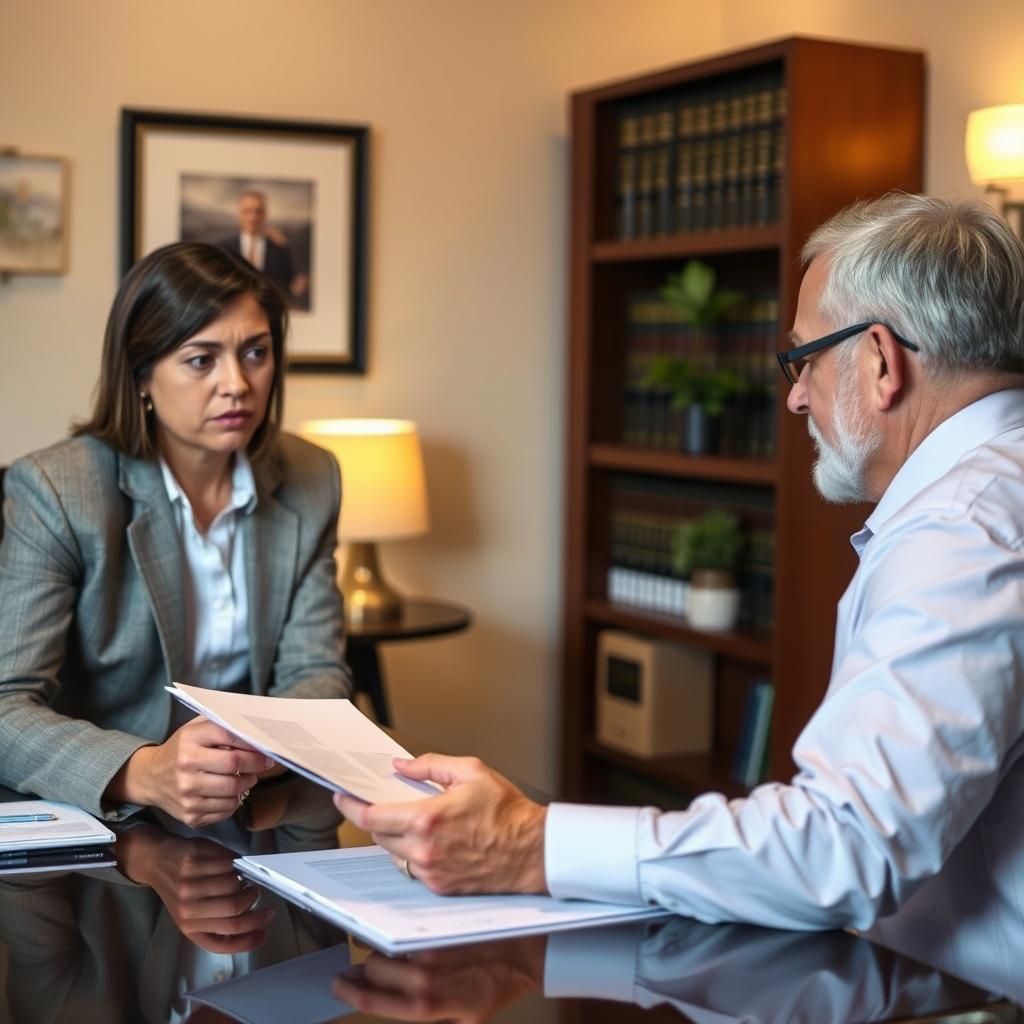
Retirement Asset Division Lawyer Monroe County
A Retirement Asset Division Lawyer Monroe County handles the legal process of splitting pensions, 401(k)s, and IRAs during a divorce. Virginia law treats these assets as marital property subject to equitable distribution. You need a specific court order called a Qualified Domestic Relations Order (QDRO) to divide most plans without tax penalties. Law Offices Of SRIS, P.C.—Advocacy Without Borders. (Confirmed by SRIS, P.C.)
Statutory Definition of Retirement Asset Division in Virginia
Virginia Code § 20-107.3 governs the division of retirement assets, classifying them as marital property subject to equitable distribution upon divorce. This statute provides the legal framework for valuing and allocating pensions, 401(k)s, IRAs, and other deferred compensation earned during the marriage. The court’s goal is a fair, not necessarily equal, division based on numerous statutory factors. A Retirement Asset Division Lawyer Monroe County must handle these rules to protect your financial future.
The classification of an asset as marital, separate, or part marital and part separate is the first critical step. Marital property includes all retirement benefits accrued from the date of marriage until the date of separation. Separate property includes benefits earned before the marriage or after separation. Contributions and growth during the marriage are typically marital. A skilled attorney will trace contributions to establish the separate share.
Valuation is complex and often requires actuarial or financial experienced attorneys. Defined benefit plans (pensions) require calculating the present value of a future income stream. Defined contribution plans (401(k), 403(b)) use the account balance as of the valuation date. The valuation date in Virginia is typically the date of the parties’ last separation. Market fluctuations between separation and trial can create disputes.
The court applies the factors in Va. Code § 20-107.3(E) to achieve equitable distribution. These factors include the contributions of each party to the well-being of the family, the duration of the marriage, and the economic circumstances of each party. The court cannot consider marital misconduct. The division is not a simple 50/50 split. The judge has broad discretion.
A direct transfer of retirement assets pursuant to a divorce is not a taxable event under federal law. However, improper handling triggers severe penalties. Withdrawals without a proper court order incur ordinary income tax and a 10% early withdrawal penalty if under age 59½. This makes the legal documentation paramount. Your Retirement Asset Division Lawyer Monroe County ensures compliance.
What is a QDRO and why is it mandatory?
A Qualified Domestic Relations Order (QDRO) is a court order required to divide most employer-sponsored retirement plans. The QDRO is a separate order from the final divorce decree. It gives the plan administrator specific instructions for splitting the account. Without a QDRO, the plan will not recognize the divorce decree’s division. This can leave an ex-spouse with no legal claim to the funds.
How are military or government pensions divided differently?
Military and federal government pensions (FERS, CSRS) have unique rules under federal law. The Uniformed Services Former Spouses’ Protection Act (USFSPA) governs military retirement division. It allows state courts to treat disposable retired pay as marital property. Federal employee pensions require a Court Order Acceptable for Processing (COAP). These orders have strict formatting and content requirements distinct from a standard QDRO.
What happens to an IRA in a Monroe County divorce?
Individual Retirement Accounts (IRAs) are divided by a transfer incident to divorce, not a QDRO. The divorce decree itself must contain specific language directing the transfer. The financial institution will require a copy of the decree to process the transfer. The transfer must be a direct trustee-to-trustee transfer to avoid taxes and penalties. Any payout to the spouse triggers immediate taxation.
The Insider Procedural Edge in Monroe County Circuit Court
The Monroe County Circuit Court, located at 1 Courthouse Square, Union, WV 24983, handles all divorce and equitable distribution matters for Monroe County, Virginia residents. Virginia residents file in the circuit court of the county or city where they reside. Monroe County, Virginia does not have its own independent circuit court. Residents typically file in the circuit court for the Virginia county where they live.
Procedural specifics for Monroe County are reviewed during a Consultation by appointment at our Virginia Location. The filing fee for a divorce complaint in a Virginia circuit court is approximately $89, but costs vary by county. You must meet Virginia’s residency requirement: at least one party must have been a domiciled resident for six months prior to filing. The court requires a one-year separation for a no-fault divorce with no minor children.
The timeline from filing to final hearing can span several months to over a year. The complexity of valuing and dividing retirement assets often lengthens the process. Discovery, including subpoenas to plan administrators and depositions of financial experienced attorneys, is common. Local rules dictate deadlines for filing pleadings and scheduling hearings. Missing a deadline can jeopardize your rights to certain assets.
Courtroom temperament in rural Virginia counties favors preparedness and respect for procedure. Judges expect attorneys to have all documentation in order. They have little patience for disorganization, especially with complex financial exhibits. Presenting clear valuations and well-drafted proposed orders is critical. A Retirement Asset Division Lawyer Monroe County knows how to present a case for the best outcome.
What is the typical cost for filing a divorce involving retirement assets?
Total filing and court costs often exceed $500 when accounting for service of process and other fees. The legal fees for a case involving retirement asset division are significantly higher due to the required experienced analysis and precise drafting. A simple QDRO can cost between $1,000 and $2,500 to draft and implement. Complex cases with multiple plans or valuation disputes cost more. You need a clear fee agreement with your attorney.
How long does the QDRO approval process take?
The QDRO drafting and approval process can take three to six months after the divorce is final. Your attorney drafts the order and submits it to the plan administrator for pre-approval. The administrator reviews it for compliance with the plan’s specific terms and ERISA. Once approved, the attorney submits the QDRO to the court for signature. Only then can the plan administrator execute the division.
Penalties & Defense Strategies for Mishandled Asset Division
The most common penalty for mishandling retirement asset division is a 10% IRS early withdrawal penalty plus full income taxation on the distributed amount. This applies if funds are withdrawn instead of properly transferred. The financial consequence can erase a significant portion of the asset’s value. A Retirement Asset Division Lawyer Monroe County structures the division to avoid these penalties.
| Offense / Error | Penalty | Notes |
|---|---|---|
| Early Withdrawal Without QDRO (Under 59½) | 10% IRS penalty + Ordinary Income Tax | Applies to 401(k), 403(b), pension lump sums. |
| Invalid QDRO Rejected by Plan | Legal fees to re-draft, delay in receiving funds. | Plan administrators strictly enforce their own model language. |
| Failure to Divide Asset in Decree | Asset remains entirely with plan participant. | Post-divorce modification to claim share is extremely difficult. |
| Incorrect Valuation Date | Unequal distribution, loss of market gains. | Virginia uses date of last separation, not date of filing or trial. |
[Insider Insight] Local prosecutors do not handle this civil matter. However, the opposing party’s attorney will aggressively seek to maximize their client’s share. In Virginia courts, judges closely examine the source of contributions to retirement accounts. They are skeptical of claims that an account is entirely separate without clear documentation. Presenting a coherent tracing report is a key defense strategy.
A primary defense is careful tracing of separate property contributions. This involves obtaining complete account statements from the date of marriage forward. You must document any pre-marital balances and any post-separation contributions. Commingling of separate and marital funds can transmute separate property into marital property. Your attorney must present clear evidence to the court.
Another strategy is negotiating a trade-off of other assets. You might agree to let your spouse keep a larger share of a retirement account in exchange for you keeping the marital home or other liquid assets. This avoids the complexity and cost of a QDRO. It requires accurate valuation of all assets on the table. This is often the most efficient resolution.
Ensuring the QDRO is drafted correctly the first time is a critical defensive measure. An incorrect QDRO can be rejected by the plan administrator, causing lengthy delays. Some plans have “model” QDROs that must be used. Your attorney must work directly with the plan’s QDRO administrator during the drafting phase. This proactive step prevents future enforcement problems.
Can my ex-spouse take more than half of my retirement?
Yes, a court can award more than half of a retirement account to one spouse under Virginia’s equitable distribution scheme. The division is based on fairness, not strict equality. Factors like the length of the marriage, each spouse’s economic circumstances, and contributions to the family are considered. A disproportionate award is not uncommon, especially in long-term marriages.
What if my spouse hides a retirement account?
Discovery tools like subpoenas and interrogatories are used to uncover hidden assets. Failure to disclose an asset can result in the court reopening the case after the divorce is final. The judge can award the entire hidden asset to the innocent spouse as a sanction. Forensic accounting may be necessary. Full financial disclosure is legally required.
Why Hire SRIS, P.C. for Your Monroe County Retirement Division
SRIS, P.C. assigns attorneys with direct experience drafting and implementing Qualified Domestic Relations Orders for Virginia clients. Our team understands the precise language required by major plan administrators like Fidelity, Vanguard, and federal retirement systems. We know that a single error in a QDRO can cost you years of savings. We get the documents right.
Attorney Background: Our Virginia family law attorneys have handled hundreds of equitable distribution cases. While specific case results for Monroe County are not enumerated in our database, our firm’s approach is consistent. We analyze plan documents early. We engage financial experienced attorneys when needed. We pursue strategic settlements that protect your retirement security.
Our differentiator is systematic case management for financial complexity. We create a detailed asset ledger at the outset of your case. We identify all retirement accounts, pensions, and deferred compensation. We determine the valuation method and secure necessary records. We manage the timeline for QDRO submission. This prevents last-minute errors and oversights.
We provide Virginia family law attorneys who communicate in clear terms about your financial options. We explain the tax implications of different settlement structures. We advise on the liquidity of assets you might receive in trade. Our goal is a division that leaves you with a stable financial foundation post-divorce. Your future security is the priority.
Localized FAQs for Monroe County Residents
How is a pension divided if I am not yet retired?
The court can use the “present value” method, awarding a lump-sum value from other assets, or the “deferred distribution” method, granting a share of future payments. The deferred method is common for pensions. A QDRO will specify the percentage or formula for payments to begin at the participant’s retirement. This is a complex calculation requiring an actuary.
Do I need a separate lawyer for the QDRO?
Your divorce attorney should handle the QDRO as part of your case. A QDRO is a legal document that must conform to your divorce decree and federal law. Using a separate, non-attorney service can create conflicts and errors. Your attorney ensures the QDRO executes the division exactly as the court ordered. Integrated representation is safer.
What is the difference between equitable distribution and community property?
Virginia is an equitable distribution state, meaning assets are divided fairly but not necessarily equally. Community property states mandate a presumptive 50/50 split. Virginia judges consider multiple factors to determine a fair share. This gives the judge more discretion. The outcome is less predictable without strong legal advocacy.
Can my spouse’s new 401(k) loan affect my share?
Yes, 401(k) loans taken during the marriage are considered marital debt. The loan balance reduces the net value of the retirement account available for division. The court will typically assign responsibility for repaying the loan to the spouse who took it. This effectively reduces the marital estate. The account statement will show the loan balance.
How long do I have to file for a share of retirement assets?
You must claim a division of retirement assets in the initial divorce proceedings. Once a final divorce decree is entered without addressing an asset, it is very difficult to claim a share later. You must petition the court to reopen the case, which is rarely granted. Identify all assets during the divorce. Do not wait.
Proximity, CTA & Disclaimer
Procedural specifics for Monroe County are reviewed during a Consultation by appointment. Our Virginia-based attorneys provide criminal defense representation and family law services across the state. For retirement asset division, call our team to discuss your Monroe County case. Consultation by appointment. Call 183-829-20003. 24/7.
Our firm’s NAP (Name, Address, Phone) is: SRIS, P.C., 4103 Chain Bridge Rd, Fairfax, VA 22030. Phone: 183-829-20003. We have a Location in Virginia to serve clients throughout the Commonwealth. For support from our experienced legal team, contact us directly. We also provide DUI defense in Virginia and other legal services.
Past results do not predict future outcomes.