
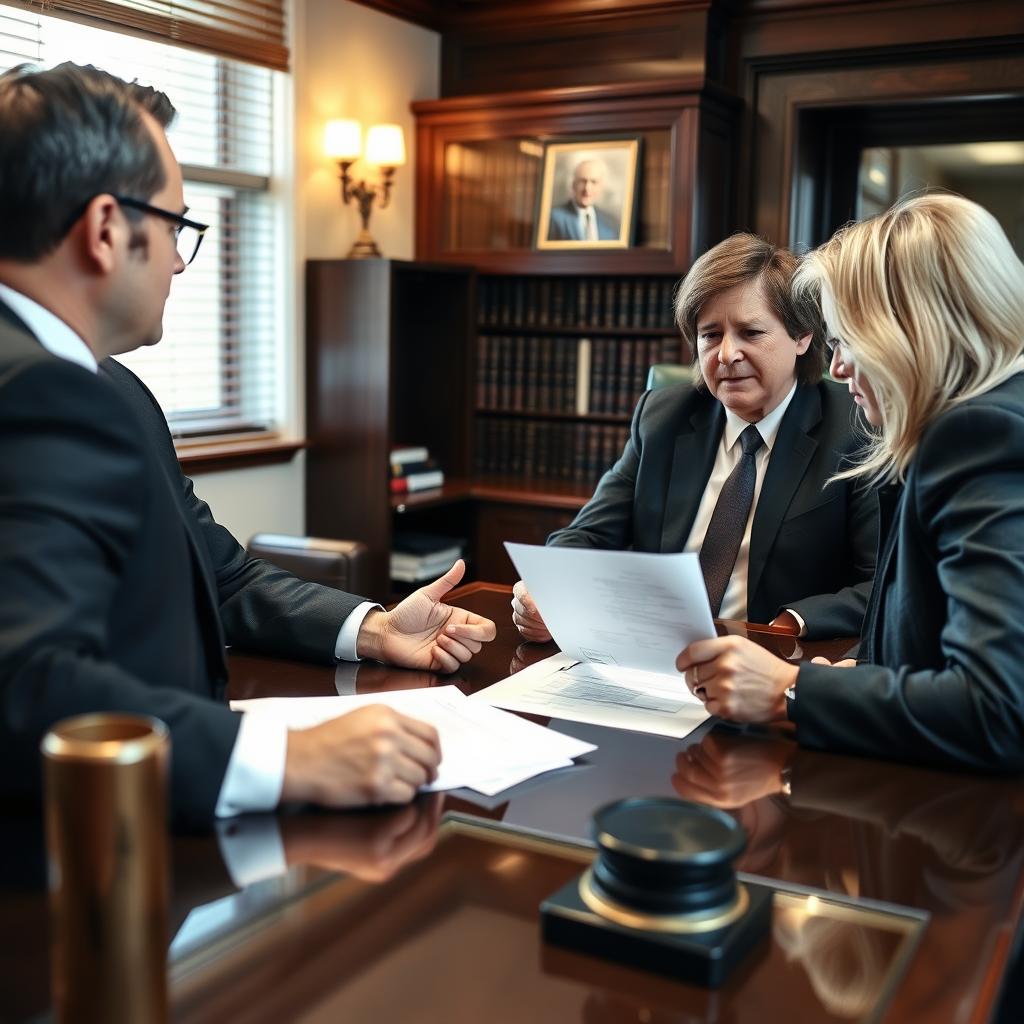
Equitable Distribution Lawyer Cortland County
An Equitable Distribution Lawyer Cortland County handles the legal division of marital assets and debts under New York law. Law Offices Of SRIS, P.C. —Advocacy Without Borders. provides direct counsel for these complex financial disputes. The process is governed by New York Domestic Relations Law § 236. It requires a detailed analysis of all property acquired during the marriage. SRIS, P.C. advocates for a fair outcome based on statutory factors. (Confirmed by SRIS, P.C.)
Statutory Definition of Equitable Distribution in New York
Equitable distribution in Cortland County is governed by New York Domestic Relations Law § 236(B)(5) — a judicial determination — with outcomes based on multiple statutory factors. This law does not mandate an equal 50/50 split. Instead, it requires a fair division of marital property. The court examines the entire economic partnership of the marriage. This legal framework applies to all divorces filed in Cortland County Supreme Court.
The controlling statute is New York Domestic Relations Law § 236, Part B. This law defines marital property and separate property. Marital property includes almost all assets and debts acquired from the marriage date to the commencement of a divorce action. Separate property includes assets owned before marriage or received by gift or inheritance. The court has broad discretion to distribute marital property equitably between the parties.
What specific assets are subject to division in Cortland County?
Marital property in Cortland County includes real estate, pensions, retirement accounts, and business interests acquired during the marriage. This includes the family home, bank accounts, investment portfolios, and vehicles. Even deferred compensation or stock options earned during the marriage are divisible. Debts like mortgages, credit card balances, and loans are also part of the marital estate. Separate property, such as an inheritance kept solely in one name, is typically excluded.
How does the court determine what is “equitable”?
New York courts apply ten statutory factors under DRL § 236 to decide a fair division. These factors include the income and property of each party at marriage and at divorce. The duration of the marriage and the age and health of both parties are considered. The court also evaluates the need of the custodial parent to occupy the marital home. The direct and indirect contributions to the career of the other spouse are heavily weighted.
What is the difference between marital and separate property?
Marital property is all assets and debts acquired during the marriage, regardless of title. Separate property is assets owned before marriage or acquired by gift or inheritance. The key distinction is the source and timing of the acquisition. A commingling of separate funds with marital funds can transform them into marital property. Proving an asset is separate requires clear documentary evidence and tracing. Learn more about Virginia legal services.
The Insider Procedural Edge in Cortland County
Cortland County Supreme Court, located at 46 Greenbush Street, Cortland, NY 13045, handles all equitable distribution matters. This court requires strict adherence to New York’s mandatory disclosure rules in matrimonial actions. The procedural timeline is driven by the court’s individual calendar system and judicial preferences. Filing fees and motion costs are set by state law and county clerk schedules. Local rules emphasize early settlement conferences to resolve financial issues.
The Cortland County Supreme Court justice assigned to your case manages the entire timeline. You must file a Request for Judicial Intervention (RJI) to start the process. The court will then schedule a preliminary conference to set discovery deadlines. Financial disclosure through sworn Net Worth Statements and document production is mandatory. Failure to comply with disclosure orders can result in severe sanctions. The court often refers cases to mediation for property division discussions.
What is the typical timeline for an equitable distribution case?
A contested equitable distribution case in Cortland County can take over a year to resolve. The timeline depends on case complexity, asset discovery, and court scheduling. Simple cases with full cooperation may settle within several months. Cases involving business valuations or hidden assets take much longer. The court’s trial calendar backlog directly impacts the final resolution date.
What are the key filing requirements and costs?
Initial filing fees for a divorce action in Cortland County are set by the state. Additional motion fees apply for requests for temporary orders or enforcement. The major cost is often for experienced valuations of assets like real estate or pensions. You must budget for appraisal fees, actuarial reports, and possibly forensic accountants. Attorney fees vary based on the level of conflict and required discovery. Learn more about criminal defense representation.
Penalties & Defense Strategies in Property Division
The most common penalty in equitable distribution cases is an unequal division of assets favoring the compliant spouse. When a party hides assets or fails to disclose financial information, the court can impose sanctions. These sanctions are designed to ensure full and honest disclosure. The court has broad authority to punish non-compliance. The goal is to achieve a fair result based on complete information.
| Offense | Penalty | Notes |
|---|---|---|
| Failure to Disclose Assets | Asset awarded 100% to other spouse; fines | Court can impose cost-shifting for discovery. |
| Dissipation of Assets | Value added back to dissipator’s share | Spending marital funds frivolously on the eve of divorce. |
| Non-Compliance with Orders | Contempt findings; attorney fees awarded | Can include daily fines until compliance. |
| Filing Frivolous Motions | Sanctions and costs awarded to other side | Under 22 NYCRR Part 130 court rules. |
[Insider Insight] Cortland County judges expect careful financial disclosure. Local prosecutors of financial claims—the opposing counsel and the court itself—take hidden assets seriously. The court often orders the non-compliant party to pay the other side’s attorney fees incurred to uncover the truth. Early and complete transparency is the best defense against allegations of hiding property.
How can hidden assets be discovered and addressed?
Forensic accounting and subpoenas for financial records are primary tools for finding hidden assets. An Equitable Distribution Lawyer Cortland County can demand bank statements, tax returns, and business records. Lifestyle analysis can reveal undisclosed income or spending. If assets are found post-divorce, you can file a motion to set aside the judgment. The court may reopen the case to redistribute the newly discovered property.
What strategies protect a business from unfair division?
Obtaining an accurate business valuation from a neutral experienced is the first critical step. Defending against claims that the business is marital property requires tracing initial investment. A buy-sell agreement or prenuptial agreement can provide strong protection. Structuring a payout to the non-owner spouse over time can preserve business operations. The goal is to equitably compensate the spouse without destroying the business entity. Learn more about DUI defense services.
Why Hire SRIS, P.C. for Equitable Distribution in Cortland County
SRIS, P.C. assigns attorneys with direct experience in New York matrimonial law and complex asset division. Our team understands the specific expectations of Cortland County Supreme Court justices. We prepare cases with the thorough financial documentation the court demands. Our approach is direct and strategic, focused on achieving a fair division of your marital estate. We advocate without borders to protect your financial future.
Our lead counsel for financial matters in New York is backed by extensive case review. While specific attorney credentials for Cortland County are confirmed during intake, our team operates under a firm-wide standard of aggressive advocacy. We have managed numerous cases involving retirement accounts, real estate, and business interests. The firm’s systematic approach to discovery and valuation builds strong positions for negotiation or trial.
SRIS, P.C. has a Location serving Cortland County and the surrounding region. We provide advocacy without borders for clients facing complex divorce proceedings. Our legal team analyzes every financial detail to identify and value marital assets. We develop clear strategies to address debts and liabilities. The goal is a resolution that aligns with New York law and your personal circumstances.
Localized FAQs for Cortland County
How is a pension divided in a Cortland County divorce?
A pension earned during the marriage is marital property subject to division. The court uses a Qualified Domestic Relations Order (QDRO) to split the future benefits. The value is often determined by an actuarial experienced. The non-employee spouse receives a percentage of the marital portion. Learn more about our experienced legal team.
Who gets the house in a Cortland County divorce?
The court considers multiple factors, including child custody and financial ability. One spouse may buy out the other’s equity. The house can be sold with proceeds divided. The custodial parent may be awarded use of the home until children reach adulthood.
What happens to debt in a Cortland County divorce?
Marital debt is divided equitably, similar to assets. Creditors can still pursue both parties if the debt is in joint names. The divorce decree assigns responsibility, but a separate contract with the creditor may be needed. The court looks at who incurred the debt and for what purpose.
Can my spouse get part of my inheritance in New York?
Inheritance is typically separate property if kept segregated. Commingling inheritance with joint accounts can convert it to marital property. Using inheritance to pay marital expenses or improve the marital home may subject it to division. Clear tracing of the funds is essential for protection.
How long do I have to be separated before divorce in New York?
New York has no mandatory separation period for a no-fault divorce. You can file based on an irretrievable breakdown of the marriage for at least six months. Separation agreements can be made at any time. The court must resolve all financial and custody issues before granting the divorce.
Proximity, CTA & Disclaimer
Our legal team serves clients throughout Cortland County. Procedural specifics for Cortland County are reviewed during a Consultation by appointment at our New York Location. Consultation by appointment. Call 24/7. The SRIS, P.C. team is prepared to address your equitable distribution concerns. Contact us to discuss the division of assets and debts in your case.
Law Offices Of SRIS, P.C.—Advocacy Without Borders.
Consultation by appointment. Call [phone]. 24/7.
Past results do not predict future outcomes.