
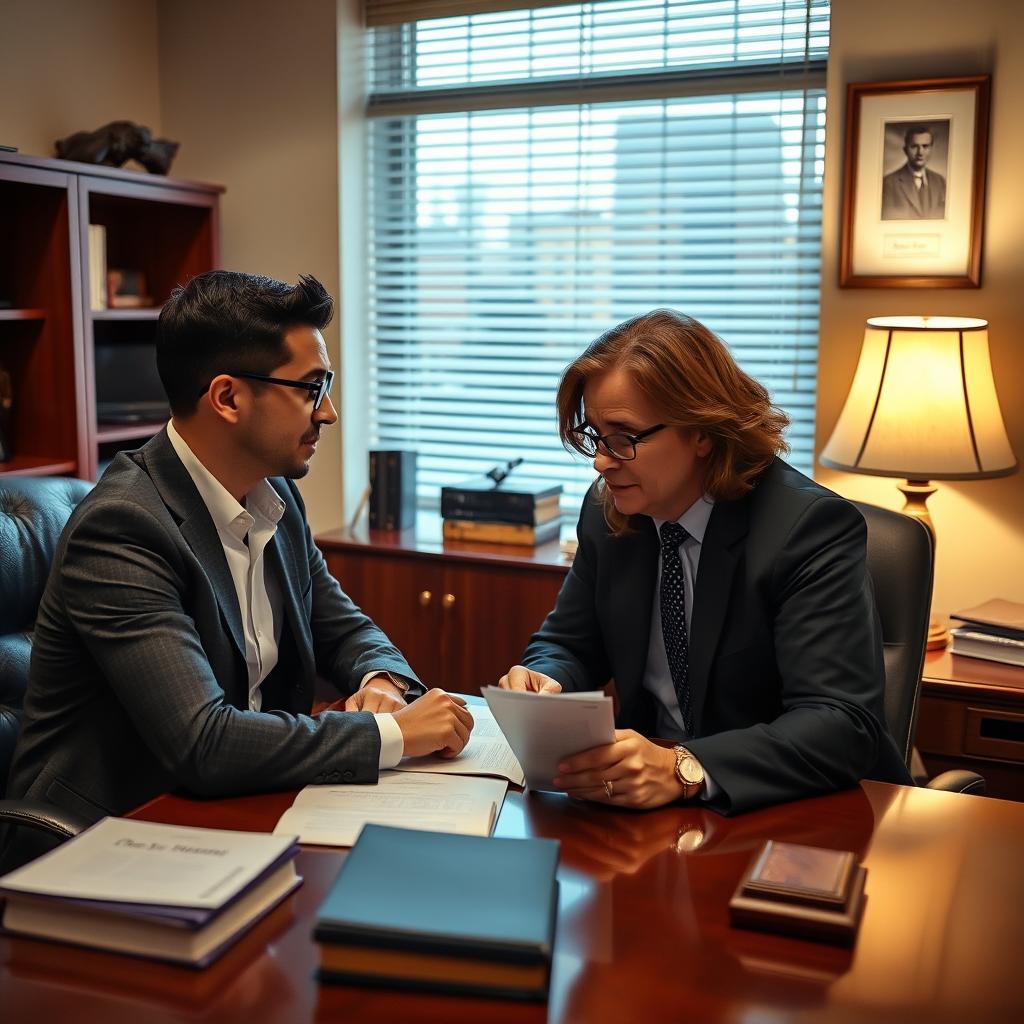
Marital Property Division Lawyer Queens County
You need a Marital Property Division Lawyer Queens County to handle equitable distribution under New York law. Law Offices Of SRIS, P.C. —Advocacy Without Borders. secures your financial future in a Queens County divorce. Our attorneys fight for a fair split of marital assets and debts. We protect your rights in the Queens Supreme Court. Contact us for a case review. (Confirmed by SRIS, P.C.)
Statutory Definition of Marital Property Division in New York
New York Domestic Relations Law § 236(B)(5)(c) governs equitable distribution of marital property in Queens County. This statute defines marital property as all property acquired by either spouse during the marriage, regardless of title. It is separate from separate property, which is property acquired before marriage or through gift or inheritance. The court must divide marital property equitably between the parties. Equitable does not always mean equal. The law provides factors for the court to consider. These factors include the income and property of each party at marriage. The duration of the marriage and the age and health of both parties are considered. The court also looks at the need of a custodial parent to occupy the marital residence. The direct or indirect contributions to the career of the other spouse are weighed. Any wasteful dissipation of assets is a critical factor. The potential future financial circumstances of each party are also reviewed. The statute provides the legal framework for all property division cases in Queens County. A Marital Property Division Lawyer Queens County uses this law to build your case. Understanding these statutory factors is essential for a favorable outcome.
New York Domestic Relations Law § 236(B) — Equitable Distribution — The court has broad discretion to divide assets and award maintenance based on statutory factors.
What is considered marital property in Queens County?
Marital property includes all assets and debts acquired from the date of marriage until the commencement of a divorce action. This includes the marital home, bank accounts, retirement accounts, and business interests. It also includes vehicles, furniture, and other personal property obtained during the marriage. Even if an asset is titled in only one spouse’s name, it is typically marital property. A Queens County judge will classify all property as either marital or separate. This classification is the first step in the equitable distribution process.
How is a pension divided in a Queens County divorce?
A pension earned during the marriage is marital property subject to equitable distribution. The portion of the pension accrued from the marriage date until the divorce filing date is divisible. Courts often use a Qualified Domestic Relations Order (QDRO) to divide retirement benefits. This legal order directs the plan administrator to pay a share to the non-employee spouse. The value of the pension must be properly calculated, often requiring an actuarial experienced.
What is the difference between equitable distribution and community property?
New York is an equitable distribution state, not a community property state. Equitable distribution means a fair, but not necessarily equal, division of marital assets. A judge considers multiple statutory factors to decide what is fair. Community property states typically mandate a straight 50/50 split of assets acquired during marriage. This key distinction makes skilled legal representation in Queens County critical. Learn more about Virginia legal services.
The Insider Procedural Edge in Queens Supreme Court
The Queens Supreme Court, Matrimonial Part, located at 88-11 Sutphin Blvd, Jamaica, NY 11435, handles all divorce and property division cases. This court has specific procedural rules that impact your case timeline and strategy. Filing a divorce action starts the legal clock for property division. You must file a Summons with Notice or a Summons and Complaint to initiate the case. The filing fee for a divorce action in Queens County is currently $210. The court requires detailed financial disclosure from both parties. This is done through a Statement of Net Worth and mandatory discovery. The court’s case management system sets strict deadlines for disclosure and motions. Queens County judges expect full compliance with these procedural deadlines. Failure to meet deadlines can result in sanctions or unfavorable rulings. The court also schedules preliminary conferences to set a discovery schedule. A compliance conference follows to ensure both sides have exchanged information. If settlement talks fail, the court will schedule a trial. The entire process can take over a year for contested cases involving complex assets. Having a lawyer who knows this local procedure is a significant advantage.
What is the typical timeline for a property division case in Queens?
A contested marital property division case in Queens County often takes 12 to 24 months. The timeline depends on the complexity of assets and level of disagreement. Simple cases with full agreement can be resolved in a few months. Cases involving businesses, pensions, or hidden assets take much longer. The court’s crowded docket also influences how quickly a trial date is set.
What are the key filing deadlines in Queens Supreme Court?
You must serve the divorce papers within 120 days of filing the Summons. The defendant has 20 days (30 if served out-of-state) to answer the Complaint. Financial disclosure via the Statement of Net Worth is typically due 40 days after the preliminary conference. Missing these deadlines can waive important rights or lead to default judgments.
Penalties & Defense Strategies for Property Division
The most common penalty in property division is an unequal distribution of assets favoring the other spouse. The court has the power to award a larger share of marital property to one party. It can also order one spouse to pay the other a distributive award, which is a cash payment. The court can impose sanctions for failing to disclose assets or comply with orders. In extreme cases, a finding of contempt of court is possible. A strategic defense focuses on full financial transparency and using statutory factors. Learn more about criminal defense representation.
| Offense / Issue | Potential Penalty / Outcome | Notes |
|---|---|---|
| Failure to Disclose Assets | Sanctions; Forfeiture of Asset | Court can award the hidden asset entirely to the other spouse. |
| Wasteful Dissipation of Assets | Charge-Back of Full Value | Spending marital funds on a paramour or gambling can be added back to the marital pot. |
| Non-Compliance with Court Orders | Contempt; Fines; Attorney’s Fees | Judges in Queens Supreme Court do not tolerate ignoring orders. |
| Unfair Initial Settlement Offer | Prolonged Litigation; Higher Costs | Starting with an unreasonable position damages settlement credibility. |
[Insider Insight] Queens County judges and attorneys are familiar with complex asset portfolios. They frequently deal with real estate, small businesses, and professional practices. The Matrimonial Part expects detailed appraisals and forensic accounting for high-value assets. Prosecutors are not involved; this is a civil matter between spouses. The court’s trend is to enforce strict disclosure rules to prevent hiding assets. Presenting clear, documented evidence is more persuasive than emotional arguments.
Can my spouse take my inheritance in a Queens County divorce?
An inheritance received by one spouse is typically considered separate property. It is not subject to equitable distribution if it has been kept separate. The key is proving the inheritance was not commingled with marital assets. Depositing inheritance funds into a joint bank account can convert them to marital property. A lawyer can help trace and protect these separate assets.
What happens to the marital home in Queens County?
The marital home is usually the largest marital asset. The court has several options for dealing with it. One spouse may be awarded the house, often in exchange for other assets. The house can be sold, and the proceeds divided equitably. If children are involved, the custodial parent may keep the house until the youngest child turns 21.
Why Hire SRIS, P.C. for Your Queens County Property Division
Our lead matrimonial attorney has over 15 years of focused experience in New York equitable distribution law. SRIS, P.C. brings direct, tactical advocacy to the Queens Supreme Court. We understand the local judges and the procedural nuances of the Matrimonial Part. Our firm has secured favorable property division outcomes for clients in Queens County. We prepare every case as if it is going to trial to maximize settlement use. Our approach is based on thorough financial investigation and precise legal argument. Learn more about DUI defense services.
Lead Matrimonial Counsel
Extensive background in complex asset division, including business valuations and pension analysis. Focused practice in New York domestic relations law. Proven record in negotiating and litigating high-stakes property settlements in Queens County.
We assign a dedicated legal team to each client’s case. We explain the process in clear terms without unrealistic promises. Our goal is to protect your financial stability after divorce. We analyze tax implications and long-term consequences of every proposed settlement. Choosing SRIS, P.C. means choosing a firm that fights for your fair share.
Localized FAQs for Queens County Property Division
How long do I have to be a resident to file for divorce in Queens County?
You or your spouse must live in New York State for at least one continuous year before filing. If you were married in New York, the requirement is one year of residency. For grounds of adultery, you only need to be a resident at the time of filing.
Is my spouse entitled to half of my business in Queens County?
Your spouse is entitled to an equitable share of the marital portion of your business. The value of the business growth during the marriage is subject to division. A forensic accountant often determines this value for the court. Learn more about our experienced legal team.
How is debt divided in a Queens County divorce?
Marital debt is divided equitably, just like assets. Debt acquired during the marriage for family needs is typically marital. The court considers who incurred the debt and for what purpose when dividing it.
What is a QDRO and when is it needed?
A Qualified Domestic Relations Order (QDRO) is a court order to divide a retirement plan. It is needed to split pensions, 401(k)s, or other ERISA-governed plans without tax penalty. It is a separate order finalized after the divorce judgment.
Can a prenuptial agreement affect property division in Queens?
A valid prenuptial agreement controls property division if it was signed voluntarily with full disclosure. It can override New York’s equitable distribution laws. The court will enforce it unless there is proof of fraud, duress, or unconscionability.
Proximity, CTA & Disclaimer
Our Queens Location is strategically positioned to serve clients throughout the borough. We are accessible from neighborhoods like Jamaica, Flushing, Forest Hills, and Astoria. Consultation by appointment. Call 24/7. For dedicated representation from a Marital Property Division Lawyer Queens County, contact SRIS, P.C. Our legal team is ready to review your case. Law Offices Of SRIS, P.C.—Advocacy Without Borders.
NAP: SRIS, P.C. | Consultation by appointment | Call 24/7.
Past results do not predict future outcomes.