
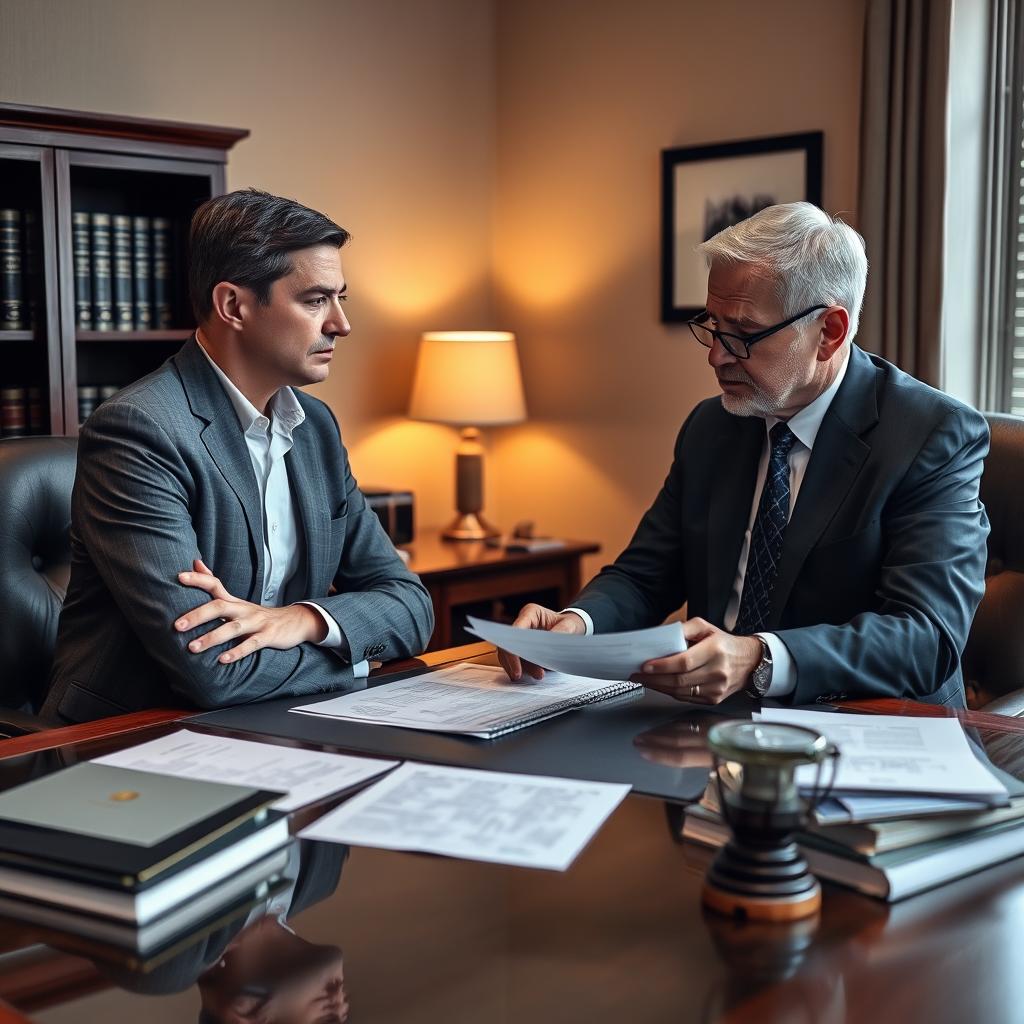
Equitable Distribution Lawyer Hamilton County, NY
When a marriage ends in Hamilton County, New York, the division of assets and debts is governed by equitable distribution—a process rooted in New York’s Domestic Relations Law. For residents of Lake Pleasant, Indian Lake, Speculator, Inlet, Long Lake, Hope, Wells, and Blue Mountain Lake, the Hamilton County Supreme Court at 102 County View Drive handles divorce and equitable distribution matters. The court does not automatically split property fifty-fifty; it considers a range of statutory factors to determine a fair allocation of marital property. Mr. Sris, Owner and Founder of Law Offices Of SRIS, P.C., and the firm’s Of Counsel attorneys represent clients in equitable distribution proceedings, applying decades of experience to matters involving real estate, retirement accounts, business interests, and other complex assets. For a consultation, call (888) 437-7747. Law Offices Of SRIS, P.C. – Advocacy Without Borders.
What Equitable Distribution Means in Hamilton County
Equitable distribution in New York is the legal framework for dividing marital property upon divorce, governed primarily by Domestic Relations Law § 236. The Hamilton County Supreme Court—part of the 4th Judicial District—exercises authority over all divorce and equitable distribution issues. Unlike community property states, New York does not presume a 50/50 split. Instead, the court examines a list of statutory factors, including the income and property of each spouse at the time of the divorce and at the time the property was acquired, the duration of the marriage, the age and health of both parties, the need of a custodial parent to occupy the marital residence, the loss of inheritance and pension rights, the contribution of each spouse to the acquisition of marital property, the liquid or non-liquid character of the property, the tax consequences to each party, and whether alimony (maintenance) has been awarded.
Hamilton County, situated in the heart of the Adirondacks, is the least populous county in New York, and its court calendar often moves with a pace that reflects the region’s smaller caseload. Local real estate—from primary residences to vacation cabins and undeveloped forest land—regularly becomes a focal point in property division. The court may also address the division of pensions, deferred compensation, and closely held business interests. The process begins with the identification and classification of marital and separate property. Marital property generally includes assets acquired during the marriage, while separate property—such as gifts or inheritances received by one spouse—may remain with that spouse. Because classification disputes are common, an attorney experienced in Hamilton County proceedings can be essential to protect your interests.
How Mr. Sris and His Of Counsel Handle Equitable Distribution Cases
Mr. Sris and his Of Counsel approach equitable distribution by first developing a thorough understanding of the marital estate. This includes identifying all assets and debts, tracing the source of funds for real estate and investment accounts, and working with valuation professionals when necessary—such as for businesses, professional practices, or intellectual property. They then analyze the statutory factors to construct a reasoned position on how the court should divide the property and whether maintenance (spousal support) is appropriate. Mr. Sris and his Of Counsel negotiate settlement terms where possible, but they are prepared to litigate at the Hamilton County Supreme Court when parties cannot agree.
Cases in Hamilton County may involve unique characteristics, such as property situated in remote Adirondack locations or assets tied to tourism businesses. The firm’s multi-state experience also proves valuable when a spouse lives outside New York or when assets are located in multiple jurisdictions. Mr. Sris and his Of Counsel bring extensive combined legal experience. Results may vary. Throughout the process, they communicate with clients about realistic expectations, the role of temporary orders under DRL § 236, and the importance of documenting financial information comprehensively.
About Mr. Sris and the Firm’s Of Counsel Attorneys
Mr. Sris, Owner and Founder of Law Offices Of SRIS, P.C., is a former prosecutor who has practiced since 1997. He is admitted in Virginia, Maryland, the District of Columbia, New Jersey, and New York. His background includes testifying before the Virginia House Courts of Justice Committee in support of 2019 HB 635 (chief patron Del. David Bulova), a bill that addressed equitable distribution procedure. The firm’s Of Counsel attorneys contribute additional experience in family law litigation, asset tracing, and negotiation. Together, Mr. Sris and his Of Counsel provide representation informed by years of courtroom work and a practical understanding of how New York courts resolve property division issues. The firm’s New York location serves Hamilton County and the surrounding region.
Frequently Asked Questions
How does equitable distribution work in Hamilton County, NY?
Equitable distribution in Hamilton County involves the court classifying and dividing marital property based on a set of statutory factors, not a fixed formula. The Hamilton County Supreme Court follows New York Domestic Relations Law § 236, which requires identification of marital and separate property, valuation, and then an equitable—though not necessarily equal—distribution. Factors considered include the length of the marriage, each spouse’s contributions, and the economic circumstances of each party. The process can be resolved through a negotiated settlement or, if necessary, a trial. For guidance on your specific situation, call (888) 437-7747.
Do I need a lawyer for an equitable distribution case in Hamilton County?
You are not required to have an attorney, but property division in divorce often involves complex legal and financial issues that benefit from experienced representation. A lawyer can assist with identifying hidden assets, challenging the classification of certain property, and advocating for a fair division based on the statutory factors. At Law Offices Of SRIS, P.C., Mr. Sris and his Of Counsel handle these details so that you can focus on your next chapter. To discuss the details of your matter, contact the firm at (888) 437-7747.
What factors does the court consider when dividing property in Hamilton County?
The court examines a list of factors under DRL § 236, including each spouse’s income, the duration of the marriage, contributions as a homemaker, the need to occupy the marital residence, and the tax consequences of any proposed division. The value of assets such as pensions, businesses, and real estate is also a central part of the analysis. Because Hamilton County has a small population, judges are often familiar with local property characteristics. A thorough presentation of these factors can influence the final order. For a consultation, reach Mr. Sris and his Of Counsel at (888) 437-7747.
How does the court handle retirement accounts and pensions in Hamilton County?
Retirement assets acquired during the marriage are generally considered marital property subject to equitable distribution. The court may use a qualified domestic relations order (QDRO) to divide certain plans. Valuation of these assets can be technical, especially with defined-benefit pensions or accounts with pre-marital contributions. Mr. Sris and his Of Counsel work with financial attorneys when needed to ensure a proper division. For guidance on your specific situation, call (888) 437-7747.
What is the difference between equitable distribution and maintenance (alimony) in Hamilton County?
Equitable distribution concerns the division of property and debts, while maintenance (spousal support) is a separate award based on one spouse’s need and the other’s ability to pay. New York has statutory formulas for temporary maintenance, but the final award is determined after considering factors such as the length of the marriage, the presence of children, and the equitable distribution itself. Both issues are often resolved together in the Hamilton County Supreme Court. To discuss the details of your matter, contact Law Offices Of SRIS, P.C. at (888) 437-7747.
Where can I find an equitable distribution lawyer in Hamilton County?
You can reach Mr. Sris and the firm’s Of Counsel attorneys at (888) 437-7747. Law Offices Of SRIS, P.C. serves clients in Lake Pleasant, Indian Lake, Speculator, Inlet, Long Lake, Hope, Wells, Blue Mountain Lake, and throughout Hamilton County. Consultations are by appointment at the firm’s New York location, with phone availability during business hours. Call today to schedule a consultation.
Additional localities we serve:
Family Law Lawyer New York County (Manhattan)
Family Law Lawyer Kings County (Brooklyn)
Family Law Lawyer Queens County (Queens)
Family Law Lawyer Nassau County (Long Island)
Attorney advertising. Prior results do not guarantee a similar outcome. Case results depend on a variety of factors unique to each case. Results may vary.