
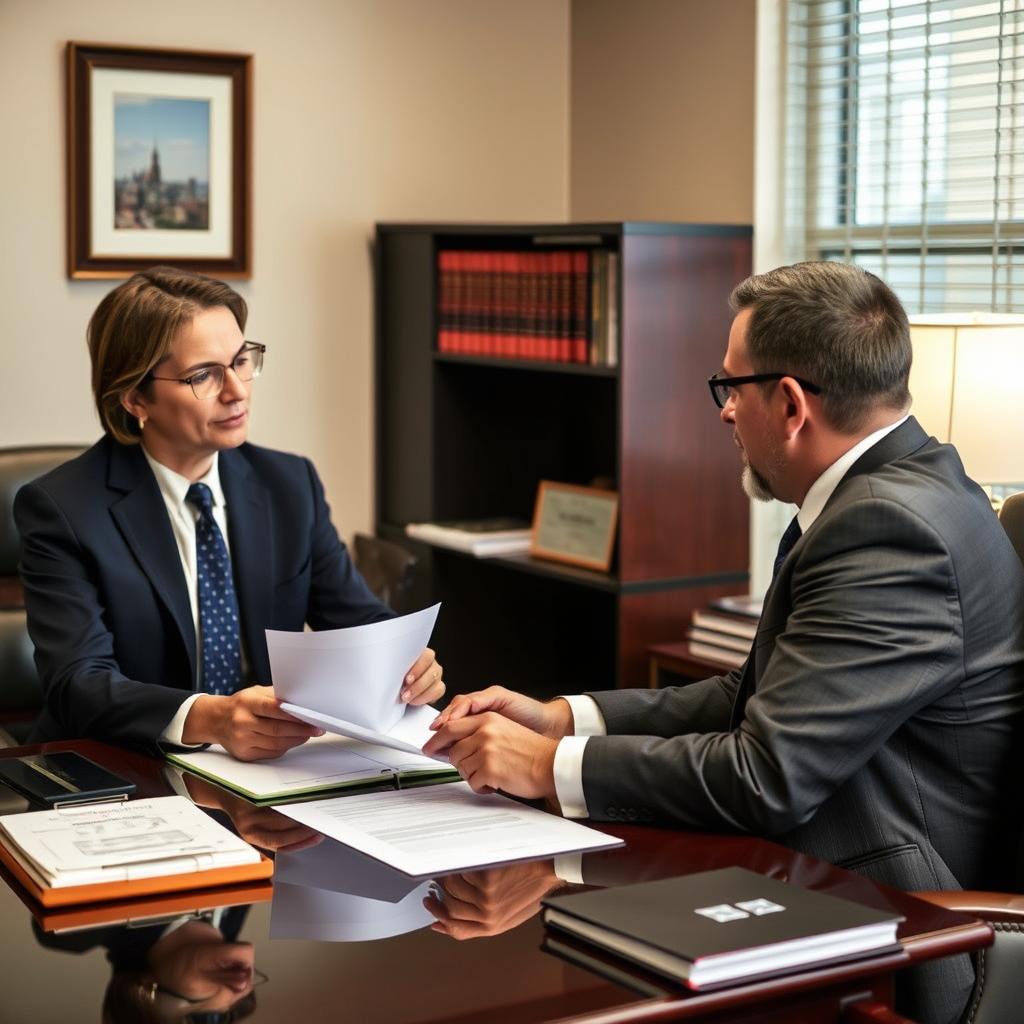
Equitable Distribution Lawyer Rockland County, NY
When a marriage ends in Rockland County, New York, property division is often one of the most significant financial decisions a couple makes. New York follows equitable distribution, meaning marital assets and debts are divided fairly, not necessarily equally. The process requires a careful classification of property, a valuation of real estate, retirement accounts, business interests, and other holdings, and a strategic approach to negotiations or court proceedings. Law Offices Of SRIS, P.C. represents individuals in equitable distribution matters across Rockland County, including New City, Nanuet, Spring Valley, Suffern, Haverstraw, and Nyack. Mr. Sris and the firm’s Of Counsel attorneys assist clients with the identification of marital and separate property, the analysis of spousal maintenance claims, and the presentation of a comprehensive financial picture. Contact the firm at (888) 437-7747 to schedule a consultation about your case. Law Offices Of SRIS, P.C. – Advocacy Without Borders.
What Equitable Distribution Means in Rockland County
Under New York’s Domestic Relations Law § 236, equitable distribution governs the division of property when a marriage is dissolved. Unlike states that split assets equally, New York courts divide marital property based on what is fair under the circumstances. The Rockland County Supreme Court, located in New City, has jurisdiction over divorce and equitable distribution matters throughout the 9th Judicial District, which covers all of Rockland County. The court considers several statutory factors, including the income and property of each spouse at the time of the divorce and at the time the property was acquired, the duration of the marriage, the age and health of both parties, the need of a custodial parent to occupy the marital residence, the loss of inheritance and pension rights, the contribution of each spouse to the acquisition of marital property, the liquid or non-liquid character of the property, the probable future financial circumstances of each party, and the tax consequences. Parties may present evidence through financial disclosures, experienced attorney valuations, and testimony. The court then determines what portion of the marital estate each spouse receives, and may order a distributive award or a transfer of specific assets.
Because Rockland County is part of the Hudson Valley, its Supreme Court docket includes a mix of suburban and semi-rural families. The judges are experienced in handling complex asset divisions, including those involving closely held businesses, professional practices, and real estate holdings. While the court encourages settlement, it is prepared to conduct trials when the parties cannot agree. The firm’s familiarity with the local court procedures helps clients understand what to expect at each stage.
How Mr. Sris and the Firm’s Of Counsel Attorneys Handle Equitable Distribution Cases
Equitable distribution requires precise financial documentation and a clear understanding of what constitutes marital versus separate property. The firm begins by working with clients to identify all assets and debts, trace the origins of property that may be separate, and gather necessary documents such as tax returns, financial statements, and appraisals. The goal is to build a complete and accurate picture of the marital estate. Mr. Sris and the firm’s Of Counsel attorneys then discuss the client’s priorities—whether that is retaining the family home, protecting a business, or securing a fair share of retirement assets.
After the initial assessment, the team develops a strategy for negotiation. In many cases, the parties can reach a settlement through direct discussions or mediation, avoiding the time and expense of a trial. The firm works to present a realistic proposal supported by financial evidence and legal authority. If a settlement cannot be reached, the matter proceeds to the Rockland County Supreme Court, where the attorneys present the case to the judge. Throughout the litigation, the firm’s multi-state experience—Mr. Sris is admitted in Virginia, Maryland, the District of Columbia, New Jersey, and New York—provides perspective on how similar issues are handled in different jurisdictions, which can be valuable in complex cross-border cases.
About Mr. Sris and the Firm’s Of Counsel Attorneys
Mr. Sris is the Owner and Founder of Law Offices Of SRIS, P.C. A former prosecutor, he founded the firm in 1997 and has practiced family law, criminal defense, and immigration across multiple states. He testified before the Virginia House Courts of Justice Committee in support of 2019 HB 635 (chief patron Del. David Bulova) and is admitted to practice in Virginia, Maryland, the District of Columbia, New Jersey, and New York. Mr. Sris and the firm’s Of Counsel attorneys have extensive combined experience in family law matters. Results may vary.
The firm’s Of Counsel attorneys bring their own track records to the table, contributing insight in financial analysis, valuation disputes, and negotiation. Together, the team provides representation that is grounded in years of courtroom work and focused on achieving a favorable resolution for each client. For guidance on your specific situation, contact the firm at (888) 437-7747.
Frequently Asked Questions
What is equitable distribution in New York?
Equitable distribution is the process by which a New York court divides marital property fairly, not necessarily equally, upon divorce. The court considers the factors listed in Domestic Relations Law § 236, including each spouse’s income, contributions to the marriage, and the duration of the relationship. Marital property generally includes assets acquired during the marriage, while separate property—such as gifts or inheritances—stays with the original owner. A party seeking a larger share must show why a deviation from a 50/50 split is fair.
How does the Rockland County Supreme Court handle property division?
The Rockland County Supreme Court in New City oversees all divorce and equitable distribution cases in the county. The process begins with mandatory financial disclosure, after which the court may encourage settlement through conferences or mediation. If the parties cannot agree, the judge holds a trial where each side presents evidence about asset values, contributions, and financial needs. The court then issues a judgment dividing the property. For a consultation, reach the firm at (888) 437-7747.
What is the difference between marital and separate property under New York law?
Marital property includes assets earned or acquired during the marriage, regardless of whose name is on the title, while separate property includes assets obtained before the marriage or through gift or inheritance. The distinction is critical because only marital property is subject to equitable division. The appreciation of separate property during the marriage, however, may be treated as marital if active efforts contributed to the increase. Careful tracing of funds is often required to correctly classify each asset.
Can we settle property division without going to court in Rockland County?
Yes, many couples resolve equitable distribution through negotiation or mediation and submit a written settlement agreement to the court. The agreement must be fair and reasonable and must fully disclose each party’s financial circumstances. The court reviews the agreement and, if satisfied, incorporates it into the divorce judgment. An attorney can help negotiate a settlement that protects your interests and complies with the law.
Do I need a lawyer for an equitable distribution case in Rockland County?
While you are not legally required to hire a lawyer, an experienced family law attorney helps ensure that all assets are identified, properly valued, and fairly distributed. Equitable distribution involves complex financial records, valuation principles, and legal arguments. An attorney can also advise on spousal maintenance claims and tax implications. For a consultation, reach Law Offices Of SRIS, P.C. at (888) 437-7747.
How can I start the equitable distribution process?
To begin, contact a family law attorney to discuss the facts of your case. The attorney will explain the procedural steps, help you gather financial documents, and determine whether you should pursue settlement negotiations or prepare for litigation. Once the divorce action is filed in Rockland County Supreme Court, mandatory financial disclosure begins and the court’s schedule controls the timeline. Call (888) 437-7747 to speak with Mr. Sris and the firm’s Of Counsel attorneys about your matter.
For more information on family law representation in other New York communities, see our pages for Family Law Lawyer New York County (Manhattan), Family Law Lawyer Kings County (Brooklyn), Family Law Lawyer Nassau County (Long Island), and Family Law Lawyer Suffolk County (Long Island).
Primary resources: Rockland County Supreme Court | New York Domestic Relations Law § 236 | New York State Unified Court System
Attorney advertising. Prior results do not guarantee a similar outcome. Case results depend on a variety of factors unique to each case. Results may vary.
? 1997-2026 Law Offices Of SRIS, P.C.