
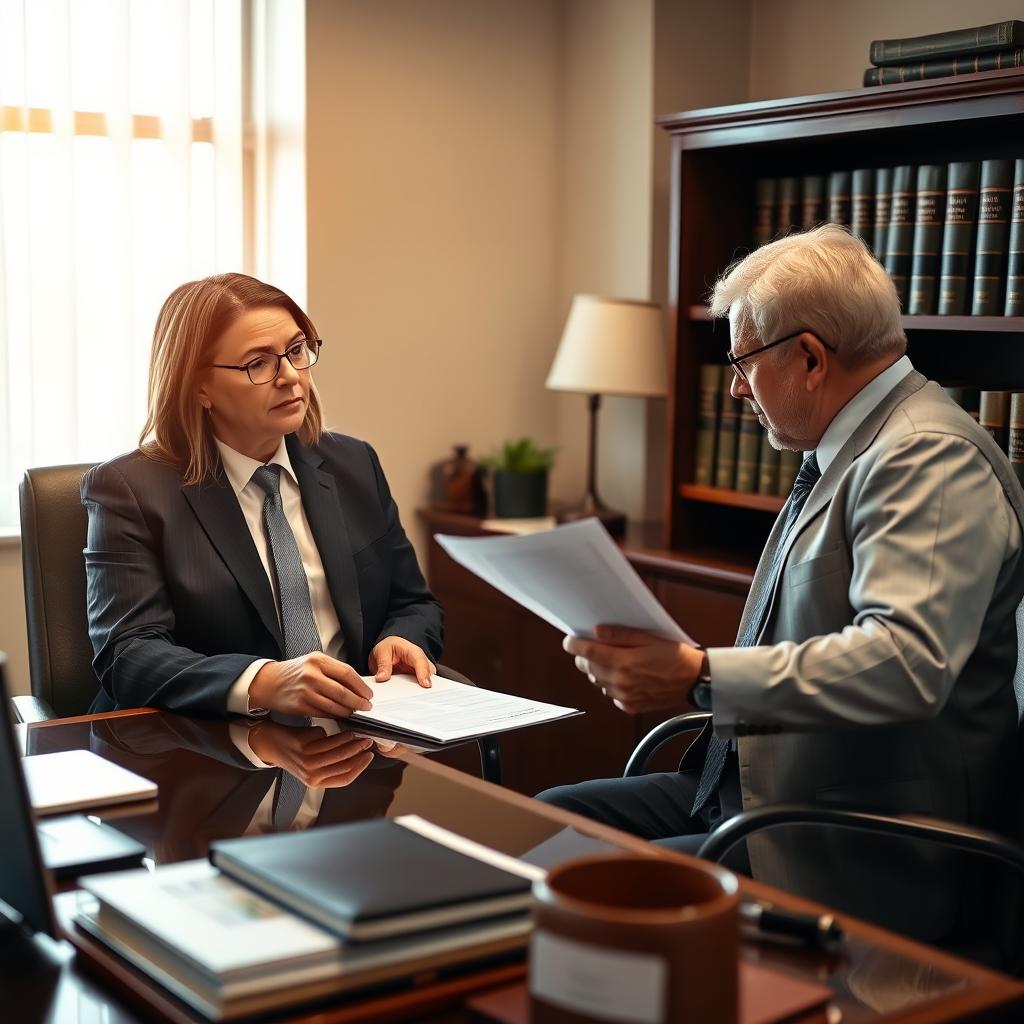
Indefinite Alimony Lawyer Livingston County, NY
When a marriage ends, New York courts have the authority to award spousal maintenance—commonly called alimony—to a financially dependent spouse. In some cases, that obligation may be indefinite rather than for a fixed period. For spouses facing the prospect of paying or receiving ongoing support in Livingston County, understanding how indefinite alimony works under the New York Domestic Relations Law and how local courts approach these determinations is critical. Law Offices Of SRIS, P.C. represents clients in maintenance disputes before the Livingston County Supreme Court and the Livingston County Family Court. Mr. Sris and the firm’s Of Counsel attorneys bring considerable experience in family law matters across the Finger Lakes region. To discuss your situation and the options available, call (888) 437-7747. Law Offices Of SRIS, P.C. – Advocacy Without Borders.
What Indefinite Alimony Means in Livingston County
Spousal maintenance in New York is governed by Domestic Relations Law (DRL) § 236. The statute provides for both temporary maintenance—support paid while a divorce action is pending—and post-divorce maintenance. For marriages without a valid prenuptial or postnuptial agreement, the court applies a statutory formula to determine the presumptive amount and duration of post-divorce maintenance. However, the formula yields only advisory guidelines, and the court retains discretion to deviate based on statutory factors. When the facts warrant, a court may order maintenance that has no predetermined end date—referred to as indefinite, non-durational, or permanent alimony.
Livingston County is part of New York’s 7th Judicial District, and family law matters are heard in two courts. Divorce and equitable distribution—including contested alimony claims—proceed in the Livingston County Supreme Court, located at 2 Court Street in Geneseo. Custody, visitation, child support, and family offense petitions are handled by the Livingston County Family Court. Because indefinite alimony often arises in long-term marriages where one spouse has stayed out of the workforce or faces a substantial earning disparity, the outcome depends heavily on the specific financial circumstances of each party and the evidence presented. Having counsel who is familiar with the local bench and the evidentiary demands of a maintenance hearing can make a meaningful difference in the result.
How Mr. Sris and the Firm’s Of Counsel Attorneys Handle Indefinite Alimony Cases
Whether you are the potential payor or the recipient, the process begins with a careful analysis of the marriage’s financial history. Mr. Sris and the firm’s Of Counsel attorneys review tax returns, employment records, retirement account statements, and any existing separation agreements or prenuptial contracts. The key inquiry under DRL § 236(B)(6) is the earning capacity and financial need of each spouse, the age and health of the parties, the length of the marriage, and the presence of any children requiring care. For a payor spouse, the strategy may involve demonstrating that the other party is capable of self-support through vocational training or that the marital standard of living can be maintained with a durational award. For a recipient spouse, the focus is often on documenting an inability to become self-supporting due to age, disability, or a long absence from the labor market.
Once a clear picture of the finances emerges, counsel prepares the necessary motion papers or settlement proposals. Many alimony disputes in Livingston County resolve without trial, either through direct negotiation between the parties or in a mandated settlement conference before the Supreme Court. If a hearing is necessary, Mr. Sris and the firm’s Of Counsel attorneys present the economic evidence through witness testimony, financial affidavits, and, when appropriate, expert reports from vocational evaluators or forensic accountants. Throughout the litigation, the goal is to achieve a resolution that reflects the statutory factors and the parties’ actual circumstances, while avoiding unnecessary litigation expense.
About Mr. Sris and the Firm’s Of Counsel Attorneys
Reviewed by Mr. Sris, Owner and Founder
Admitted in Virginia, Maryland, the District of Columbia, New Jersey, and New York
Practicing since 1997
Mr. Sris, Owner and Founder of Law Offices Of SRIS, P.C., has practiced family law for many years. He is a former prosecutor and has testified before the Virginia House Courts of Justice Committee in support of 2019 HB 635 (chief patron Del. David Bulova). His experience in trial advocacy and financial-document analysis provides a strong foundation for handling contested maintenance proceedings.
The firm’s Of Counsel attorneys collaborate with Mr. Sris on family law matters in New York and other jurisdictions. They bring a range of experience that includes litigation, negotiation, and familiarity with the procedural requirements of New York Supreme Court. Law Offices Of SRIS, P.C. is a multi-state law firm that has represented clients in family law disputes since 1997.
Frequently Asked Questions
What is indefinite alimony in New York?
Indefinite alimony—sometimes called permanent or non-durational maintenance—is spousal support that a New York court orders without setting a fixed end date. Under DRL § 236(B)(6), a judge may award indefinite maintenance when the recipient spouse is unable to become self-supporting, often due to advanced age, chronic illness, or a prolonged absence from the workforce during a long marriage. The court weighs statutory factors including the length of the marriage, the parties’ earning capacities, the marital standard of living, and any contributions made as a homemaker. Because the formula guidelines are advisory for post-divorce maintenance, the judge has discretion to deviate from the calculated amount and duration. For guidance on your specific situation, reach Law Offices Of SRIS, P.C. at (888) 437-7747.
How does the Livingston County court decide whether to order indefinite alimony?
The Livingston County Supreme Court evaluates the same statutory factors that apply statewide, but local judicial practice often emphasizes thorough financial disclosure and realistic assessments of each party’s future earning ability. The court will examine each spouse’s education, work history, health, and the need to care for minor children. If the recipient demonstrates that a return to the workforce would be unreasonable or impossible, the court may order maintenance that continues until the recipient’s death or remarriage. Because the determination is highly fact-specific, counsel typically submit detailed net-worth statements, income documentation, and, when helpful, experienced attorney vocational assessments. To discuss the details of your matter, contact Law Offices Of SRIS, P.C. at (888) 437-7747.
Can indefinite alimony be modified after the divorce is final?
Yes, indefinite spousal maintenance in New York can be modified upon a showing of a substantial change in circumstances. Common grounds for modification include a significant involuntary loss of income by the payor, a measurable increase in the recipient’s income, cohabitation with a new partner, or the payor’s retirement. The party seeking modification must file a petition in the Supreme Court that issued the original order, presenting evidence of the changed conditions. However, if the parties’ separation agreement expressly states that maintenance is non-modifiable, the court will generally enforce that provision. For a consultation, reach Mr. Sris and the firm’s attorneys at (888) 437-7747.
What is the difference between temporary maintenance and indefinite alimony?
Temporary maintenance—also called pendente lite support—is spousal support awarded during the divorce action, while indefinite alimony is post-divorce maintenance that may last indefinitely. Temporary maintenance is calculated under a strict statutory formula based on the parties’ incomes, and its purpose is to preserve the economic status quo while the case is pending. Post-divorce maintenance, including indefinite awards, is governed by advisory guidelines and the full set of statutory factors. A spouse who receives temporary support may also receive indefinite post-divorce maintenance if the circumstances warrant it, but the two awards are distinct and determined at different stages of the case.
Do I need a lawyer to pursue or oppose indefinite alimony in Livingston County?
While you are not legally required to have an attorney, contesting indefinite alimony involves complex financial evidence and the application of statutory factors that can be difficult to navigate alone. A party who appears pro se must still comply with procedural rules regarding discovery, disclosure statements, and the presentation of admissible evidence. An attorney experienced in New York matrimonial law can help assemble the necessary documentation, identify relevant statutory factors, and present the case effectively at a settlement conference or trial. To explore your options, contact Law Offices Of SRIS, P.C. at (888) 437-7747.
What are the tax implications of indefinite alimony payments?
Under current federal law, alimony payments under a divorce or separation agreement executed after December 31, 2018, are not deductible by the payor and are not included in the recipient’s taxable income. For agreements entered into on or before that date, the prior tax treatment generally remains in effect unless the agreement is modified and the parties expressly elect the new rule. Because the tax consequences can significantly affect the net financial position of each spouse, structured settlement negotiations often account for the after-tax impact. A qualified tax professional should be consulted for advice specific to your circumstances.
Localities We Serve
New York County (Manhattan) Family Law • Kings County (Brooklyn) Family Law • Queens County Family Law • Nassau County Family Law
Primary Sources
Livingston County Supreme Court • New York Domestic Relations Law § 236 • New York State Unified Court System
Attorney advertising. Prior results do not guarantee a similar outcome. Case results depend on a variety of factors unique to each case. Results may vary.