
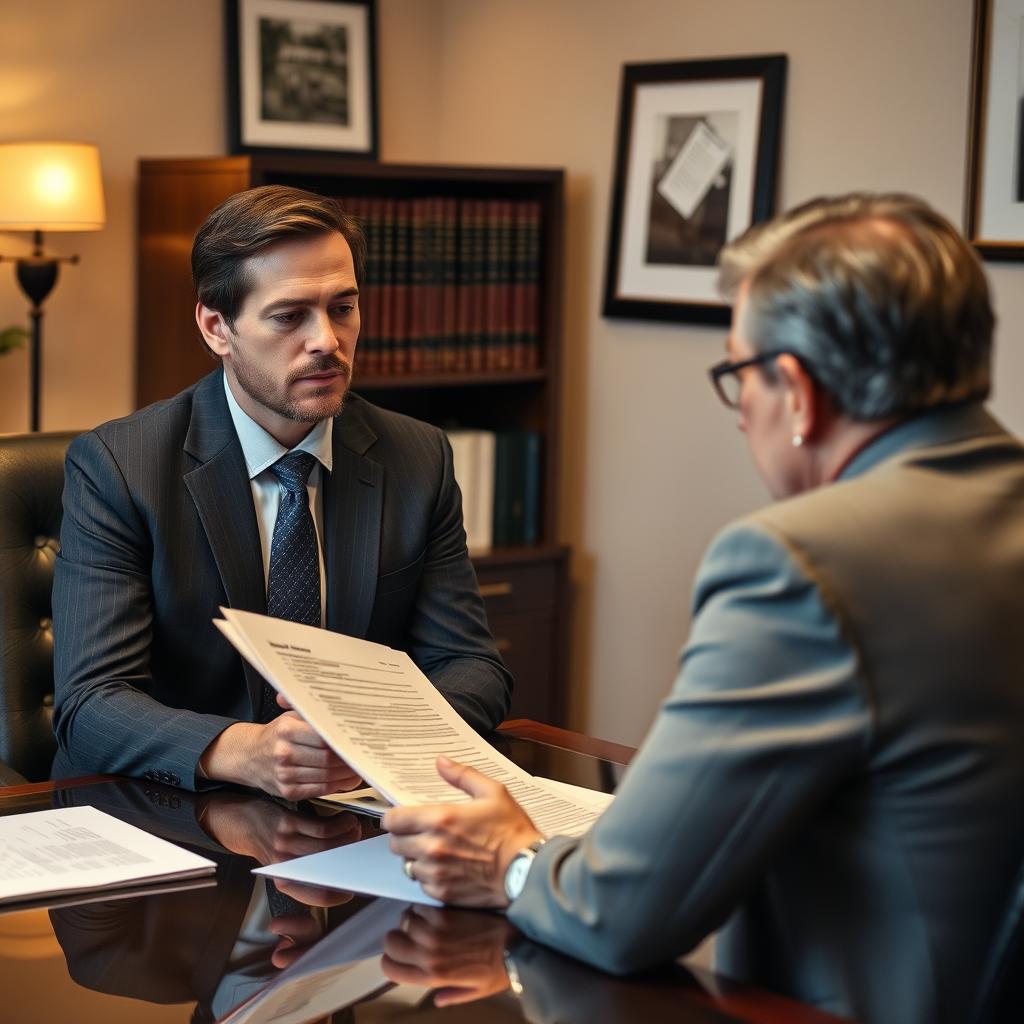
Separation Agreement Lawyer Queens County, NY
You and your spouse have been arguing more than talking; the Queens apartment feels smaller every day, and you both know something has to change. You are not yet ready for divorce—maybe for religious reasons, financial stability, or because the children are still in Flushing schools—but you need clear, enforceable ground rules about who stays in the Jamaica co‑op, how the bills get paid, and when each of you will spend weekends with the kids in Astoria. That is precisely what a separation agreement does in New York, and Mr. Sris of Law Offices Of SRIS, P.C. has helped many Queens County families negotiate a path through this difficult chapter. Drawing on extensive combined legal experience between Mr. Sris and his Of Counsel, the firm guides spouses through drafting, negotiating, and finalizing separation agreements that are fair, durable, and structured to protect your rights in the event a divorce follows. The firm’s New York location serves clients from Jamaica, Flushing, Long Island City, Forest Hills, Bayside, Jackson Heights, Rego Park, Elmhurst, Woodside, Corona, Rockaway Beach, Howard Beach, Ozone Park, and every other Queens neighborhood. If you are considering a separation, reach Law Offices Of SRIS, P.C. at (888) 437‑7747 to request a consultation and start building a written agreement that reflects your family’s reality. Law Offices Of SRIS, P.C. – Advocacy Without Borders.
What a Separation Agreement Means in Queens County, NY
In New York, a separation agreement is a written contract executed by both spouses that resolves all of the issues ordinarily addressed in a divorce—property division, spousal maintenance, child custody. India is not a signatory to the 1980 Hague Convention on Civil Aspects of International Child Abduction. Visitation, and child support—while the marriage legally continues. The agreement is governed by New York Domestic Relations Law and is binding on the parties if voluntarily entered into after full financial disclosure. Queens County (Queens), the largest borough by population and part of the 11th Judicial District, handles these family matters through two court systems: the Queens County Supreme Court, located at 88‑11 Sutphin Boulevard in Jamaica, adjudicates divorce and equitable distribution issues when a separation agreement is later converted to a divorce, and the Queens County Family Court hears custody, visitation, support, and family offense petitions arising from the separation period.
Queens County’s high volume of family cases means that a well‑drafted agreement can keep a couple out of an overburdened court calendar entirely. The borough’s proximity to Manhattan and Nassau County, along with its dense public transit network—the 7, E, F, M, N, Q, and R subway lines, the Long Island Rail Road, and major highways such as the Long Island Expressway, Grand Central Parkway, and the Van Wyck Expressway—makes it one of the most interconnected localities in the region; these same transit realities often affect where parents live after separation and how parenting time is structured. Our firm knows the courthouse in Jamaica and the Family Court on Jamaica Avenue, and we routinely draft agreements with the practical logistics of Queens life in mind, from school-zoning considerations in Bayside to commuting distances between Jackson Heights and a parent’s workplace in Midtown.
A separation agreement can serve as the basis for a no‑fault divorce after one year under New York Domestic Relations Law § 170(6), or it can remain in place indefinitely if the spouses choose to stay legally married. The agreement must include a fair and reasonable distribution of marital property and debts, spousal maintenance provisions consistent with the statutory formula found in the Domestic Relations Law, custody and parenting‑time schedules, and child support calculated according to the Child Support Standards Act percentage guidelines. Because a Queens County Supreme Court judge will review the agreement for unconscionability when it is incorporated into a divorce judgment, the terms must reflect real negotiation and full transparency. Mr. Sris and his Of Counsel ensure that every separation agreement they prepare satisfies New York’s rigorous court‑approval standards while addressing the unique concerns of Queens families.
How Mr. Sris and His Of Counsel Approach Separation Agreements
When a spouse in Queens County contacts the firm about a separation agreement, the first step is a thorough consultation during which Mr. Sris or one of his Of Counsel listens to the family’s circumstances, financial picture, and long‑term goals. The firm then works with the client to prepare a statement of both parties’ income, assets, debts, and expenses, because New York law requires full financial disclosure before any separation agreement can be enforced. Mr. Sris and his team then either sit down with the parties for guided negotiation—often in separate rooms or via video—or correspond with the other spouse’s attorney to hammer out the terms. Because every member of the Of Counsel group is engaged through the firm under the “Of Counsel” designation, the client benefits from a collaborative team that brings extensive collective experience to the drafting table without the cost structure of a large downtown firm.
Once a draft agreement is in written form, the firm reviews it clause by clause with the client, explaining each provision in plain English. If the spouses later decide to convert the separation into a no‑fault divorce, Mr. Sris and his Of Counsel can file the necessary complaint in Queens County Supreme Court, attach the signed separation agreement, and ask the court to incorporate its terms into the divorce judgment. Throughout the process, the firm avoids hard‑and‑fast timelines—every case moves according to the court’s calendar and the parties’ readiness—and focuses instead on building an agreement that will stand up under judicial scrutiny and, most importantly, work for the family day to day.
About Mr. Sris and His Of Counsel Team
Mr. Sris, Owner and Founder of Law Offices Of SRIS, P.C., has practiced family law since the firm’s founding in 1997. Admitted in New York, Virginia, Maryland, the District of Columbia, and New Jersey, he brings a multi‑jurisdictional understanding to separation agreements, which is particularly helpful when one spouse lives in Queens and the other resides in a neighboring state or overseas. Mr. Sris testified before the Virginia House Courts of Justice Committee in support of 2019 HB 635 (chief patron Del. David Bulova), a demonstration of his commitment to family law reform that manifests in the careful, statute‑anchored drafting he applies to every separation agreement the firm prepares. A former prosecutor, Mr. Sris approaches negotiation with the thorough preparation of a seasoned trial lawyer but always keeps the focus on achieving a workable settlement outside the courtroom.
Mr. Sris is supported by a team of Of Counsel attorneys, each engaged through the firm and concentrating their practice in family law and related fields. Together, Mr. Sris and his Of Counsel bring extensive combined legal experience to Queens County family law matters. Results may vary. The firm’s New York location serves clients by appointment only; call (888) 437‑7747 to schedule a consultation at a time that works for you.
Frequently Asked Questions
What is a separation agreement in New York?
A separation agreement is a legally binding contract between married spouses that resolves all of the issues a divorce would decide—property division, support, custody—while the marriage remains intact. In New York, a properly executed separation agreement that complies with the Domestic Relations Law and is filed with the court can serve as the basis for a no‑fault divorce after one year, or it can be kept in place indefinitely if the parties choose to remain married. The agreement must be in writing, signed by both spouses, and acknowledged in the same manner as a deed. Because a Queens County Supreme Court judge will review it later if it is incorporated into a divorce, the agreement must be fair, reasonable, and the product of full financial disclosure.
Do I need a lawyer for a separation agreement in Queens County?
You are not legally required to hire a lawyer to execute a separation agreement, but having an attorney who regularly practices in Queens County family law helps ensure the agreement is comprehensive, enforceable, and tailored to New York’s statutory requirements. A separation agreement that contains ambiguous language, omits required financial disclosures, or fails to address certain categories of marital property can be challenged in court later. Mr. Sris and his Of Counsel draft agreements that anticipate future litigation, court‑incorporation standards, and the specific practices of Queens County Supreme Court, so that clients are not left with an unenforceable document when they need it most.
How does a separation agreement affect divorce in New York?
Under New York Domestic Relations Law § 170(6), a signed and acknowledged separation agreement that has been lived up to for at least one year provides grounds for a no‑fault divorce. The divorce complaint simply asks the court to incorporate the agreement’s terms into the divorce judgment. The court reviews the agreement for fairness but rarely re‑opens the underlying negotiations unless the agreement is found to be unconscionable. This route avoids the expense and acrimony of a contested divorce trial and lets the couple move on more quickly.
Can a separation agreement be modified after it is signed?
A separation agreement can be modified if both spouses consent in writing, or if a court later finds that a substantial change in circumstances warrants modification of child‑related provisions. Custody, visitation, and child support terms are always modifiable based on the best interests of the child and a change in circumstances. Spousal maintenance and property division terms, however, generally cannot be changed unless the agreement explicitly reserves the right to modify them or the parties agree. Mr. Sris and his team draft agreements that clearly state which terms are modifiable and which are final, preventing future disputes.
What should I include in a separation agreement in Queens County?
A comprehensive Queens County separation agreement should address spousal maintenance, equitable distribution of marital property and debts, custody and parenting time, child support, health insurance, tax allocations, and a plan for converting the separation into a divorce if desired. Because Queens is a borough of commuters, the parenting‑time schedule must account for work commutes, school hours, and the logistics of getting children between neighborhoods such as Astoria and Bayside. The agreement should also specify who will remain in the marital home—often a cooperative apartment or a multi‑family house—and how the mortgage, maintenance charges, and utilities will be handled during separation.
How does the court enforce a separation agreement in Queens County?
If one party breaches a separation agreement, the other can file a petition in Queens County Supreme Court or, for child‑related enforcement, in Queens County Family Court to compel compliance. The court has the power to award money judgments for unpaid support, order specific performance of property provisions, and, in child‑centered matters, modify the terms to protect the child. Because the agreement is a contract under New York law, the moving party may also be entitled to attorney’s fees if the breach is willful. Mr. Sris and his Of Counsel help clients enforce existing separation agreements by filing the appropriate motion in the correct court and presenting the facts clearly.
For personalized help with your separation, contact Mr. Sris and his Of Counsel: Queens County Divorce Lawyer | Queens County Child Custody Lawyer | Queens County Spousal Support Lawyer.
Attorney advertising. Prior results do not guarantee a similar outcome.
Case results depend on a variety of factors unique to each case.
Results may vary.