
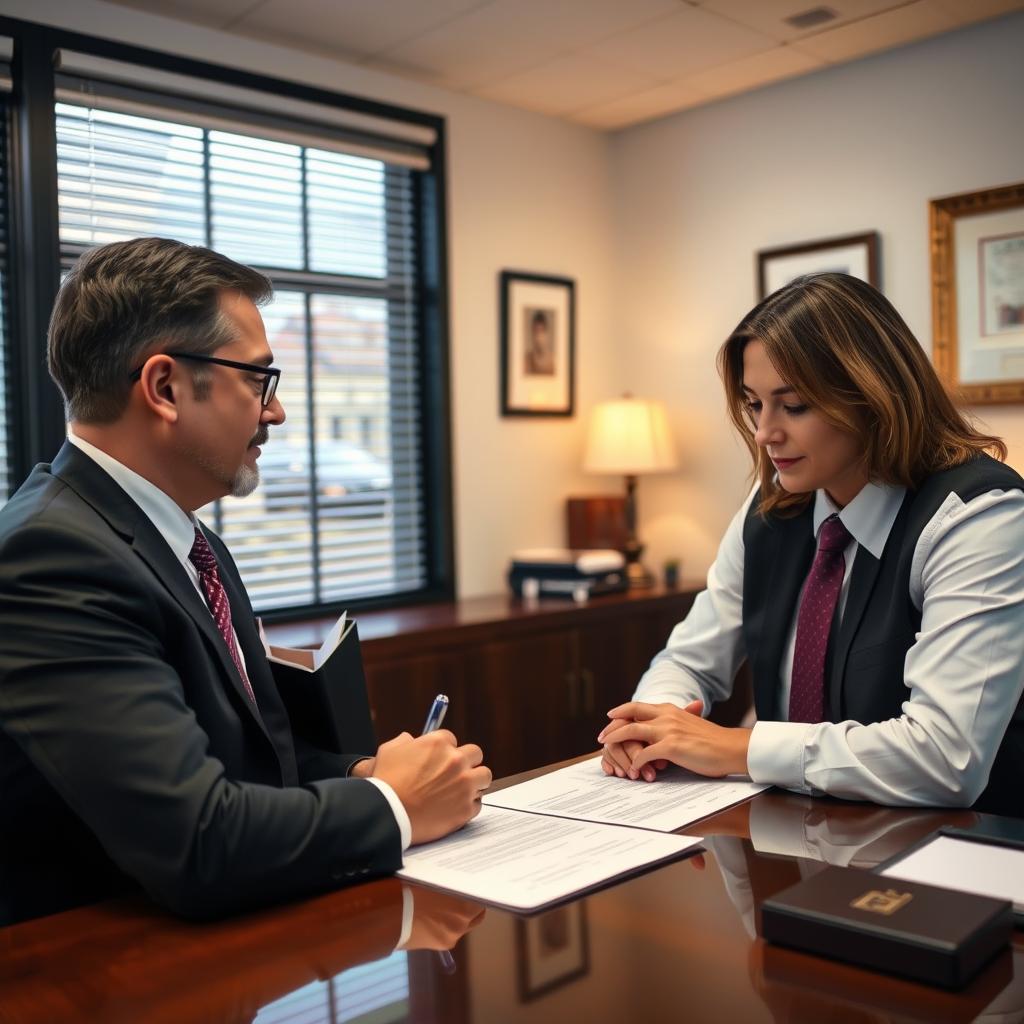
Separation Agreement Lawyer Ontario County, NY
For many couples in Ontario County, a separation agreement is a practical first step toward resolving marital issues without immediately filing for divorce. A separation agreement is a written contract between spouses that addresses property division, spousal maintenance, child custody and support, and other important matters. In New York, a properly executed separation agreement can later serve as the basis for a no‑fault divorce after a period of compliance. Whether you are considering a separation, need help negotiating fair terms, or must enforce an existing agreement, having an experienced family law attorney can make a significant difference. Mr. Sris and his Of Counsel team at Law Offices Of SRIS, P.C. bring a thorough understanding of New York’s Domestic Relations Law to clients throughout Ontario County. Call (888) 437‑7747 to schedule a consultation about your separation agreement.
What a Separation Agreement Means in Ontario County, New York
A separation agreement is a legally enforceable contract that gives spouses control over the terms of their separation rather than leaving those decisions to a judge. Under New York’s Domestic Relations Law, specifically DRL § 170, a valid separation agreement can become the ground for a no‑fault divorce after the parties have lived apart and complied with the agreement’s terms for at least one year. The agreement typically addresses equitable distribution of marital property, spousal maintenance (alimony) calculated under the statutory formulas in DRL § 236, and arrangements for children if applicable. Because New York enforces strict automatic orders — which freeze marital assets and restrict insurance changes once a divorce action is filed — a carefully crafted separation agreement can protect both parties’ interests from the start.
In Ontario County, family law matters are heard in two primary courts. The Ontario County Supreme Court, located in Canandaigua, handles divorce actions and all equitable distribution and maintenance issues. The Ontario County Family Court has jurisdiction over custody, visitation, child support, paternity, and family offense petitions. Understanding which court will oversee your matter is important when drafting a separation agreement, because the agreement’s provisions may later be incorporated into a divorce judgment or enforced independently. Mr. Sris and his Of Counsel are familiar with the local procedures and judicial expectations in Ontario County, which helps them guide clients toward agreements that are likely to be upheld. While every case follows its own timeline, the court’s approach to separation agreements in this region tends to favor agreements that clearly address all financial and parenting issues, avoiding future litigation.
How Mr. Sris and His Of Counsel Handle Separation Agreement Cases
Mr. Sris and his Of Counsel draw on extensive combined legal experience in family law to handle separation agreement matters for Ontario County clients. Results may vary. The process begins with a careful evaluation of the parties’ financial picture, including assets, debts, income, and any existing support obligations. From there, the legal team negotiates terms that reflect the spouses’ priorities — whether that means maintaining a family business, protecting retirement accounts, or ensuring a stable parenting plan. Because Mr. Sris and his Of Counsel understand both the collaborative and contested aspects of family law, they can help clients decide whether to pursue a negotiated separation agreement or, when necessary, prepare for litigation over disputed issues.
When representing a client, Mr. Sris and his Of Counsel focus on achieving a fair resolution while minimizing unnecessary conflict. They advise on how New York’s statutory maintenance guidelines and child support percentages apply to the particular facts of the case. If the agreement must later be enforced, the team can file a motion in Ontario County Supreme Court to compel compliance or modify terms when circumstances have changed substantially. Throughout the process, the attorneys ensure the agreement’s language is precise enough to avoid ambiguity but flexible enough to accommodate future events. For clients who simply want to live apart under clear rules without divorcing immediately, a separation agreement offers a structured path forward, and Mr. Sris and his Of Counsel work to make that process as efficient as possible.
About Mr. Sris and His Of Counsel Team
Mr. Sris, Owner and Founder of Law Offices Of SRIS, P.C., has been practicing since 1997 and is admitted in Virginia, Maryland, the District of Columbia, New Jersey, and New York. His background as a former prosecutor gives him firsthand courtroom experience that benefits family law clients facing contested matters. Mr. Sris testified before the Virginia House Courts of Justice Committee in support of 2019 HB 635 (chief patron Del. David Bulova), a bill that updated aspects of Virginia’s equitable distribution statute — demonstrating his commitment to the broader legal community. He brings this same attention to detail and statutory analysis to separation agreement cases in Ontario County.
All other attorneys are Of Counsel, engaged through Excella, and work collaboratively with Mr. Sris on family law matters. Together, Mr. Sris and his Of Counsel bring extensive combined legal experience to every case. Results may vary. The firm’s New York location, by appointment, serves clients throughout Ontario County and the Finger Lakes region. For a consultation about a separation agreement, call (888) 437‑7747.
Frequently Asked Questions
What is a separation agreement in New York?
A separation agreement is a written contract between spouses that resolves all issues arising from their marriage while they live apart, without immediately ending the marriage. Under New York law, specifically DRL § 170, a separation agreement can later serve as the basis for a no‑fault divorce after the parties have complied with its terms for at least one year. The agreement must be signed and acknowledged by both spouses and must address the essential aspects of their separation, including property division, spousal support, and, if applicable, child custody and support. Courts generally uphold separation agreements that are fair and entered into voluntarily.
How is a separation agreement different from a divorce?
A separation agreement allows spouses to live apart and settle their financial and parenting obligations while remaining legally married; a divorce permanently ends the marriage. With a separation agreement, the parties retain the ability to reconcile and simply stop following the agreement. A divorce, once finalized, cannot be undone except through remarriage. Many couples use a separation agreement as a transitional step, later converting it into the terms of a divorce judgment. In New York, a separation agreement can also be used as the ground for a no‑fault divorce after one year of living separate and apart under its terms.
Can a separation agreement be enforced in Ontario County courts?
Yes, a validly executed separation agreement is a legally binding contract that Ontario County courts will enforce, provided it is fair and not the product of fraud, duress, or overreaching. If one spouse violates the agreement, the other can file a motion in Ontario County Supreme Court to compel compliance or seek damages. Enforcement often involves proving the breach and demonstrating that the agreement’s terms are clear. Because the court’s standard for setting aside an agreement is high, having the agreement drafted correctly at the outset is the trusted protection.
Do I need a lawyer to draft a separation agreement in Ontario County?
You are not legally required to hire a lawyer to create a separation agreement, but legal guidance can help ensure the agreement is fair, enforceable, and addresses all necessary legal issues. A lawyer can identify potential pitfalls that a layperson might overlook, such as the impact of automatic orders under DRL § 236, the treatment of retirement assets, or the interplay between spousal maintenance and child support. Once signed, a separation agreement is difficult to modify, so having an experienced attorney review and negotiate the terms can save substantial future litigation.
What happens if my spouse violates the separation agreement?
If a spouse breaches a separation agreement, the other party can seek enforcement through the Ontario County Supreme Court by filing a motion for contempt or a breach‑of‑contract action. The court can order the breaching party to cure the violation, pay damages, or face other sanctions. If the violation involves failure to pay support, wage garnishment or other collection remedies may be available. Prompt action is advisable, because delay can complicate enforcement. Mr. Sris and his Of Counsel can assist clients with enforcement proceedings when an agreement is not being honored.
Can a separation agreement be modified later?
A separation agreement can be modified if both spouses agree to the changes in writing, or, in limited circumstances, a court may modify its support or custody provisions if there has been a substantial change in circumstances. Property division terms are generally not modifiable unless the agreement reserves that right. Child custody and support provisions may be modified if the best interests of the child require it. Spousal maintenance may be modified if the agreement allows it or if a court determines that continued enforcement would be inequitable. Working with an attorney from the start can help anticipate future needs and build flexibility into the agreement.
How long does it take to finalize a separation agreement in Ontario County?
The time needed to complete a separation agreement varies depending on the complexity of the parties’ finances, the level of cooperation, and the availability of each spouse’s lawyer. In straightforward cases where both spouses agree on the major terms, the agreement can be drafted, reviewed, and signed in a matter of weeks. More complex situations involving business valuations, extensive assets, or disputes over custody can take several months. Once signed, the agreement is effective immediately, though incorporating it into a later divorce judgment adds additional court processing time.
How does a separation agreement affect child custody and support?
A separation agreement can establish custody, visitation, and child support arrangements, but courts retain the authority to modify these provisions if they are not in the child’s best interests. Parents can use the agreement to set a schedule, allocate decision‑making authority, and calculate support using New York’s statutory child support guidelines. While the agreement’s terms are presumptively valid, either parent may later petition the Ontario County Family Court for modification if circumstances change. A well‑drafted agreement can reduce the likelihood of future disputes, but it does not eliminate the court’s ongoing jurisdiction over children.
Will a separation agreement help me avoid going to court in Ontario County?
A separation agreement can significantly reduce the need for court appearances by resolving most issues out of court, but it does not eliminate the possibility of future litigation. If both parties negotiate in good faith and comply with the agreement, they can avoid contested hearings. However, if a dispute arises over enforcement or modification, court involvement may be necessary. Additionally, if the agreement is later used as the basis for a divorce, a brief uncontested hearing may be required. The goal is to minimize adversarial proceedings, and a thorough agreement is the most effective tool for achieving that.
What should I bring to an initial consultation about a separation agreement?
To make the initial consultation most productive, bring a summary of your assets and debts, recent income information, any existing court orders involving your family, and a list of your priorities and concerns. Relevant documents include tax returns, pay stubs, bank statements, retirement account statements, deeds, and vehicle titles. If you have children, be prepared to discuss their current living arrangements, school schedules, and any special needs. Having this information ready allows the attorney to give you a more accurate assessment of your situation and the likely range of outcomes under New York law.
Related Practice Areas in New York:
Attorney advertising. Prior results do not guarantee a similar outcome.
Case results depend on a variety of factors unique to each case.
Results may vary.