
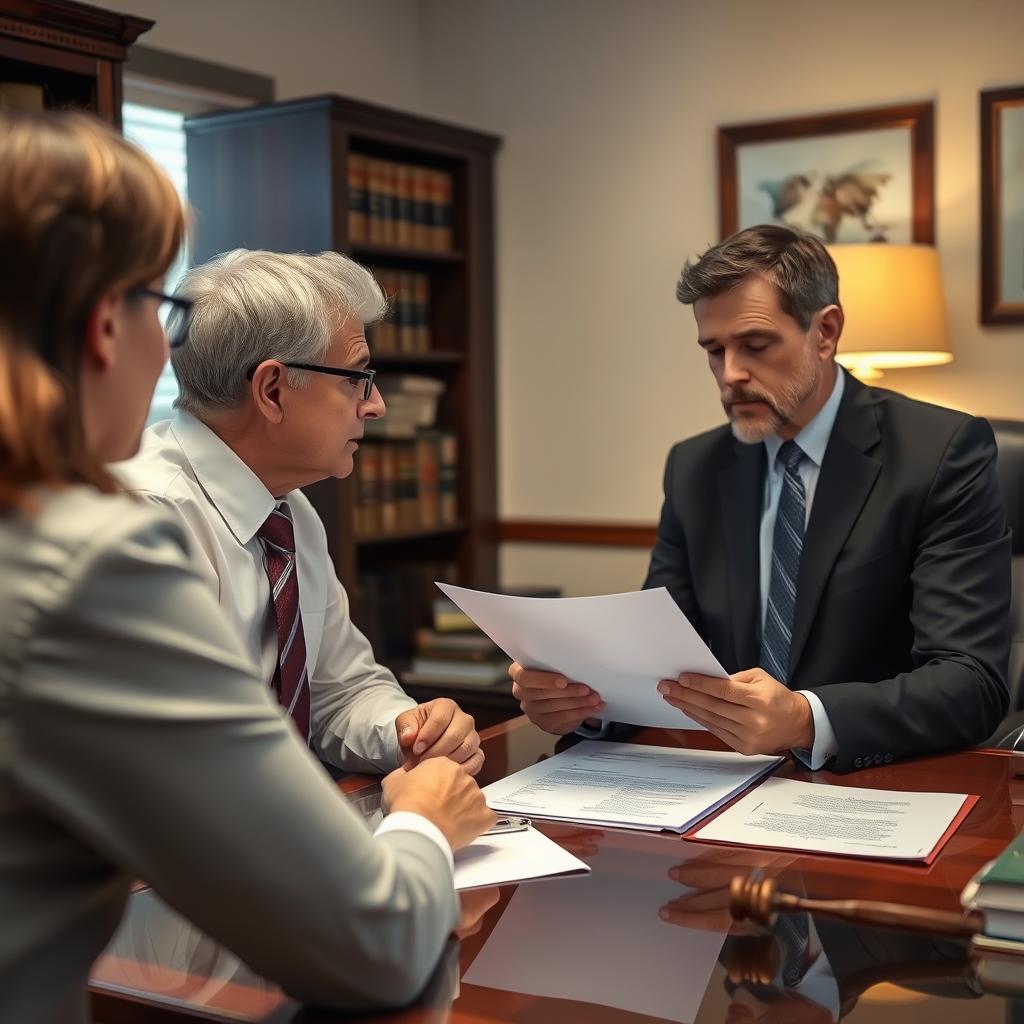
Fault Based Divorce Lawyer Otsego County, NY
When a marriage breaks down and one spouse’s conduct provides a legal ground to end it, a fault‑based divorce can shape property division, spousal support, and custody. In Otsego County, fault‑based divorce cases are heard in the Otsego County Supreme Court, which handles all matrimonial matters in the 6th Judicial District. Law Offices Of SRIS, P.C., founded in 1997, represents clients through Mr. Sris and his Of Counsel team. Mr. Sris, a former prosecutor, concentrates his practice on family law matters across New York, including fault‑based divorce in Otsego County and the surrounding communities of Cooperstown, Oneonta, Cherry Valley, Richfield Springs, Morris, Hartwick, Laurens, and Unadilla. Reach Law Offices Of SRIS, P.C. at (888) 437‑7747. Our New York location is at 50 Fountain Plaza, Suite 1400, Office No. 142, Buffalo, NY 14202; consultations are by appointment. Law Offices Of SRIS, P.C. – Advocacy Without Borders.
What Fault‑Based Divorce Means in Otsego County, New York
New York is both a no‑fault and a fault‑based divorce state. Under New York Domestic Relations Law (DRL) § 170, a spouse may seek a divorce on fault grounds including adultery, cruel and inhuman treatment, abandonment for one or more years, or imprisonment for three or more consecutive years after the marriage. A fault‑based divorce does not require the six‑month period of irretrievable breakdown needed for a no‑fault divorce, and proving fault can directly affect equitable distribution, maintenance (alimony), and even custody when the conduct is relevant to the best interests of the child. In Otsego County, the Supreme Court at 197 Main Street, Cooperstown, applies these statutory fault grounds and also handles the related financial and parenting issues.
Residents of Otsego County who choose a fault‑based divorce must present sufficient evidence to satisfy the court. The Otsego County Supreme Court follows the same procedural rules as all New York matrimonial courts, including mandatory disclosure of finances, automatic restraining orders under DRL § 236 that freeze marital assets upon filing, and a settlement conference before trial. Because fault allegations often increase conflict, the court may appoint a forensic experienced attorney or order a custody evaluation if children are involved. Mr. Sris and his Of Counsel appear regularly in Otsego County Supreme Court and understand how local judges and court staff handle fault‑based divorce proceedings, allowing clients to receive realistic guidance about what to expect.
How Mr. Sris and His Of Counsel Handle Fault‑Based Divorce Cases
A fault‑based divorce requires more than an accusation; it must be supported by credible proof. Mr. Sris and his Of Counsel begin by evaluating the available evidence—witness accounts, electronic records, financial documents, and any other material that can establish the alleged fault ground. They then discuss with the client whether proceeding on a fault ground serves the client’s overall objectives, considering factors such as the impact on property division, spousal support, and, where applicable, custody. In some situations, the client may decide to pursue a no‑fault divorce to reduce conflict; in others, establishing fault is critical to achieving a fair outcome.
Once a strategy is decided, Mr. Sris and his Of Counsel prepare and file the necessary pleadings and motions in the Otsego County Supreme Court. They manage discovery, respond to the other side’s demands, and advocate at temporary relief hearings for pendente lite support, exclusive use of the marital residence, or interim custody. Throughout the case, they work to protect the client’s rights while keeping the matter moving toward resolution. If settlement cannot be reached, Mr. Sris and his Of Counsel are prepared to present the fault evidence at trial before an Otsego County judge.
About Mr. Sris and His Of Counsel Team
Mr. Sris, Owner and Founder of Law Offices Of SRIS, P.C., has practiced family law since 1997. He is admitted in Virginia, Maryland, the District of Columbia, New Jersey, and New York, and serves clients throughout Otsego County. Mr. Sris testified before the Virginia House Courts of Justice Committee in support of 2019 HB 635 (chief patron Del. David Bulova). Mr. Sris and his Of Counsel bring over 120 years of combined legal experience. They have documented 4,739+ case results across all practice areas with over 93% favorable outcomes. Results may vary.
All attorneys who work on family law matters are Of Counsel—engaged through Excella—and collaborate closely with Mr. Sris. The team’s collective experience allows them to handle complex fault‑based divorce trials while maintaining the individual case review that clients in Cooperstown, Oneonta, and neighboring towns deserve.
Frequently Asked Questions
What are the fault grounds for divorce in New York?
Under DRL § 170, the fault grounds are adultery, cruel and inhuman treatment, abandonment for one or more years, and imprisonment for three or more consecutive years after the marriage. Each ground requires specific proof. Adultery must be shown by clear and convincing evidence; cruel and inhuman treatment requires conduct that endangers the physical or mental well‑being of the spouse such that it is unsafe or improper to continue the marriage. Abandonment and imprisonment also have distinct elements that must be satisfied to the court’s satisfaction. Because the evidentiary burden is higher than in a no‑fault divorce, Mr. Sris and his Of Counsel carefully review the facts before advising a client to proceed on a fault ground.
How does a fault‑based divorce affect property division in Otsego County?
New York follows equitable distribution, meaning the court divides marital property fairly based on a list of statutory factors; a proven fault ground can be one of those factors. DRL § 236 requires the judge to consider “any other factor which the court shall expressly find to be just and proper,” and in practice, egregious marital fault—such as economic misconduct related to adultery—can influence the division. However, fault does not automatically entitle the innocent spouse to a larger share. The Otsego County Supreme Court weighs all relevant circumstances, including the duration of the marriage, each spouse’s income and health, and the contributions of each to the marital estate.
What evidence is needed to prove fault in a New York divorce?
The evidence required depends on the specific fault ground alleged; for adultery, it may include testimony, electronic communications, photographs, or financial records, while cruelty may rely on medical records, police reports, or witness statements. Because fault‑based divorce is contested by its nature, documentation is essential. Mr. Sris and his Of Counsel gather and preserve relevant materials early, complying with New York’s disclosure rules. The court expects the petitioning spouse to present credible, admissible proof—not mere suspicion—and a well‑prepared case will address the elements of the statutory ground squarely.
How long does a fault‑based divorce take in Otsego County, New York?
A contested fault‑based divorce in Otsego County can take 12 to 24 months or longer, depending on the complexity of the issues and the court’s calendar. Uncontested divorces, where fault is not litigated, may be resolved in 3 to 6 months from filing, but when fault is alleged and the other spouse contests the claim, the case goes through discovery, motion practice, and possibly trial. A mandatory settlement conference is held before trial, and if a custody evaluation is ordered, it can add several months. The time frame is never past results do not guarantee a similar outcome; each case proceeds according to its own facts. Results may vary.
Do I need a lawyer for a fault‑based divorce in Otsego County?
While you are not legally required to have a lawyer, representing yourself in a fault‑based divorce is risky because the procedural and evidentiary demands are high. Proving fault requires familiarity with the New York Domestic Relations Law, the rules of evidence, and local court practice. A mistake in pleading or proof can delay the case or result in an unfavorable outcome. Mr. Sris and his Of Counsel handle fault‑based divorce matters in Otsego County and can guide you through each step, from evaluating whether to assert a fault ground to presenting your case in court. Contact Law Offices Of SRIS, P.C. at (888) 437‑7747 to discuss your situation.
Attorney advertising. Prior results do not guarantee a similar outcome. Case results depend on a variety of factors unique to each case. Results may vary.