
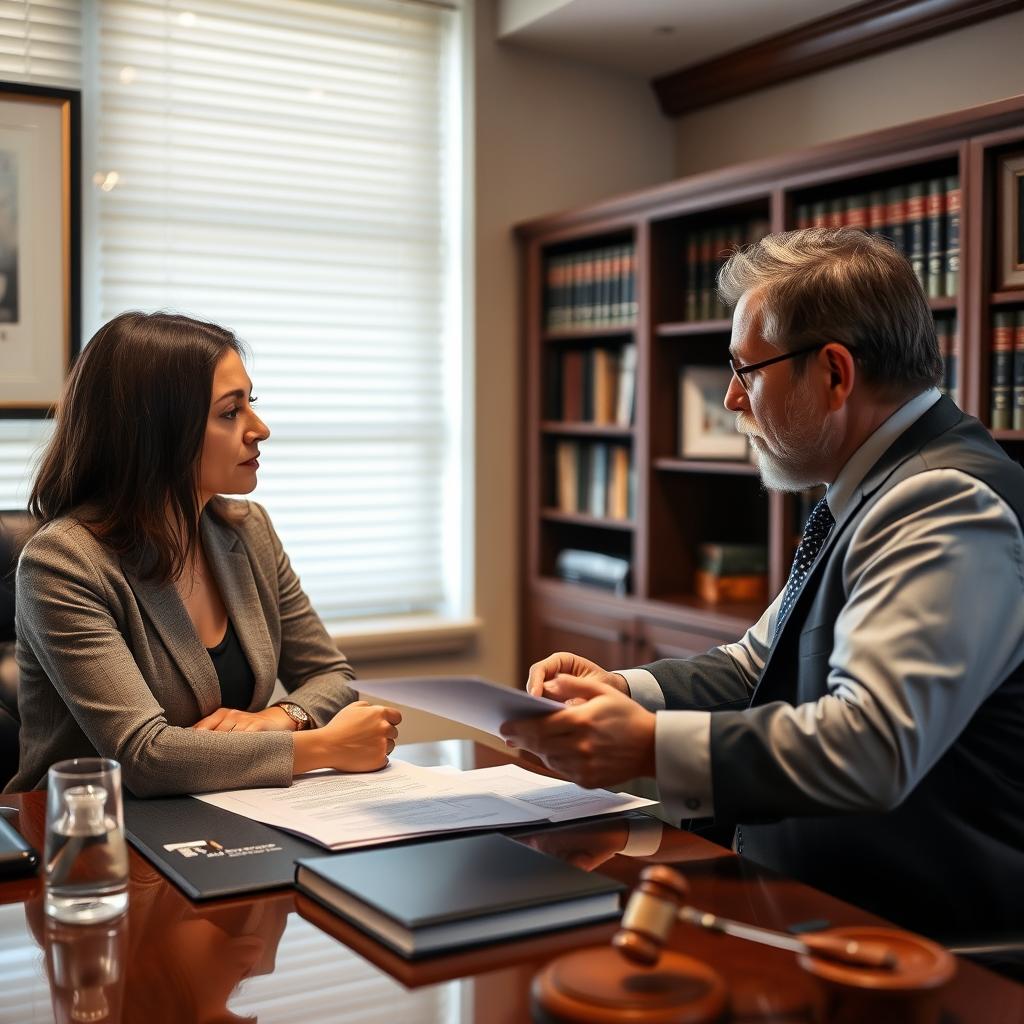
Fault Based Divorce Lawyer Albany County, NY
If you are considering a divorce in Albany County and believe your spouse’s misconduct is the cause, a fault‑based divorce can fundamentally change the financial outcome of your case. In New York, certain types of marital wrongdoing—such as adultery, cruelty, or abandonment—allow one party to seek a divorce on fault grounds under the New York Domestic Relations Law. That classification can directly affect how the court decides maintenance, property division, and even attorney’s fees. Mr. Sris and his Of Counsel concentrate on representing clients who are pursuing or responding to a fault‑based divorce action before the Albany County Supreme Court, located at 16 Eagle Street in downtown Albany. With a practice spanning the Capital District and across New York State, Law Offices Of SRIS, P.C. helps individuals in Albany, Colonie, Guilderland, Bethlehem, and the surrounding communities present these sensitive matters clearly and persuasively.
If you need legal guidance on a fault‑based divorce in Albany County, contact our location at (888) 437‑7747.
Law Offices Of SRIS, P.C. – Advocacy Without Borders.
What Fault‑Based Divorce Means in Albany County
A fault‑based divorce in New York is brought under Domestic Relations Law (DRL) § 170 when one spouse alleges that the other’s conduct caused the marriage to fail. The statutory grounds include adultery, cruel and inhuman treatment, abandonment for at least one year, and imprisonment for three or more consecutive years after the marriage. Unlike a no‑fault divorce—which requires only that the marriage has been irretrievably broken for six months—a fault‑based claim places the reason for the breakup directly at issue. That distinction matters in Albany County because the Supreme Court can weigh that conduct when it decides equitable distribution, spousal maintenance, and even the allocation of litigation costs.
The Albany County Supreme Court, sitting in the 3rd Judicial District, handles all matrimonial actions in the county. When a complaint for divorce includes fault allegations, the case often becomes more involved than a typical uncontested proceeding. The court may need to hear testimony about the alleged misconduct, review documentary evidence, and evaluate the credibility of witnesses. Because Albany County includes both urban and suburban communities—from the neighborhoods near Empire State Plaza to the residential neighborhoods of Delmar and Ravena—the dynamics of a fault‑based proceeding can be shaped by the personal and professional realities of the parties. Mr. Sris and his Of Counsel understand the local court practices and work to build a record that properly frames how fault should influence the financial and parental matters that must be resolved.
How Mr. Sris and His Of Counsel Handle Fault‑Based Divorce Cases
Each fault‑based divorce starts with a careful evaluation of the alleged grounds and the evidence that supports them. Before any complaint is filed, Mr. Sris and his Of Counsel review the specific facts with you—what happened, when it happened, and what documentation exists. Because New York allows no‑fault divorce as a simpler alternative, the decision to plead fault must be strategic; the benefit might be a more favorable maintenance award or an unequal division of marital property. Our attorneys help you weigh those potential advantages against the additional time and expense that a contested fault proceeding can involve.
Once a strategy is set, the legal team at Law Offices Of SRIS, P.C., prepares the summons and complaint, ensuring that the allegations comply with DRL § 170 and the pleading requirements of the Civil Practice Law and Rules. After service, the case proceeds through the Supreme Court’s Part 3 matrimonial calendar. Discovery and motion practice in a fault‑based divorce can be extensive: depositions may probe the details of the alleged misconduct, and protective orders are sometimes necessary to limit intrusive discovery. Mr. Sris and his Of Counsel appear routinely in the Albany County courthouse and work to resolve the case as efficiently as possible, whether through a negotiated settlement or, when necessary, at trial. Throughout the proceeding, they keep the focus on securing an outcome that acknowledges the true circumstances surrounding the end of the marriage.
About Mr. Sris and His Of Counsel Team
Mr. Sris, Owner and Founder of Law Offices Of SRIS, P.C., is a former prosecutor who has practiced family law since 1997. His experience in the courtroom shapes how he prepares a fault‑based divorce case—analyzing evidence, anticipating challenges, and presenting the facts in a way the court can rely on. He has testified before the Virginia House Courts of Justice Committee in support of 2019 HB 635 (chief patron Del. David Bulova). He is admitted to practice in New York, Virginia, Maryland, the District of Columbia, and New Jersey.
Mr. Sris works with a group of experienced Of Counsel attorneys, each with a background that strengthens the firm’s ability to handle complex matrimonial matters. Together, Mr. Sris and his Of Counsel bring over 120 years of combined legal experience and have achieved over 4,739 documented firm-wide results. Results may vary. Every fault‑based divorce matter receives coordinated attention from this team, so no single attorney is operating in isolation—you benefit from collective insight at every stage of your case.
Frequently Asked Questions
What is fault‑based divorce in New York?
A fault‑based divorce in New York is a dissolution of marriage granted because one spouse proves the other committed specific marital misconduct listed in Domestic Relations Law § 170. That misconduct can be adultery, cruel and inhuman treatment, abandonment for at least one year, or imprisonment for three or more consecutive years after the marriage. Unlike a no‑fault divorce, which requires only that the marriage has broken down irretrievably for six months, a fault‑based action puts the reasons for the divorce directly in front of the judge. When fault is established, the court may consider it when deciding how to divide property, award maintenance, and allocate counsel fees.
What are the grounds for fault‑based divorce in New York?
New York recognizes four fault grounds under DRL § 170: adultery, cruel and inhuman treatment, abandonment for one year or more, and imprisonment of the other spouse for at least three consecutive years after the marriage. Each ground requires specific proof. Adultery typically must be shown by evidence of inclination and opportunity, or through the testimony of a third party. Cruel and inhuman treatment means conduct that endangers the physical or mental well‑being of the filing spouse. Abandonment requires proof that one spouse left without consent and with no intention to return. Imprisonment applies when the other spouse has been confined for three or more consecutive years. An experienced attorney can help you determine whether the facts in your marriage support one of these grounds.
How does fault affect property division in Albany County?
Under New York’s equitable distribution law (DRL § 236), marital property is divided fairly but not necessarily equally; fault can influence the court’s determination of what is fair. When a spouse’s misconduct is egregious—such as dissipating marital assets on an extramarital relationship—the judge in Albany County Supreme Court may award a larger share of the marital estate to the innocent party. Fault can also affect maintenance awards and the direction of attorney’s fees. Courts consider all relevant factors, and while fault is not an automatic penalty, it remains a significant consideration in a contested case.
How long does a fault‑based divorce take in Albany County?
A fault‑based divorce in Albany County generally takes longer than a no‑fault divorce because the allegations must be litigated or resolved through a settlement that satisfies the parties and the court. The timeline depends on whether the defendant contests the grounds, the complexity of discovery, and the Supreme Court’s calendar in the 3rd Judicial District. Cases that reach trial can extend well beyond a year, while those that settle after initial motion practice may conclude sooner. Mr. Sris and his Of Counsel work to move your case forward efficiently while protecting the benefits that a fault‑based filing can provide.
Do I need a lawyer for a fault‑based divorce in Albany County?
You are not legally required to hire a lawyer, but a fault‑based divorce involves complex pleadings, strict evidentiary rules, and strategic decisions that are difficult to navigate without professional guidance. Because the outcome can alter your financial future—through property division, maintenance, and possible award of counsel fees—working with an experienced attorney is strongly recommended. Mr. Sris and his Of Counsel have handled fault‑based matters in the Albany County Supreme Court and can explain the likely timeline, the proof you will need, and the realistic goals of your case.
How do I find a fault‑based divorce lawyer near me in Albany County?
Start by looking for a lawyer who regularly appears in Albany County Supreme Court and who can discuss the specific fault ground that applies to your marriage. Many family law attorneys offer consultations that let you ask about their experience with fault‑based cases, the evidence you will need, and their approach to negotiating or litigating those claims. Law Offices Of SRIS, P.C. focuses on matrimonial matters in the Capital District, and you can reach our location at (888) 437‑7747 to schedule a consultation and discuss your situation in detail.
Our firm handles family law matters in other New York counties as well. For representation in Manhattan, you can learn more about our New York County family law practice. We also serve clients in Kings County (Brooklyn), Queens County, Richmond County (Staten Island), and Nassau County. For a broader overview of our New York family law work, visit our statewide family law hub.
Attorney advertising. Prior results do not guarantee a similar outcome.
Case results depend on a variety of factors unique to each case.
Results may vary.