
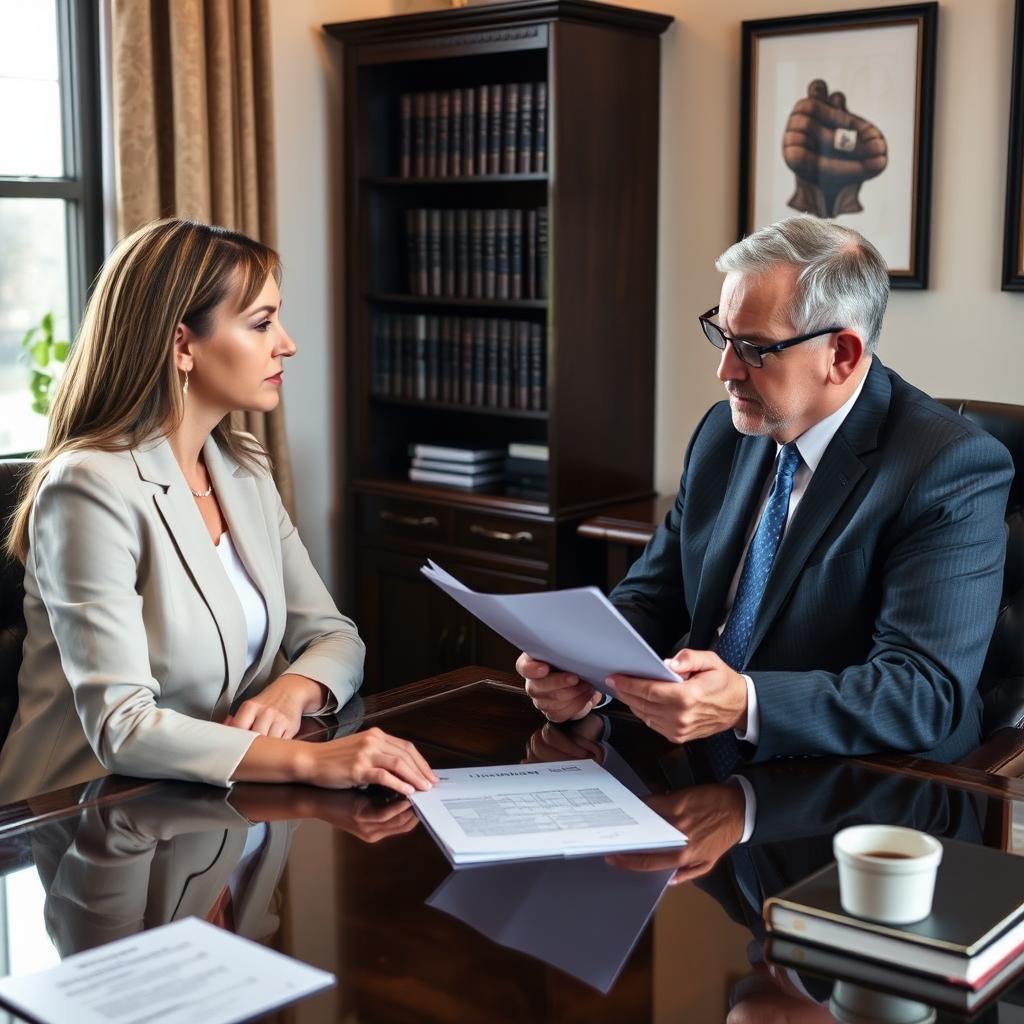
Fault Based Divorce Lawyer Columbia County, NY
If you are considering a divorce in Columbia County, New York, and believe that your spouse’s marital misconduct—such as adultery, cruelty, or abandonment—should be taken into account by the court, you need an attorney who understands how fault grounds operate under New York’s Domestic Relations Law. While New York allows a no‑fault divorce based on an irretrievable breakdown of the marriage for at least six months (DRL § 170(7)), the statute also preserves several fault grounds. Asserting a fault‑based claim can influence equitable distribution of marital property, spousal maintenance awards, and even the timeline of the proceeding. Mr. Sris and his Of Counsel represent individuals throughout the Hudson Valley who wish to pursue or defend against a fault‑based divorce in Columbia County Supreme Court. From the initial filing at 401 Union Street in Hudson through pendente lite motions and trial, they guide clients through each phase of the litigation. To discuss your situation, call Law Offices Of SRIS, P.C. at (888) 437‑7747. Law Offices Of SRIS, P.C. – Advocacy Without Borders.
What Fault Based Divorce Means in Columbia County, New York
In New York, a divorce can be granted on no‑fault grounds or on one of the fault‑based grounds enumerated in DRL § 170. The fault grounds that remain available include adultery, cruel and inhuman treatment, abandonment for one or more years, and imprisonment for three or more consecutive years after the marriage. Any party seeking a divorce in Columbia County must file the action in the Supreme Court of the State of New York, County of Columbia, located at 401 Union Street, Hudson. The same court handles all ancillary issues: equitable distribution, spousal maintenance, and any related orders of protection.
Asserting fault can affect the outcome of a divorce in meaningful ways. While New York is an equitable distribution state and the court primarily divides marital property fairly—not necessarily equally—evidence of egregious marital fault may weigh into the court’s consideration of the factors listed in DRL § 236. Similarly, a finding of fault can influence the duration and amount of spousal maintenance. In Columbia County, these matters are litigated before the Supreme Court, with pendente lite hearings scheduled according to the court’s calendar. Understanding how the local bench applies the statutory factors is essential when deciding whether to plead a fault ground or defend against one.
Columbia County, situated in the upper Hudson Valley along the Taconic State Parkway and Route 9, is served by the 3rd Judicial District. The Supreme Court shares the Union Street courthouse with the County’s Family Court, which handles separate proceedings for custody, child support, and family offense petitions. Mr. Sris and his Of Counsel are familiar with the local practice preferences and routinely appear in Columbia County Supreme Court to advocate for clients whose divorces involve fault allegations.
How Mr. Sris and His Of Counsel Handle Fault Based Divorce Cases
Every fault‑based divorce begins with a thorough evaluation of the factual and legal landscape. Mr. Sris and his Of Counsel meet with the client to understand the history of the marriage, the specific conduct alleged, and the evidence that may be available to prove or refute fault. Because fault grounds require clear and convincing proof in many instances—particularly for adultery or cruelty—early investigation is critical. The team works with the client to gather documents, identify potential witnesses, and assess whether the asserted fault is likely to withstand a motion to dismiss or a summary judgment challenge.
Once the Complaint is filed with the Columbia County Supreme Court, the automatic orders under DRL § 236 take effect, freezing marital assets and prohibiting changes to insurance coverage. Mr. Sris and his Of Counsel then handle all discovery, including interrogatories, document production, and depositions. If the fault allegations are contested, they prepare the case for trial while also exploring settlement options that can achieve the client’s objectives without the uncertainty and expense of a full hearing. Throughout the process, they advise clients on how fault determinations could impact spousal maintenance calculations made under the statutory formula and on the equitable distribution of retirement assets, real property, and business interests. The timeline of a fault‑based divorce varies depending on the complexity of the issues and the court’s schedule, but the team remains focused on moving the case forward while protecting the client’s immediate interests through pendente lite relief when warranted.
About Mr. Sris and His Of Counsel Team
Mr. Sris, Owner and Founder of Law Offices Of SRIS, P.C., has practiced family law across multiple states since 1997. Admitted in Virginia, Maryland, the District of Columbia, New Jersey, and New York, he brings extensive experience to divorce matters in Columbia County and throughout the Hudson Valley. A former prosecutor, Mr. Sris understands courtroom advocacy from both sides of the aisle. His legislative background includes testifying before the Virginia House Courts of Justice Committee in support of 2019 HB 635 (chief patron Del. David Bulova). Mr. Sris manages a targeted caseload of family law matters in New York, ensuring each client receives focused attention.
Alongside Mr. Sris, a team of Of Counsel attorneys—engaged through Excella—lends additional depth to the firm’s practice. These attorneys collectively contribute over 120 years of combined legal experience, with 4,739+ documented firm-wide results, drawing on a range of backgrounds that include prior prosecutorial service and law enforcement careers. Results may vary. While Mr. Sris leads the New York family law matters, the Of Counsel team supports case strategy and preparation, reinforcing the firm’s capacity to handle complex fault‑based divorce litigation.
Frequently Asked Questions
How long does a fault‑based divorce take in Columbia County, New York?
An uncontested fault‑based divorce can finalize in roughly three to six months, while a contested case may take twelve to twenty‑four months or longer, depending on the court’s calendar and the complexity of the dispute. The timeline is influenced by whether the fault ground is admitted or hotly disputed, the need for discovery and depositions, and the scheduling of a mandatory settlement conference before trial. Columbia County Supreme Court handles all matrimonial filings, and pendente lite motions for temporary support or exclusive occupancy are generally heard within weeks. Because fault allegations often require evidentiary hearings, a party seeking a fault‑based divorce should anticipate a longer process than an uncontested no‑fault action.
Do I need to prove fault to get a divorce in New York?
No, New York law permits a no‑fault divorce based on an irretrievable breakdown of the marriage for at least six months (DRL § 170(7)), so fault is not a prerequisite to ending the marriage. However, if you choose to plead a fault ground—such as adultery, cruelty, or abandonment—you may influence how the court distributes marital property and awards spousal maintenance. The decision to allege fault should be made after consulting with an attorney who can evaluate whether the evidence supports the claim and whether the potential financial benefit outweighs the cost and acrimony of litigating the issue.
What is the filing fee for a divorce in Columbia County?
To start a divorce action in the Columbia County Supreme Court, a plaintiff must purchase an index number and pay a $95 fee for the Request for Judicial Intervention (RJI) if a motion is filed. Additional costs include service of process, which can range from $50 to $150, and a note of issue fee of $30 when the case is ready for trial. Certified copies of divorce decrees typically cost between $8 and $15. If the parties engage in mediation or retain a forensic experienced attorney for custody or valuation issues, those expenses are separate. The court’s filing fees are subject to change, and a party may apply for a fee waiver in certain circumstances of financial hardship.
How does fault affect spousal maintenance in New York?
Fault alone does not automatically determine the amount or duration of spousal maintenance, but a court may consider marital misconduct when it is extreme or egregious and has a significant impact on the marriage’s finances. New York uses a statutory formula for temporary maintenance during the divorce and a separate set of guidelines for post‑divorce maintenance. While the formula considers income and duration of marriage, the court retains discretion to deviate from the guideline amount after weighing numerous factors, including whether one spouse’s wrongdoing reduced marital assets or increased the other spouse’s financial needs. In a fault‑based action, the judge may hear testimony about the parties’ conduct and determine whether the fault is relevant enough to adjust the maintenance award.
Can I claim fault after starting a no‑fault divorce?
Yes, you may amend your Complaint to add a fault ground if the facts support it, provided the amendment is timely and does not unduly delay the proceeding. In New York, a divorce Complaint may plead multiple grounds in the alternative, so you can assert both the irretrievable breakdown ground and a fault ground simultaneously. If you initially filed for a no‑fault divorce and later discover evidence of adultery or cruelty, consult your attorney promptly. The court will permit amendments in the interest of justice, but delay can invite objections. Strategically, it is often simpler to include all applicable grounds from the outset.
What happens if my spouse denies the fault ground?
When a spouse denies a fault ground, the case becomes contested, and the court will require a trial or evidentiary hearing at which the party alleging fault must present proof. For example, to prove adultery, circumstantial evidence showing opportunity and inclination must be presented; confessions alone are rarely sufficient. Claims of cruel and inhuman treatment require evidence of conduct that endangers the physical or mental well‑being of the spouse. Mr. Sris and his Of Counsel prepare clients for this reality by collecting witness statements, documents, and other corroborating evidence early in the case. If the proof cannot meet the required standard, the court may dismiss the fault ground but still grant a divorce on the no‑fault basis, preserving the client’s ability to end the marriage without relitigating fault.
Legal Insights from Our New York Family Law Practice
Below are additional resources and primary‑source references that may be helpful when researching fault‑based divorce in New York:
- New York State Unified Court System — official information on court structure, forms, and e‑filing
- New York Domestic Relations Law (DRL) — full text of DRL § 170 (grounds for divorce) and DRL § 236 (equitable distribution and maintenance)
- Columbia County Supreme Court — address, hours, and local procedural information
Contact Law Offices Of SRIS, P.C. at (888) 437‑7747 to schedule a consultation. Our New York location at 50 Fountain Plaza, Suite 1400, Office No. 142, Buffalo, NY 14202 serves clients throughout Columbia County by appointment.
Attorney advertising. Prior results do not guarantee a similar outcome. Case results depend on a variety of factors unique to each case. Results may vary.