
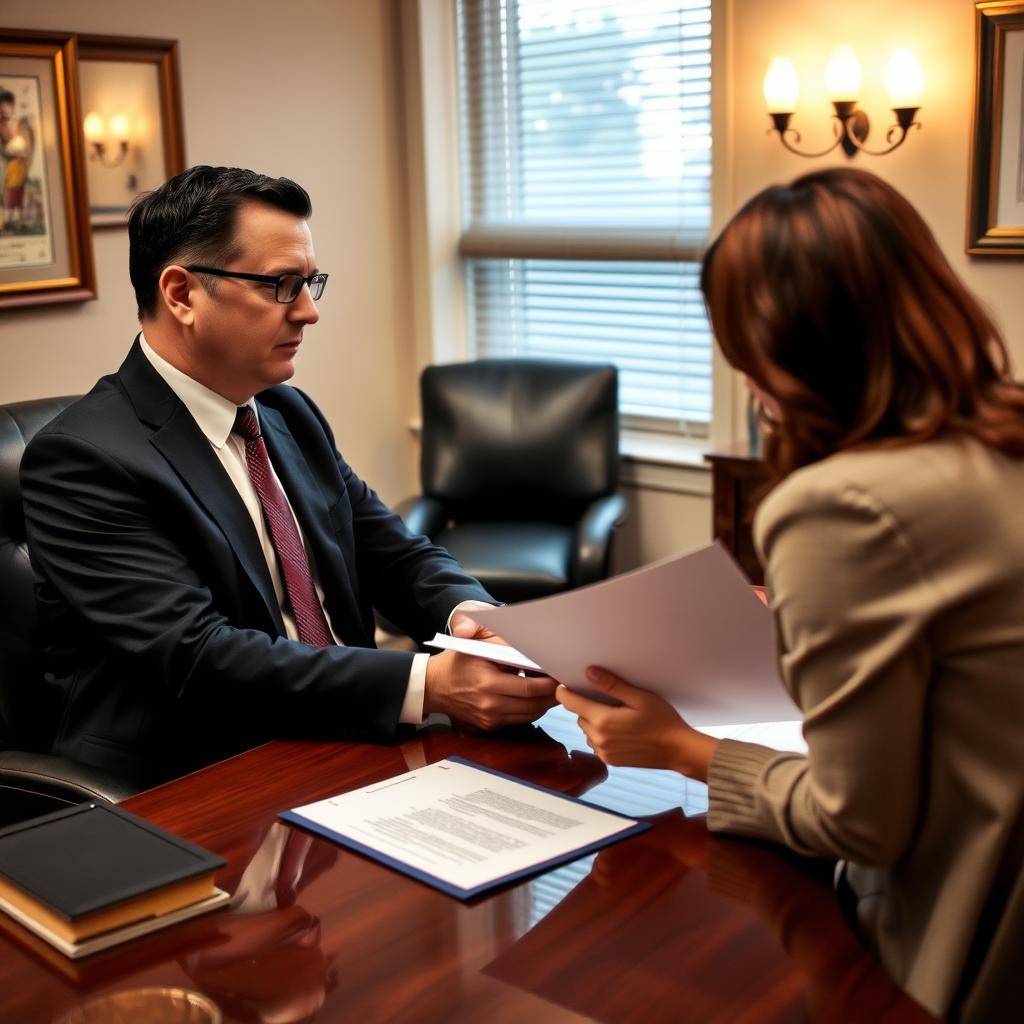
Business Valuation Divorce Lawyer Livingston County, NY
When a marriage involves a closely held business, professional practice, or partnership interest in Livingston County, the division of marital assets becomes considerably more complex than a straightforward division of bank accounts and real estate. New York follows the rule of equitable distribution under the Domestic Relations Law, which requires the court to value and divide marital property fairly—but not necessarily equally—based on a range of statutory factors. The Livingston County Supreme Court, located at 2 Court Street in Geneseo, hears divorce and equitable distribution matters for communities across the Finger Lakes region, including Dansville, Mount Morris, Avon, Caledonia, Nunda, Lima, Livonia, Lakeville, and Conesus. Mr. Sris, Owner and Founder of Law Offices Of SRIS, P.C., and his Of Counsel concentrate a portion of their family law practice on representing clients whose divorce involves business valuation issues in Livingston County and throughout New York. To discuss your matter, call (888) 437-7747. Law Offices Of SRIS, P.C. – Advocacy Without Borders.
What Business Valuation Divorce Means in Livingston County, New York
Business valuation in a divorce is the process of determining the fair market value of a business interest owned by either spouse, so that the court can classify and distribute that interest equitably. Under New York’s equitable distribution statute—codified in the Domestic Relations Law—the court first classifies assets as separate or marital, then values the marital share, and finally distributes the marital property after weighing the statutory factors. For a business that was started or significantly grown during the marriage, a substantial portion of its value may be treated as marital property, even if only one spouse’s name appears on the ownership documents. The Livingston County Supreme Court and its assigned matrimonial part handle all phases of the divorce proceeding, including the valuation hearing if the parties cannot agree on a business’s worth.
Clients in the Finger Lakes region often hold interests in family farms, agricultural cooperatives, manufacturing operations, professional corporations, or retail establishments. A thorough business valuation requires analyzing financial records, tax returns, goodwill, and market conditions. The court may consider the contribution of each spouse to the business, including non-titled efforts such as bookkeeping, client relations, or management of the household that enabled the other spouse to build the enterprise. Mr. Sris and his Of Counsel work with forensic accountants and valuation attorneys to develop an accurate picture of the business’s worth and to present that evidence to the court. Results may vary. Based on the specific facts.
How Mr. Sris and His Of Counsel Handle Business Valuation Divorce Cases
When representing a spouse whose business is subject to valuation, Mr. Sris and his Of Counsel focus on identifying the proper valuation date, distinguishing between active and passive appreciation, and applying the appropriate standard of value—typically fair market value under New York law. They examine the business’s income stream, asset base, and market position, and they coordinate with forensic accountants who can perform a detailed financial analysis. For the non-titled spouse, the approach centers on ensuring that all marital contributions are recognized and that the valuation does not undervalue the couple’s true economic partnership.
The procedural path in Livingston County begins with the mandatory financial disclosure required by the Domestic Relations Law. Automatic restraining orders under DRL § 236 take effect upon filing and prohibit dissipation of business assets without court approval. Discovery may involve document demands, depositions of business partners, and subpoenas to financial institutions. The court may schedule a settlement conference before trial to encourage resolution. Throughout the process, Mr. Sris and his Of Counsel advise clients on the strategic considerations of settlement versus litigation, always working toward a resolution that protects their long-term financial interests. Past results do not guarantee a similar outcome. The duration depends on the complexity of the valuation issues and the court’s calendar.
About Mr. Sris and His Of Counsel Team
Mr. Sris, Owner and Founder of Law Offices Of SRIS, P.C., has been practicing since 1997 and is admitted to the bars of Virginia, Maryland, the District of Columbia, New Jersey, and New York. He testified before the Virginia House Courts of Justice Committee in support of 2019 HB 635 (chief patron Del. David Bulova). His experience includes complex family law matters in multiple jurisdictions, and he maintains a deliberate focus on cases that require advanced financial and legal analysis. Together with his Of Counsel, he brings over 120 years of combined legal experience and 4,739+ documented firm-wide results to matters involving business valuation and equitable distribution. Results may vary.
Law Offices Of SRIS, P.C. maintains a New York presence by appointment. The Buffalo location address is 50 Fountain Plaza, Suite 1400, Office No. 142, Buffalo, NY 14202. Mr. Sris and his Of Counsel serve clients throughout Livingston County, including the communities of Geneseo, Dansville, Mount Morris, Avon, Caledonia, Nunda, Lima, Livonia, Lakeville, and Conesus. All consultations are by appointment; call (888) 437-7747 to schedule.
Frequently Asked Questions
How long does a divorce take in Livingston County, New York?
An uncontested divorce typically takes three to six months from filing to judgment, while contested divorces in Livingston County often last twelve to twenty-four months or longer depending on court volume. The mandatory settlement conference and valuation discovery can add time, especially when a business interest is at issue. Automatic orders under DRL § 236 freeze marital assets when the divorce is filed. The Livingston County Supreme Court schedules hearings on its own calendar, and the involvement of forensic accountants and appraisers will influence the total timeline.
How much does a divorce cost in Livingston County, New York?
The Supreme Court divorce filing fee (index number purchase) is set by the court, and the Request for Judicial Intervention requires a separate fee, with additional fees for motions, note of issue, and service of process. Costs increase when a business valuation experienced attorney is retained; forensic accounting fees vary widely based on the complexity of the enterprise. Attorney fees depend on the scope of representation. Because every family and business is different, Law Offices Of SRIS, P.C. can discuss fee structures during a consultation.
What is equitable distribution, and how does it affect my business in a New York divorce?
Equitable distribution is New York’s statutory framework for dividing marital property fairly, but not necessarily equally, based on more than a dozen factors listed in the Domestic Relations Law. A business interest acquired or grown during the marriage is presumptively marital property. The court will determine the value of that interest and may award the other spouse a share of its value—either through a distribution of other assets, a lump-sum payment, or periodic payments. The non-titled spouse’s indirect contributions are also considered.
Do I need a business valuation experienced attorney for my divorce in Livingston County?
If the marital estate includes a closely held business, professional practice, or significant partnership interest, a qualified business valuation experienced attorney is nearly always necessary to produce a credible fair market value opinion. The experienced attorney analyzes financial documents, applies accepted valuation methodologies, and prepares a report that can be admitted as evidence. Mr. Sris and his Of Counsel coordinate closely with forensic accountants to ensure the valuation is thorough and ready for presentation in the Livingston County Supreme Court if litigation is required.
How does New York law treat goodwill in a business valuation divorce?
New York courts distinguish between enterprise goodwill, which is generally treated as a marital asset subject to distribution, and personal goodwill, which is usually considered a separate asset of the titled spouse. Enterprise goodwill attaches to the business itself—its reputation, location, and customer relationships—while personal goodwill derives from the individual’s skills and reputation. Proper classification of goodwill requires careful financial analysis and often becomes a central dispute in high-net-worth divorces.
What should I bring to my first consultation with a business valuation divorce lawyer?
Bring any available financial documents related to the business, including tax returns for the past three to five years, profit and loss statements, balance sheets, ownership records, and any existing buy-sell agreements or operating agreements. Also bring your personal financial affidavit, recent pay stubs, and a list of all assets and debts you believe to be marital or separate. The more complete the financial picture, the more useful the initial consultation will be.
Can a business be sold during a divorce in New York?
Automatic restraining orders under DRL § 236 generally prohibit the sale, transfer, or encumbrance of business assets without court approval or a written agreement between the parties from the moment the divorce is filed. Violating these orders can carry serious consequences, including the court’s ability to award a greater share of the remaining assets to the other spouse. Always seek legal guidance before taking any action that might affect the business while a divorce is pending.
Why choose Mr. Sris and his Of Counsel for a business valuation divorce in Livingston County?
Mr. Sris and his Of Counsel bring decades of combined experience in complex family law matters and coordinate with forensic accountants to address business valuation issues effectively. The firm has documented thousands of case results since 1997. They appear regularly in the Livingston County Supreme Court and understand the local procedural expectations while navigating the technical demands of a valuation case. For a consultation, call (888) 437-7747.
What is the difference between separate property and marital property in a New York divorce?
Separate property includes assets owned before the marriage or acquired during the marriage by gift or inheritance, while marital property encompasses everything else acquired during the marriage, regardless of which spouse’s name appears on the title. For a business, the portion of value attributable to pre-marital effort or separate funds may remain separate, but any increase in value during the marriage that results from the active efforts of either spouse is typically marital. Tracing separate contributions often requires a detailed forensic accounting.
How are business debts handled in a New York divorce?
Debts incurred during the marriage for the benefit of the marital partnership are generally treated as marital liabilities and are subject to equitable distribution along with marital assets. Business debts, such as loans, lines of credit, or vendor obligations, must be analyzed to determine whether they are marital or separate. The court considers the nature of the debt and the purpose for which it was incurred when allocating responsibility for repayment.
Is mediation an option for a business valuation divorce in Livingston County?
Yes, mediation is available in New York and can be an effective way to resolve a divorce that involves a business, provided both parties are willing to exchange full financial information and engage in good-faith negotiation. A trained mediator can help the spouses work toward a settlement of all issues, including business valuation and property division, without court intervention. If mediation does not resolve all disputes, either party may proceed to litigation. Law Offices Of SRIS, P.C. can advise on whether mediation is appropriate in a particular case.
Related Family Law Services in New York
In addition to Business Valuation Divorce, Law Offices Of SRIS, P.C. assists clients with family law matters throughout the state. You may also explore:
- New York County family law lawyer
- Kings County family law lawyer
- Queens County family law lawyer
- Richmond County family law lawyer
- Nassau County family law lawyer
Attorney advertising. Prior results do not guarantee a similar outcome. Case results depend on a variety of factors unique to each case. Results may vary.