
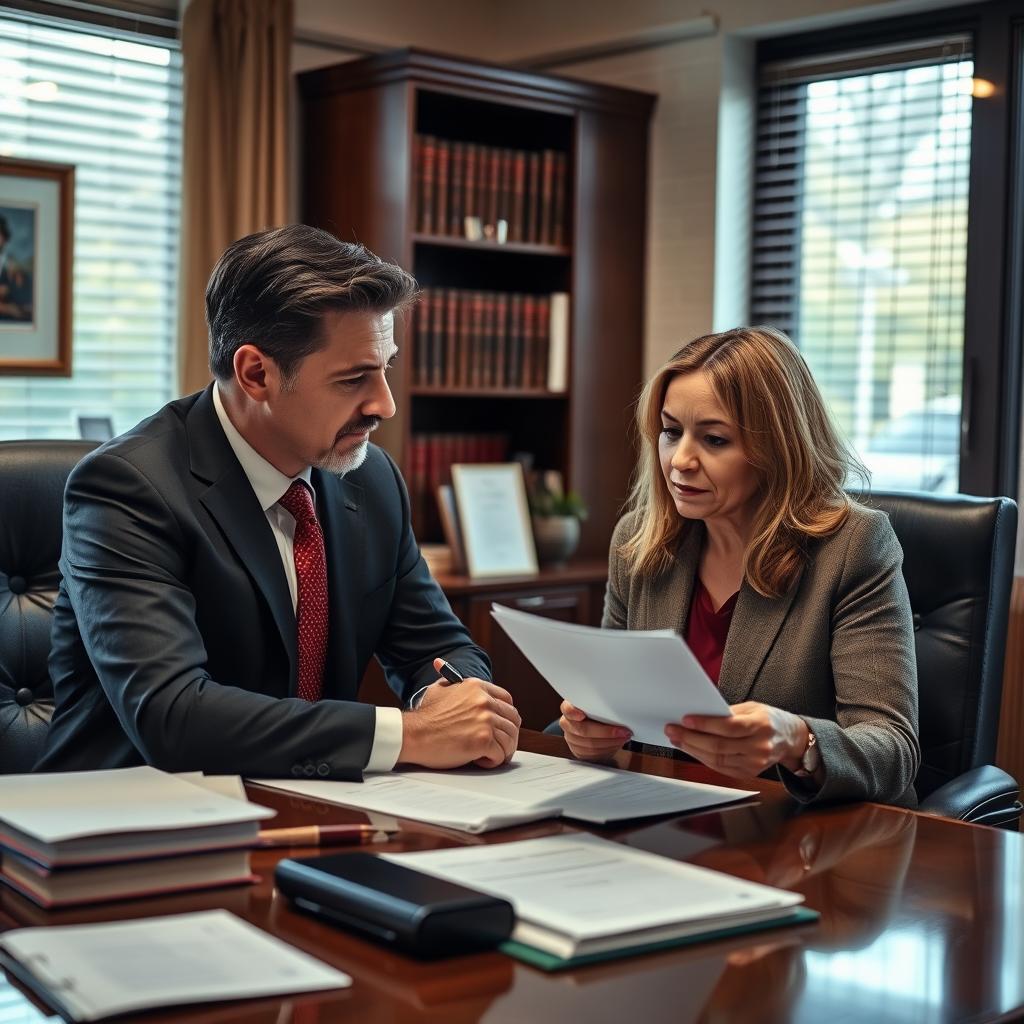
Divorce Lawyer Clinton County, NY
If you are facing divorce in Clinton County, New York, the decisions you make early in the process can shape the outcome for years to come. Law Offices Of SRIS, P.C. represents spouses and parents in the North Country, bringing extensive experience in matrimonial and family law matters. From contested divorces involving complex property division to uncontested proceedings where both parties seek to reach a fair agreement without trial, Mr. Sris and his Of Counsel team provide thorough, client-focused representation. Divorce in Clinton County is handled in the Supreme Court located at 137 Margaret Street in Plattsburgh, and the procedural requirements under New York’s Domestic Relations Law can be intricate. Mr. Sris, the firm’s Owner and Founder, has practiced since 1997 and is admitted in New York, as well as Virginia, Maryland, the District of Columbia, and New Jersey. For a confidential consultation about your divorce or related family law matter, reach Law Offices Of SRIS, P.C. at (888) 437-7747. Law Offices Of SRIS, P.C. — Advocacy Without Borders.
Bar admissions: Virginia, Maryland, District of Columbia, New Jersey, New York | Founded: 1997 | Languages: English, Tamil (Mr. Sris) | Location: By appointment — 50 Fountain Plaza, Suite 1400, Office No. 142, Buffalo, NY 14202. Call (888) 437‑7747.
What Divorce Means in Clinton County, New York
New York is a no‑fault divorce state under the Domestic Relations Law, meaning a spouse can obtain a divorce by asserting that the marriage has been irretrievably broken for the statutory period. The divorce action is filed in the Supreme Court of the county where either spouse meets the residency requirements. In Clinton County, the Supreme Court sits at 137 Margaret Street in Plattsburgh and is part of the Fourth Judicial District. The court hears both contested and uncontested divorces, as well as ancillary issues including equitable distribution of marital property, spousal maintenance, child custody, and child support.
Because the Supreme Court follows the New York Civil Practice Law and Rules and the Domestic Relations Law, procedural steps such as filing an index number, serving the summons and complaint, and requesting judicial intervention are governed by state‑wide rules but administered locally. The calendar and practices of the Clinton County Supreme Court may differ from those in metropolitan areas; our attorneys are familiar with the local procedures and work to move cases forward efficiently while protecting our clients’ rights.
Equitable distribution in New York does not necessarily mean a 50‑50 split. The court considers a range of statutory factors, including the duration of the marriage, the income and property of each spouse, the contributions of each spouse to the marital estate (including homemaking and childcare), and the future financial circumstances of each party. Similarly, spousal maintenance (alimony) is determined under statutory guidelines that consider the parties’ incomes and the length of the marriage. Whether you are seeking maintenance or contesting an award, early legal guidance is critical for presenting your financial picture accurately to the court.
How Mr. Sris and His Of Counsel Handle Divorce Cases
The process begins with a detailed consultation at which Mr. Sris or his Of Counsel reviews the facts of your situation. The team works to understand your priorities—whether they center on preserving a business, securing a fair parenting plan, or obtaining appropriate maintenance—and crafts a strategy tailored to your goals. In uncontested matters, the focus is often on drafting a comprehensive separation agreement that can then be incorporated into the divorce judgment. In contested cases, the representation may involve extensive discovery, motion practice, negotiation, and, if necessary, trial.
Because Mr. Sris maintains a limited caseload and collaborates closely with his Of Counsel team, each client receives concentrated attention. The firm handles all aspects of a divorce proceeding, from filing the summons and complaint through any post‑judgment modifications. While every case is unique, the firm’s approach is consistently grounded in thorough preparation and an understanding of both the substantive law and the local court environment. Results may vary.
About Mr. Sris and His Of Counsel Team
Mr. Sris, Owner and Founder of Law Offices Of SRIS, P.C., has concentrated his practice on family law and related areas since 1997. A former prosecutor, he brings a courtroom‑tested perspective to divorce litigation and settlement negotiations. He is admitted to practice in New York, Virginia, Maryland, the District of Columbia, and New Jersey. Mr. Sris testified before the Virginia House Courts of Justice Committee in support of 2019 HB 635 (chief patron Del. David Bulova).
Mr. Sris is supported by a team of Of Counsel attorneys—all experienced professionals engaged through Excella. The team collectively draws on over 120 years of combined legal experience, backed by 4,739+ documented firm-wide results. Results may vary. Together, they handle divorce, child custody, support, and property division matters for clients in Clinton County and throughout New York.
Frequently Asked Questions
What is the difference between contested and uncontested divorce in New York?
An uncontested divorce occurs when both spouses agree on all major issues—grounds for divorce, property division, spousal maintenance, child custody, and support—and the defendant either defaults or signs a statement waiving the right to answer. In that situation, the matter can proceed on papers without a trial. A contested divorce arises when the parties disagree on one or more issues, requiring motions, discovery, and potentially a trial before the Supreme Court. The timeline and cost vary significantly between the two paths.
How does equitable distribution work in a New York divorce?
New York courts divide marital property according to the principles of equitable distribution, which does not necessarily mean a 50‑50 split. The judge considers factors set forth in the Domestic Relations Law, including the income and property of each spouse, the duration of the marriage, the contributions of each spouse as homemaker or wage earner, the age and health of the parties, and tax consequences. Separate property—usually assets owned before the marriage or received by gift or inheritance—is generally not subject to division.
How is child custody decided in Clinton County?
Custody decisions are based on the best interests of the child, a standard that considers multiple statutory factors. The court evaluates the parents’ ability to provide a stable home, their relationship with the child, the child’s preferences (if of sufficient age and maturity), any history of domestic violence, and the willingness of each parent to foster a relationship with the other parent. Custody and visitation matters are heard in the Clinton County Family Court, while the divorce itself remains in the Supreme Court. An attorney can help you present evidence supporting your parenting plan.
Do I need a lawyer for a divorce in Clinton County?
You are not legally required to hire a lawyer, but proceeding without one can be risky—especially when children, real estate, retirement assets, or a business are involved. Even in an uncontested divorce, errors in the paperwork or settlement agreement can have long‑term financial consequences. An experienced divorce attorney can ensure that the agreement is comprehensive, enforceable, and fair, and can protect your rights if the case becomes contested.
What should I bring to an initial consultation with a divorce attorney?
Bring all relevant financial documents, including tax returns, pay stubs, bank and brokerage statements, retirement account statements, deeds, mortgage documents, and a list of assets and debts. If children are involved, bring the children’s birth certificates and any existing custody or support orders. A written timeline of the marriage and a list of questions you want answered will also help your attorney give you the most useful advice during the consultation.
Can a divorce be finalized without going to court in Clinton County?
Yes, many uncontested divorces are finalized without a trial or even a court appearance by either party. If the defendant does not contest the action and all issues are resolved in a signed separation agreement, the court may grant the divorce on submission of the papers. However, certain procedural steps must be completed correctly, and the judge must be satisfied that the agreement complies with New York law. An attorney can handle the paperwork and ensure the process moves as smoothly as possible.
To discuss your specific situation, contact Law Offices Of SRIS, P.C. at (888) 437-7747.
Related locations we serve: Family Law Lawyer in New York County (Manhattan) · Family Law Lawyer in Kings County (Brooklyn) · Family Law Lawyer in Queens County (Queens)
Attorney advertising. Prior results do not guarantee a similar outcome. Case results depend on a variety of factors unique to each case. Results may vary.