
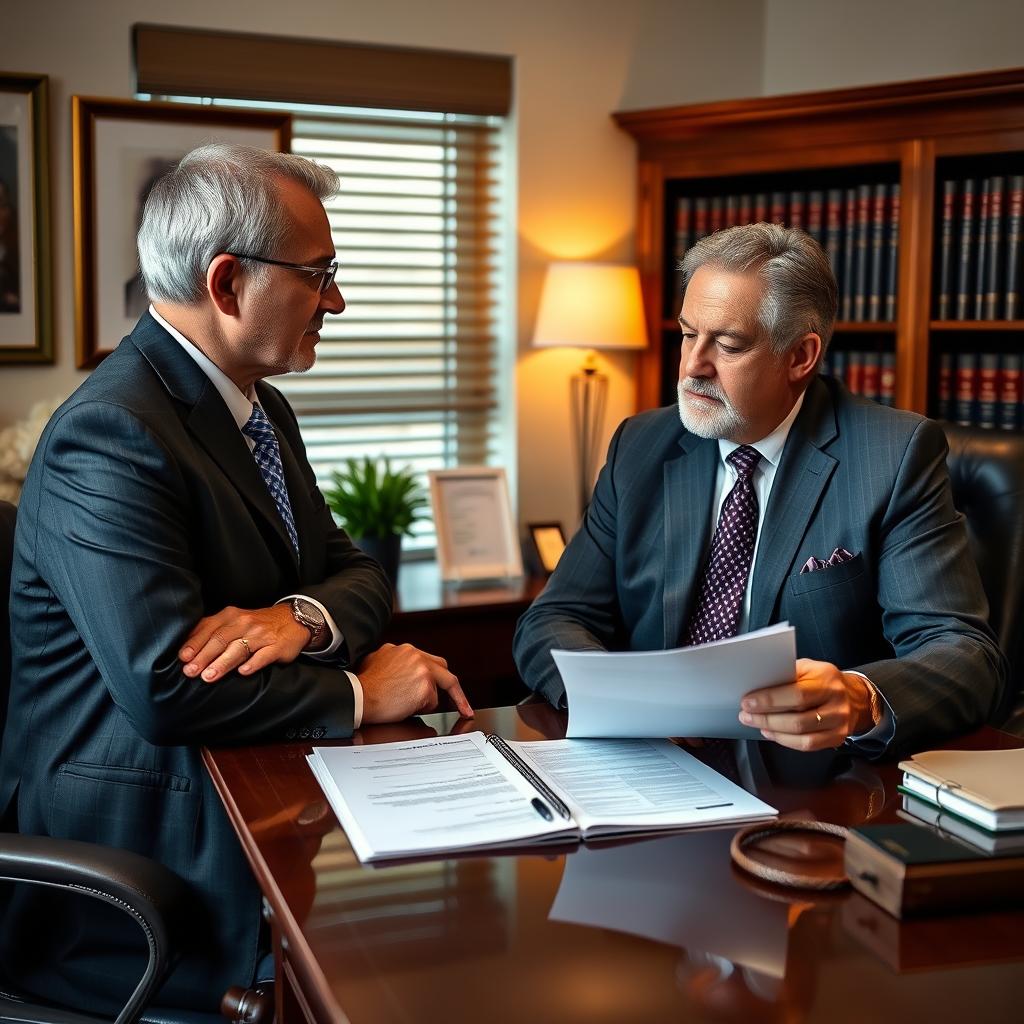
Retirement Asset Division Lawyer New York County, NY
Dividing retirement assets in a New York divorce involves more than splitting a bank account. Pensions, 401(k)s, IRAs, deferred compensation, and military or government retirement plans each require careful classification under New York’s equitable distribution law. In New York County (Manhattan), these matters proceed in the Supreme Court, where judges apply the Domestic Relations Law to determine what is marital property and how it should be divided. For a spouse who has contributed to a career that built substantial retirement benefits, or for the spouse who needs a fair share of those assets after a long marriage, the stakes are high. A qualified domestic relations order (QDRO) is often necessary to divide certain plans without triggering tax penalties or early‑withdrawal consequences. Law Offices Of SRIS, P.C. represents clients in asset division matters across New York, including retirement‑account disputes before the New York County Supreme Court. To request a consultation, call (888) 437‑7747. Law Offices Of SRIS, P.C. — Advocacy Without Borders.
What Retirement Asset Division Means in New York County
New York is an equitable distribution state. Under New York Domestic Relations Law § 236, the court must classify all property as separate or marital. Retirement assets accumulated during the marriage are presumptively marital, regardless of which spouse’s name appears on the account. The court then divides marital property in a manner that is fair, though not necessarily equal, by weighing a set of statutory factors. In New York County, the Supreme Court located at 60 Centre Street handles all matrimonial actions, including the valuation and division of pensions, 401(k) plans, IRAs, stock‑based deferred compensation, and government retirement benefits.
Because many retirement plans are governed by federal law (ERISA) or by specific New York statutes covering public‑employee pensions, obtaining a valid division often requires more than a stipulation in a settlement agreement. A QDRO — or, for certain government plans, a Domestic Relations Order — must be prepared and entered to direct the plan administrator to pay a portion of the benefits to the former spouse. In Manhattan, the volume of high‑asset matrimonial cases means that the court frequently sees complex retirement‑division disputes involving executive compensation, professional practices with defined‑benefit plans, and international components. Understanding how the local judiciary approaches these cases is central to protecting a client’s financial future.
How Mr. Sris and His Of Counsel Handle Retirement Asset Division Cases
Mr. Sris and his Of Counsel approach retirement‑asset division as part of a broader strategy for achieving a fair overall property settlement. They work with forensic accountants and valuation professionals to identify every account, determine the marital portion under the Majauskas formula or a stipulation, and project the tax consequences of different division scenarios. Whether the goal is to negotiate a settlement that preserves the liquidity of a business or to advocate at trial on the proper valuation date for a spouse’s deferred‑compensation plan, the team tailors the approach to the specific facts of the case.
The firm’s Of Counsel are familiar with the procedural requirements of the New York County Supreme Court and the rhythms of its matrimonial part. They draft QDROs and related orders to comply with plan‑administrator specifications, and they represent clients at compliance conferences when a plan rejects a proposed order. Throughout the process, the focus is on positioning the client to receive the retirement income to which they are entitled while minimizing unnecessary tax and administrative costs. No two retirement plans are alike, and the timeline of a case depends on the complexity of the assets and the court’s calendar.
About Mr. Sris and His Of Counsel Team
Mr. Sris, Owner and Founder of Law Offices Of SRIS, P.C., has practiced since 1997 and is admitted in Virginia, Maryland, the District of Columbia, New Jersey, and New York. His experience as a former prosecutor brings a disciplined approach to litigation and negotiation. Mr. Sris testified before the Virginia House Courts of Justice Committee in support of 2019 HB 635 (chief patron Del. David Bulova). He is supported by a network of Of Counsel attorneys, each with well over a decade of practice, who collectively bring substantial family‑law experience to New York matrimonial matters.
Together, Mr. Sris and his Of Counsel have documented 4,739+ case results across all practice areas since 1997. Results may vary. Mr. Sris and his Of Counsel bring over 120 years of combined legal experience. The team accepts cases throughout New York State, including appearances in the Supreme Court for New York County, and is available to discuss retirement‑asset division matters by appointment.
Frequently Asked Questions
How are retirement assets divided in a New York divorce?
New York courts divide retirement assets through equitable distribution of marital property. The portion of a pension, 401(k), IRA, or deferred compensation plan that was earned during the marriage is marital property subject to division. The court determines how to divide that portion fairly, often using a formula like Majauskas v. Majauskas to calculate the marital share. A QDRO or Domestic Relations Order is typically required to instruct the plan administrator to pay benefits directly to the former spouse. The division aims to be equitable, not necessarily equal, and considers factors such as the length of the marriage and each spouse’s financial circumstances.
What is a QDRO and when is it needed?
A QDRO is a court order that directs a retirement plan administrator to pay a portion of benefits to an alternate payee. QDROs are used for most private‑sector retirement plans governed by ERISA, including 401(k)s, pension plans, and some profit‑sharing plans. Government and military plans use similar orders with different names. Without a properly drafted QDRO, a spouse may not receive direct distributions from the plan, and early‑withdrawal penalties can apply. In New York County, the Supreme Court enters QDROs as part of the divorce judgment or afterward, and plan‑administrator approval is required before the order becomes effective.
Do all retirement accounts need a QDRO to be divided?
No; IRAs can typically be divided by transfer incident to divorce without a QDRO. Individual Retirement Accounts are not subject to ERISA and can be split through a court order that instructs the IRA custodian to transfer funds directly to the other spouse’s IRA. This avoids tax penalties if done correctly. However, 401(k)s, traditional pension plans, and certain deferred‑compensation arrangements do require a QDRO. Determining which type of order applies to each account is a key part of the asset‑division process, and errors can create significant tax consequences.
How does a New York court value a pension earned partly during the marriage?
The court commonly uses a coverture fraction to determine the marital share of a defined‑benefit pension. The numerator is the number of months the spouse participated in the plan during the marriage, and the denominator is the total months of plan participation at the time of valuation. The resulting percentage is applied to the pension benefit to calculate the marital portion. Valuing defined‑contribution plans like 401(k)s is usually simpler — the account balance at the time of valuation, minus any pre‑marital contributions and the passive growth on those contributions, represents the marital portion. In New York County, the parties may retain a pension actuary to present valuation evidence.
Can retirement assets be protected by a prenuptial or postnuptial agreement?
Yes, a valid prenuptial or postnuptial agreement can override the default rules of equitable distribution. If the parties entered into an agreement that identifies certain retirement accounts as separate property, the court will generally honor that agreement if it meets the requirements of New York Domestic Relations Law. The enforceability of such agreements depends on factors including full financial disclosure, lack of coercion, and fairness at the time of enforcement. In high‑net‑worth cases, retirement‑asset provisions in marital agreements are frequently litigated, so careful drafting and review are important.
Official New York legal resources: New York Domestic Relations Law · New York State Courts · New York County Supreme Court
Attorney advertising. Prior results do not guarantee a similar outcome. Case results depend on a variety of factors unique to each case. Results may vary.